Warning Signs in Financial Statements
Learn the most important warning signs in financial statements, including cash flow issues, rising debt, weak profits, and declining margins, to protect your investments.
 Yahnic Chigozie
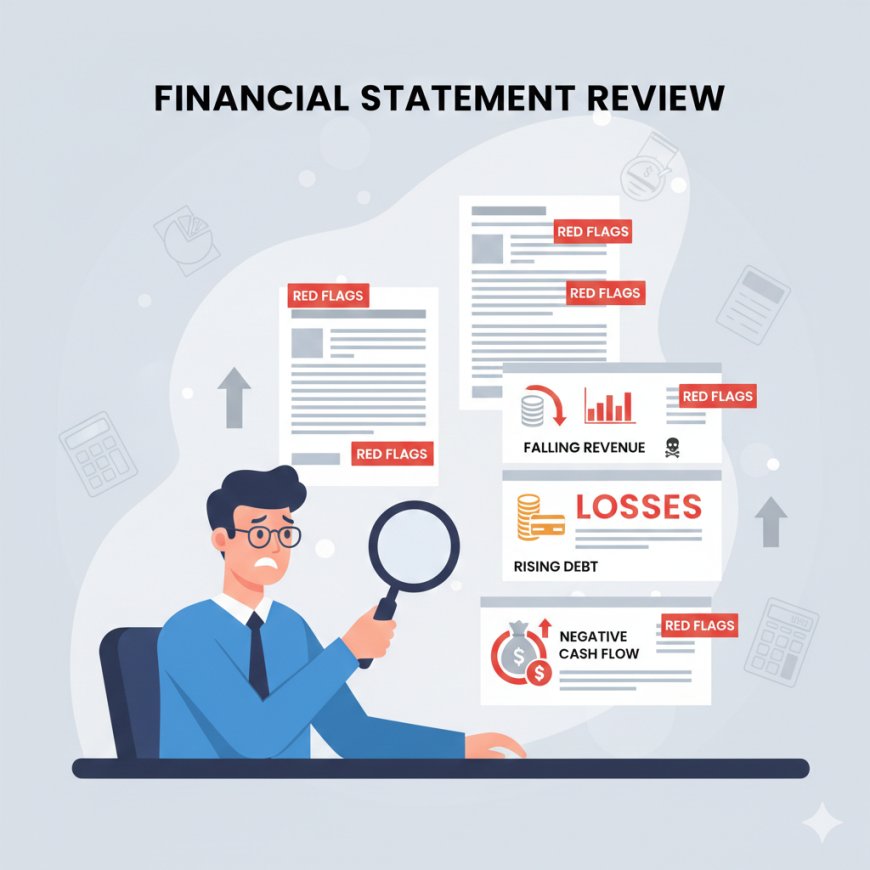
Financial statements are supposed to tell you the truth about a business.
But many investors either:
-
Don’t read them at all, or
-
Read them without knowing what to watch out for
The result?
They invest in businesses that look good on the surface but are quietly struggling underneath.
Let’s break down the major warning signs in financial statements in simple language so you can spot trouble early.
Why Financial Statements Matter
Financial statements show:
-
How a business makes money

-
How it spends money
-
Whether it’s actually profitable
-
Whether it can survive long-term


They don’t predict the future, but they reveal patterns.
And patterns tell stories.
1. Revenue Is Stagnant or Falling
Revenue is the lifeblood of a business.
Warning signs include:
-
Revenue not growing for years
-
Sharp drops in sales
-
Revenue grows once, then declines consistently
If customers are not buying more, the business has a demand problem.
No amount of accounting can fix weak demand.
2. Profits Are Falling While Revenue Is Rising
This is a silent red flag.
It means:
-
The business is selling more
-
But spending even more to do so
Possible causes:
-
Poor cost control
-
Rising operational inefficiency
-
Bad expansion decisions
Growth without profit is dangerous growth.
3. Constant Negative Cash Flow
Profit on paper is nice.
Cash flow is reality.
Warning signs:
-
Operating cash flow is negative year after year
-
Profits reported, but no real cash coming in
-
Heavy dependence on loans to stay alive


If a business can’t generate cash, it can’t survive for long.
4. Rising Debt Without Clear Growth
Debt is not bad by itself — but uncontrolled debt is dangerous.
Red flags include:
-
Debt is increasing faster than revenue
-
Borrowing just to pay expenses
-
High interest costs are eating into profits
Debt should help growth, not delay failure.
5. Expenses Growing Faster Than Revenue
Healthy businesses manage costs.
Watch out when:
-
Expenses rise sharply every year
-
Administrative costs balloon
-
Marketing costs explode without matching sales growth
This often signals poor management discipline.
6. Inconsistent or Manipulated Earnings
Some businesses:
-
Report profits for one year
-
Losses the next
-
Profits again after that
This inconsistency may suggest:
-
Unstable operations
-
One-off income
-
Aggressive accounting practices
Consistency builds trust. Wild swings raise questions.
7. Declining Profit Margins
Margins show how much the business keeps after expenses.
Warning signs:
-
Profit margins are shrinking every year
-
Rising costs without pricing power
-
Inability to pass costs to customers
Shrinking margins often mean competitive pressure or weak positioning.
8. Large “Other Income” Boosting Profits
Be careful when profits rely heavily on:
-
Asset sales
-
One-time gains
-
Non-core income
If “other income” keeps saving the company, the core business may be weak.
9. Poor Balance Sheet Strength
From the balance sheet, watch for:
-
Low cash reserves
-
High short-term liabilities
-
Assets that don’t generate income
A weak balance sheet reduces a company’s ability to handle shocks.
Nigerian Market Reality
In Nigeria:
-
Some companies hide weakness behind inflation-driven revenue
-
Currency devaluation can distort figures
-
Cash flow and debt matter more than ever
Smart Nigerian investors:
-
Look beyond profit numbers
-
Focus on cash, debt, and consistency
-
Avoid businesses surviving on borrowing alone
Financial statements don’t shout.
They whisper.
If you learn to spot the warning signs early:
-
You avoid bad investments
-
You protect your capital
-
You invest with clarity, not hope
In investing, what you avoid matters as much as what you buy.