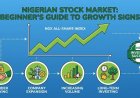
Questions about stock investing and Price
Many Nigerians believe investing requires millions, but that’s not true. This guide breaks down practical, safe, and realistic ways to start investing with just ₦10,000, even as a complete beginner.
 Yahnic Chigozie

If you’ve ever checked your stock app in the morning and felt your heart skip because the price went down, you’re not alone.
One day, your stock is green.
The next day it’s red.
By Friday, you’re confused and asking yourself:
“Did I make a mistake?”
Before you panic, let me tell you something important:
Price movement is normal. Confusion comes from not understanding why it moves.
Let’s break everything down simply, like I’m explaining to a friend.
1. Why Do Stock Prices Go Up and Down Every Day?
Stock prices move because of demand and supply.
In simple terms:
-
When more people want to buy a stock → price goes up

-
When more people want to sell → price goes down


That’s it.
But what makes people buy or sell?
Common reasons prices change daily:
-
Company news (profits, losses, dividends)
-
Economic news (inflation, interest rates, exchange rate)
-
Market mood (fear, excitement, rumors)
-
Big investors entering or leaving
Nigerian example:
If a bank like Zenith Bank reports strong profits, more people want to buy → price rises.
If inflation news scares investors, they sell → price drops.
Important truth:
A falling price does NOT automatically mean a bad company.
2. What Makes a Stock a “Good” Stock?
Many beginners think:
“A good stock is one that is going up.”
That’s wrong.
A good stock is a good business.
A good stock usually has:
-
A real product or service
-
Consistent profits
-
Good management
-
Strong cash flow
-
Dividend history (optional but powerful)
-
A fair price (not too expensive)
Simple example:
A company that makes food, cement, or provides banking services is usually more stable than a company with hype but no real earnings.
Price can lie. Business performance does not.
3. Trading vs Investing: What’s the Difference?
This is where many people get confused.
Trading
-
Short-term (minutes, days, weeks)
-
Focused on price movement
-
Very risky
-
Needs experience, time, and emotional control


Investing
-
Long-term (years)
-
Focused on business growth
-
Lower stress
-
Suitable for students & salary earners
Nigerian reality:
If you have classes, work, or a job, investing is better than trading.
📌 Beginners should invest, not trade.
4. How Long Should I Hold a Stock?
There is no one answer, but here’s a simple guide:
Hold a stock:
-
As long as the business is still strong
-
As long as your goal hasn’t changed
-
As long as the company is still making money
For beginners:
-
Think in years, not weeks
-
Let time and compounding work for you
Wealth grows slowly, then suddenly.
5. What Should I Do When a Stock Is Falling?
This is where emotions destroy money.
When a stock falls, don’t panic. Ask questions.
Ask yourself:
-
Is the entire market falling?
-
Did the company stop making money?
-
Is this temporary news or a real business problem?
Smart actions:
-
Review, don’t react
-
Hold if fundamentals are strong
-
Buy more only if you understand the company
-
Sell only if the business is broken
📌 Price falling is information, not instruction.
6. Why Do Some Stocks Never Recover After Falling?
This is very important.
Some stocks fall and rise again.
Some fall and never come back.
Reasons a stock may never recover:
-
Poor management
-
Heavy debt
-
No real business growth
-
Obsolete products
-
Constant losses
-
Dilution (printing too many new shares)
Simple truth:
Not every stock deserves your patience.
Time heals good businesses, not bad ones.
Final Thoughts
The stock market is not a casino.
It is a marketplace for businesses.
Prices move every day.
Wealth is built over time.
If you remember just this:
Don’t invest in prices. Invest in businesses.
You’re already ahead of many people.
Final Question (Be Honest):
Are you reacting to price movements…
Or investing with understanding?