How Many Investments Are Enough?
How many investments are enough? Learn how to balance diversification, risk, and simplicity to build a strong investment portfolio without overcomplicating it.
 Yahnic Chigozie
One of the most common questions investors ask is:
“How many investments do I really need?”
Some people hold one investment and feel unsafe.
Others hold too many investments and feel overwhelmed.
The truth is simple:
More investments don’t automatically mean more safety or better returns.
What matters is balance, understanding, and purpose.
Let’s break it down clearly.
Why This Question Matters
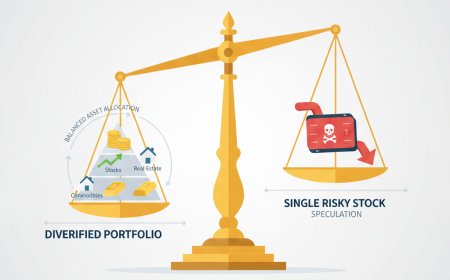
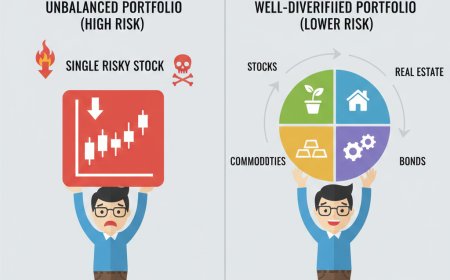
Having too few investments can:
-
Exposes you to high risk

-
Causes large losses if one fails

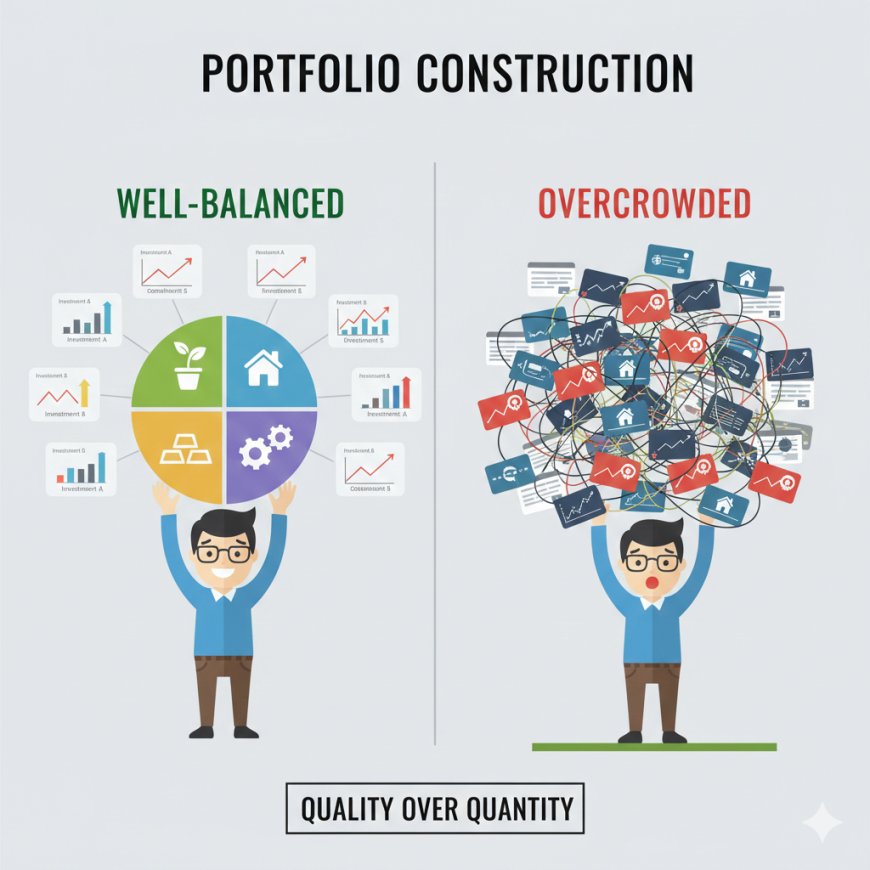
Having too many investments can:
-
Reduce focus
-
Lower returns
-
Make your portfolio difficult to manage
The goal is not “many investments.”
The goal is enough investments.
The Real Purpose of Multiple Investments
You don’t add investments just to feel busy.
You add investments to:
-
Reduce risk
-
Balance performance
-
Protect your capital
-
Match your financial goals
Every investment should have a job in your portfolio.
There Is No One-Size-Fits-All Number
The “right” number of investments depends on:
-
Your income
-
Your knowledge level
-
Your risk tolerance
-
Your time horizon
However, there are practical guidelines that work for most people.
For Beginners: Keep It Simple
If you’re just starting out:
-
3 to 5 well-chosen investments are enough
-
Focus on understanding what you own
-
Avoid chasing everything you hear about
Too many investments early on:
-
Create confusion
-
Lead to emotional decisions
-
Increase mistakes

Depth beats quantity.
For Growing Investors: Controlled Diversification
As your knowledge and capital grow:
-
5 to 10 investments can work well
-
Spread across different sectors or asset types
-
Review and rebalance periodically
At this stage, you’re managing risk intelligently, not randomly.
For Advanced Investors: Purpose-Driven Holdings
Experienced investors may hold:
-
10 to 15 investments
-
Across asset classes and regions
-
With clear allocation rules
Beyond this point, adding more investments often:
-
Adds complexity
-
Dilutes strong performers
-
Reduces overall impact
More is not always better.
Quality Beats Quantity Every Time
Holding 20 weak investments is riskier than holding 5 strong ones.
Strong investments usually have:
-
Clear business models
-
Consistent cash flow
-
Long-term relevance
If you can’t explain why you own an investment, you probably own too many.
The Nigerian Investor Reality
In Nigeria:
-
Capital is limited
-
Transaction costs matter
-
Inflation reduces purchasing power
Smart Nigerian investors:
-
Focus on fewer, stronger investments
-
Diversify intentionally
-
Avoid spreading money too thin
A concentrated, well-thought-out portfolio often performs better than a scattered one.
A Simple Rule of Thumb
Ask yourself:
-
Can I track all my investments?
-
Do I understand each one?
-
Does each investment serve a clear goal?
If the answer is no, you likely have too many.
Investing is not a competition to own the most assets.
It’s a strategy to:
-
Protect your money
-
Grow steadily
-
Sleep well at night
Enough investments are the ones you can understand, manage, and hold with confidence.