Proven Wealth Strategies That Actually Work in 2026
Want to build real wealth in Nigeria in 2026? Discover 7 proven wealth strategies that work from compound interest and smart investing, to multiple income streams and dollar diversification. Written for everyday Nigerians ready to stop surviving and start building. By Happyinvest.
 Yahnic Chigozie
Making Money Simple. Building Wealth Daily.
Let me paint you a picture.
Two people. Same age 27. Same salary ₦120,000 a month. Same city Lagos.
Five years later, one of them has ₦2.8 million in investments, a side business bringing in ₦80,000/month, and zero debt. The other one is still living paycheck to paycheck, just with a newer iPhone and more BNPL debt.
Same income. Completely different outcome.
What's the difference? Strategy.
Not luck. Not connection. Not "getting a visa." Strategy.
In 2026, the rules of wealth building haven't changed at the core but the tools available to everyday Nigerians have never been better or more accessible. The question is: do you know the strategies that actually work? Not the social media hype. Not the crypto promises. The real, proven ones.
Let's break them down seven strategies that will genuinely build your wealth this year and beyond. Grab a seat.
Strategy 1: Spend Less Than You Earn And Invest the Difference
I know. You've heard this before. But hear me out, because most people think they're doing this and they're actually not.
There's a simple formula called the 50-30-20 rule and it's a solid starting point for anyone building wealth in Nigeria:
- 50% of your income → Needs (rent, food, transport, utilities)
- 30% of your income → Wants (fun, outings, subscriptions, gifts)
- 20% of your income → Savings and investments
On a ₦120,000 salary, that looks like this:
- ₦60,000 on needs
- ₦36,000 on wants
- ₦24,000 saved and invested
Now, for many Nigerians in Lagos, rent alone eats 40–50% of income. So you may need to adjust. Maybe it's 60-20-20. Maybe 70-10-20 for now. The number matters less than the discipline.
The KEY is that the investment portion is non-negotiable. It goes out first automatically before you decide what to eat for the week.
Here's the thing a lot of people miss: the gap between what you earn and what you spend is your "wealth engine." The bigger that gap, the faster you build wealth. You grow the gap by either earning more, spending less, or ideally both at the same time.
In 2026, apps like Cowrywise, Piggyvest, and Kuda make this automatic. You set a recurring transfer on salary day and it moves before your fingers touch the money. That's the trick. Automate the discipline so you don't have to rely on willpower.
Strategy 2: Protect What You're Building
This one gets skipped constantly, and it's where so many Nigerians get destroyed financially.
You spend months building savings. Then NEPA wrecks your generator. Or someone in the family has a medical emergency. Or you lose your job. And everything you've built disappears overnight because you had no protection.
Wealth protection in 2026 has two key components:
Emergency Fund: We talked about this in our last article, but it deserves repeating 3 to 6 months of your total monthly expenses, sitting in a liquid, interest-earning account. On Cowrywise or a money market fund, you're earning 17–22% per annum on that money while it waits. It's not just sitting there doing nothing. It's working AND protecting you.
Insurance: This is the conversation nobody wants to have. Health insurance. Life insurance if you have dependents. Even device insurance. Nigerians underestimate how one single health crisis can wipe out years of savings. The National Health Insurance Scheme (NHIS) is still an option, and private plans like AXA Mansard, Hygeia, or Leadway Assurance have plans from ₦15,000–₦50,000 per year. That's less than ₦5,000/month to protect yourself from a ₦500,000 hospital bill.
The wealthiest people in the world obsessively protect their downside. They think about what they could lose before they think about what they could gain. If you want to build like them, start thinking like them.
Strategy 3: Invest in Yourself The Highest ROI Asset
Ask yourself this: what is the one asset that can never be taken from you? Not your land. Not your stocks. Not your cash in the bank.
Your skills and knowledge.
In 2026, there are Nigerians earning ₦500,000 to ₦2 million per month remotely in dollars because they invested in skills that global companies pay for. Software development. Product management. Data analysis. Copywriting. Digital marketing. UI/UX design. Video editing.
The return on investment from the right skill is unbeatable. A ₦200,000 coding bootcamp taken seriously can lead to a $2,000/month remote job within 18 months. That's ₦3.2 million per year at today's exchange rate. From one investment.
You don't have to do a coding bootcamp. Ask yourself: what skill, if mastered, would dramatically increase what the market is willing to pay you? Then go pursue that skill relentlessly.
Platforms like Coursera, Udemy, and even YouTube have free or affordable courses on almost every skill you can think of. The investment is mostly time and discipline.
In 2026, your earning capacity is your greatest wealth-building tool. Don't neglect it.
Strategy 4: Invest Consistently In Real Assets
Now we get to where your money actually grows.
A lot of Nigerians keep all their money in a savings account and call themselves "saving." That's not saving that's losing money slowly. When inflation is running at 30%+ per year and your savings account pays you 4–8%, your purchasing power is shrinking every single month.
You need your money in assets that grow and ideally assets that grow faster than inflation.
Here's what's available to Nigerians in 2026:
Money Market Funds (MMFs): This is where you should park your emergency fund and any money you'll need within 1–2 years. ARM Money Market Fund, Stanbic IBTC, and others are yielding 18–22% per annum in naira currently. You can start with as little as ₦1,000.
Nigerian Stock Exchange (NSE): Invest in shares of solid Nigerian companies Dangote Cement, GTCO, MTN Nigeria, Zenith Bank, BUA Foods. In the long run, quality stocks appreciate. Stanbic IBTC Stockbrokers, Chaka, and Trove make this accessible. You can start with ₦5,000.
Dollar-denominated investments: This is crucial in Nigeria. The naira has historically weakened against the dollar. Investing in dollar assets protects your wealth from devaluation. Bamboo, Trove, and Rise allow you to invest in US stocks (Apple, Tesla, Amazon) or dollar mutual funds from as little as $10. Even $20/month invested consistently adds up to real money.
Real Estate (indirectly): Not everyone can buy land in 2026, but real estate investment trusts (REITs) listed on the NSE like UPDC REIT allow you to own a piece of real property with as little as ₦5,000. Same wealth-building power of real estate, none of the massive upfront cost.
Treasury Bills and Bonds: The Central Bank of Nigeria (CBN) regularly offers T-Bills at competitive rates. Currently, 1-year Nigerian government bonds are yielding around 20–22% per annum. Low risk, government-backed, and very competitive. Access them through your bank or a licensed stockbroker.
The golden rule: diversify across at least 2–3 of these. Don't put everything in one place.
Strategy 5: Master the Magic of Compound Interest Starting Today
Let me show you something that will change how you think about time.
If Chidi invests ₦10,000/month starting at age 22 at 15% annual return, by age 45 he has approximately ₦22 million.
If Emeka waits until age 32 to start the same ₦10,000/month at the same return, by age 45 he has approximately ₦4.8 million.
Same amount invested each month. 10-year head start. The difference is ₦17 million.
That is the terrifying, beautiful, ruthless power of compound interest.
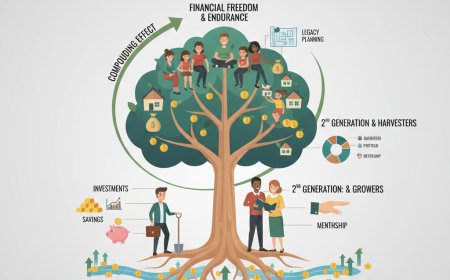
Compound interest means you earn returns not just on your original money, but on the returns themselves. Your money earns money, which earns more money, which earns even more money. It snowballs. Slowly at first. Then explosively.
The catch and this is critical it requires two things: time and patience. You have to leave the money alone. You can't keep withdrawing and restarting. Every time you pull money out, you reset the snowball.
In 2026, you can set up automatic reinvestment on most platforms. Your returns get added back to your principal automatically. You don't even have to think about it.
The best day to start was 10 years ago. The second best day is today. If you're 19, 23, or 30 reading this you are sitting on a gold mine of time. Use it.
Strategy 6: Diversify, Diversify, Diversify
There's an old Yoruba saying that even translates beautifully into financial wisdom: "Eni ba fi ọkan şiṣẹ, ọkan ni yoo jeun" he who works with one hand eats with one hand.
In investing, concentration = risk. The more you spread your money across different assets, sectors, and currencies, the more protected you are when one thing goes bad.
Here's a simple diversification framework for a Nigerian investor in 2026:
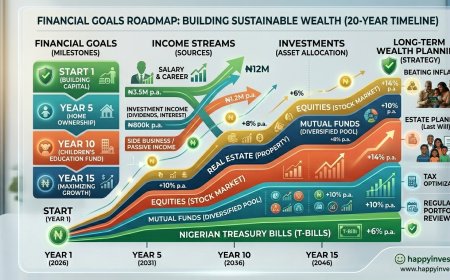
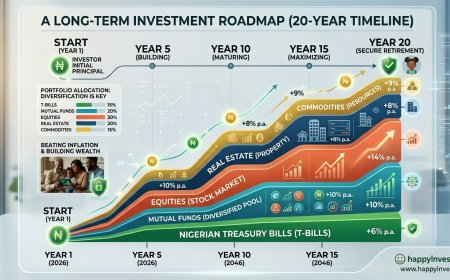
Put a portion in naira-based investments (money market funds, Nigerian stocks, T-bills), another portion in dollar investments (US stocks, dollar funds on Bamboo or Rise), another portion in a physical or semi-physical asset (real estate crowdfunding, REITs, or gold-backed tokens), and keep a small amount accessible as your emergency fund in a liquid money market account.
When the naira falls, your dollar investments protect you. When the stock market dips, your money market fund is steady. When one sector struggles, another is thriving. That's the point of diversification you're not trying to win big everywhere. You're trying to make sure you never lose everything anywhere.
In 2026, with platforms like Cowrywise, Bamboo, and Trove, you can do all of this with as little as ₦20,000/month spread across different buckets. You don't need to be rich to diversify. You just need to be intentional.
Strategy 7: Build Multiple Streams of Income
This is the strategy that separates people who are comfortable from people who are truly wealthy.
A salary is a single rope holding you up. If it cuts retrenchment, resignation, company shutdown you fall. Multiple income streams are a net. Several ropes. One cuts, you're still held.
Here's the important thing most people miss: you don't build all your income streams at once. You build them one at a time, deliberately.
The Income Stream Ladder for 2026:
Start with your primary income your job or main business. This is your base. Protect it and optimize it (ask for that raise, develop skills that make you more valuable).
Then add a skill-based side hustle. What can you do with your existing skills that someone will pay for on weekends or evenings? Graphic design, writing, consulting, tutoring, social media management. Pick one. Get your first client. Then grow it.
Then add a digital or scalable income stream. An online course teaching what you know. A digital product (templates, ebooks, presets). A YouTube channel or newsletter that can earn ad revenue or sponsorships over time. These take longer to build but they scale without trading more of your time.
Then add a passive income stream from investments. Dividend-paying stocks, rental income from REITs, returns from your money market fund. This kicks in after consistent investing over time.
By the time you're stacking all four layers you have a real wealth machine running.
Don't rush this. Don't try to do all four at once. One at a time, with focus and commitment, is how this actually works.
The Mindset That Ties It All Together
Here's something I want you to tattoo on your brain not literally, but you get my point.
Wealth is not a destination. It's a direction.
You're not trying to "arrive" at wealth on a specific date. You're trying to make sure that every financial decision you make today is pointing you in the right direction. Save a little today right direction. Invest ₦5,000 this month right direction. Learn a new skill on Saturday morning instead of sleeping till noon right direction.
Wealthy people aren't smarter than you. They're not luckier (most of them). They're more consistent. They do the boring, right things over and over again without getting distracted by noise.
2026 is full of noise. Crypto pumps. Ponzi schemes dressed as "investment clubs." Social media flexing by people who are actually broke. The ability to ignore the noise and stay on your strategy is itself a form of financial intelligence.
Stay boring. Stay consistent. Build slow. Win big.
Your Action Plan for the Next 30 Days
If everything above feels like a lot, start with just these five moves this month:
First, review your spending for the last 30 days and identify your "wealth gap" what's left after expenses. Second, automate a fixed amount to a money market fund on payday even ₦5,000. Third, open one investment account you don't have yet (Bamboo for dollar investing, Cowrywise for naira funds). Fourth, identify one skill you can monetize and take one concrete step toward it this month. Fifth, write down your financial goals for 2026. Vague goals create vague results. Be specific.
Wealth in 2026 is built one intentional decision at a time. You don't need to be perfect. You need to be consistent.
At Happyinvest, we're walking this road with you. Every article. Every strategy. Every real example made simple.
Making Money Simple. Building Wealth Daily.