The History of the NGX Stock Market Crashes and How to Protect Yourself from the Next One
Discover the history of the NGX stock market crash, its causes, lessons for investors, and how to protect your investments while taking advantage of future market downturns.
 Yahnic Chigozie
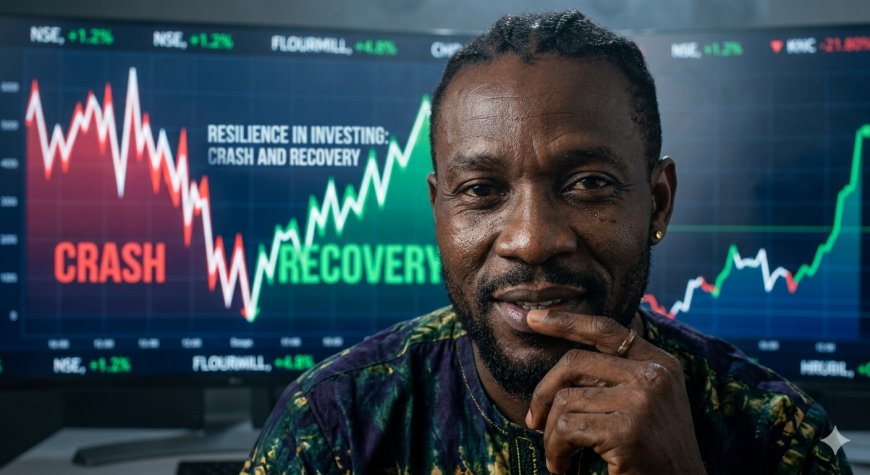
Nigeria's stock market has been obliterated three times in 20 years. Trillions of naira were wiped out. Investors went bankrupt. Some took their own lives. This is the full story, the causes, the devastation, the recoveries, and the battle-tested strategies that will protect and enrich you when the next crash comes.
- A Brief History of the NGX
- The Great Bull Run: 2003–2008
- Crash #1 — The 2008/2009 Collapse (The Big One)
- Crash #2 — The 2014–2016 Oil Price Meltdown
- Crash #3 — The COVID-19 Panic of 2020
- Bonus: Mini Crashes & Corrections (2022–2026)
- What the NGX Has Taught Us: 7 Timeless Lessons
- The Crash Playbook: How to Protect Yourself
- How to Take Advantage of the Next Crash
- Your Personal Crash-Proof Investment Checklist

1. A Brief History of the Nigerian Exchange (NGX)
Nigeria's stock market has a longer history than most people realise. It was established in 1960 as the Lagos Stock Exchange — the same year Nigeria gained independence — with just 19 securities. For decades, it operated quietly, largely inaccessible to the average Nigerian, trading paper certificates in a world without the internet or mobile banking.
Today, rebranded as the Nigerian Exchange Group (NGX) following its demutualization in 2021, it hosts over 393 listed securities, including 151 companies, 157 fixed income instruments, 12 ETFs, and 4 index futures. Its market capitalisation as of early 2026 has approached ₦126 trillion, making it Africa's strongest-performing capital market by dollar returns.
But between that humble 1960 founding and this 2026 ascent lies a turbulent, painful, and deeply instructive history, one that every Nigerian investor, particularly those aged 18–35, absolutely must understand before putting a single naira into stocks.
Key reference point: The NGX tracks its performance using the All-Share Index (ASI), formulated in January 1984 with a base of 100 points. Every data point in this article references the ASI unless otherwise stated.
2. The Great Bull Run: 2003–2008
To understand the crash, you must first understand the mania that preceded it. Between 2003 and 2007, Nigeria experienced one of the greatest stock market booms in African history, and understanding exactly what fuelled it is critical to recognizing when the next bubble is forming.
3. Crash #1 — The Great Collapse of 2008/2009
What followed in March 2008 was one of the most catastrophic market implosions in African financial history. It destroyed the wealth of millions of ordinary Nigerians and left psychological scars that kept many investors away from the stock market for over a decade.

The crash was not sudden: it was a long, agonising, grinding collapse that lasted through all of 2008 and deep into 2009. The ASI plunged from its all-time high of 66,371 points on March 3, 2008, to approximately 19,000 points by early 2009 — a total collapse of nearly 70% in just 12 months. Market capitalisation shrank from ₦13.5 trillion to less than ₦4.6 trillion. Investors who had been rich on paper in February were broke by December.
Between 2004 and 2007, market capitalisation had grown more than fivefold, but this growth was almost entirely unsupported by strong economic fundamentals. When reality set in, the market did not just correct, it imploded.
Root Causes
- Reckless margin lending by Nigerian banks — investors borrowed to buy stocks
- Banks overheated the market with non-performing margin loans exceeding ₦2.1 trillion
- Stock prices had risen far beyond the earnings and fundamentals of the companies
- Global Financial Crisis (2007/2008) triggered a foreign investor flight from the Nigerian market
- Supply of equities overwhelmed demand as panic-selling took hold
- Oil prices collapsed globally, devastating Nigeria's fiscal position
- Weak regulatory oversight allowed the speculative bubble to grow unchecked
- Over 60% of quoted securities were on constant offer — stocks could not find buyers
Government & Market Response
- CBN Governor Sanusi conducted an emergency audit of banks in 2009
- Eight banks were declared insolvent and required an emergency capital injection
- CBN injected ₦620 billion to rescue failing banks
- Asset Management Corporation of Nigeria (AMCON) was created in 2010 to absorb toxic loans
- AMCON purchased over ₦4 trillion in non-performing bank assets
- SEC Nigeria overhauled its regulatory framework
- Investors' Protection Fund reconstituted in 2012
The brutal truth: Between 2007 and 2022, the NGX All-Share Index recorded a cumulative return of just 11.6%. This means investors who bought at the 2007 peak would have still been underwater 15 years later. The 2008 crash was not just a setback for some; it was a generational wealth destruction event.
4. Crash #2 — The 2014–2016 Oil Price Meltdown
Just as the NGX was beginning to find its footing after the 2008 catastrophe, Nigeria's fundamental economic vulnerability delivered another blow. This time, the weapon was crude oil.

In mid-2014, global crude oil prices, which had held comfortably above $100 per barrel, began a catastrophic plunge that would see prices fall to just $27 per barrel by January 2016. For Nigeria, an economy where oil exports account for roughly 90% of foreign exchange earnings and over half of government revenue, this was an existential economic shock.
The NGX entered a prolonged bear market. Foreign portfolio investors, already cautious from memories of 2008, pulled capital out of Nigeria rapidly. The naira lost nearly half its foreign exchange value in less than two years. Nigeria officially entered its first recession in 25 years in 2016. Workers across the country went months without salaries. The stock market reflected this misery in falling valuations across banking, consumer goods, and industrial sectors.
Root Causes
- Saudi Arabia flooded global oil markets to undercut US shale producers
- Global oil oversupply of over 2 million barrels per day
- Nigeria's over-dependence on oil revenue exposed economic fragility
- CBN foreign exchange restrictions stifled business activity
- Political transition uncertainty (2015 election) rattled investor confidence
- Boko Haram insurgency disrupted northern economic activity
- Delayed government budgets created prolonged fiscal uncertainty
How the Market Recovered
- Oil prices gradually recovered from 2017 onwards
- Economic diversification conversations spurred some investment
- CBN forex restrictions eventually eased, restoring some foreign capital
- Agriculture sector growth helped offset oil weakness
- Some banking stocks became deeply undervalued value investors returned
- NGX began introducing new products (ETFs, bonds) to broaden the market
The key lesson from 2014–2016: Nigeria's stock market and Nigeria's oil price are deeply, almost fatally, linked. Any investor in Nigerian equities must monitor global crude oil dynamics as a primary indicator of macro risk. When oil weakens, the naira follows, and the NGX typically falls. This relationship has held across multiple cycles.
5. Crash #3 — The COVID-19 Panic of 2020
The COVID-19 crash of early 2020 was unlike any previous crash in one critical way: it was the fastest in history. What took the 2008 crisis months to accomplish, COVID accomplished in weeks.

When the World Health Organisation declared COVID-19 a global pandemic in March 2020, financial markets worldwide went into shock. Global equity markets lost $18 trillion in just February and March 2020 alone. In Nigeria, the NGX All-Share Index fell as low as 21,300 points in March, its lowest level since June 2012, as foreign investors pulled capital out of emerging markets en masse to hold cash and safe-haven assets.
Panic selling took hold of Nigerian markets as lockdowns were announced, oil prices collapsed (at one point falling to negative $37 per barrel in futures markets), and the naira came under severe pressure once more. Airlines, hospitality stocks, and consumer goods companies took the hardest hits.
Root Causes
- The Global pandemic triggered unprecedented economic shutdowns worldwide
- Oil prices collapsed — briefly hitting negative levels in futures markets
- Foreign investors fled emerging markets for US dollar safety
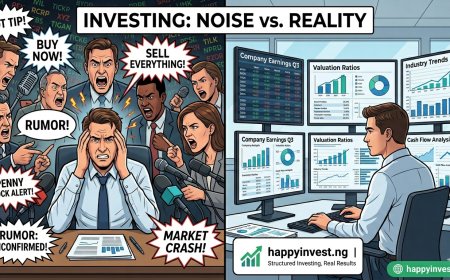
- Fear, panic, and uncertainty drove irrational mass selling
- Nigeria's import-dependent economy was paralysed by supply chain disruptions
- Travel, hospitality, and consumer sectors essentially shut down overnight
Why the Recovery Was Extraordinary
- CBN flooded the economy with stimulus liquidity — money flowed into equities
- Low interest rates made bonds unattractive — investors rotated into stocks
- Domestic investors, not foreign ones, drove the recovery
- Beaten-down blue-chip stocks attracted value buyers at historic lows
- The full year 2020 ended with +50.03% return — one of NGX's best years ever
- Those who held through the panic were richly rewarded within months
The most important lesson from COVID: Those who sold in March 2020 and waited for the "all-clear" missed one of the strongest rallies in NGX history. Those who bought more during the panic, treating the crash as a sale, were rewarded with 50%+ returns within the same calendar year. The crash lasted 6–8 weeks. The recovery lasted years.
6. Bonus: Mini Crashes & Corrections Since 2022
The NGX has also experienced several significant single-day and short-term selloffs in the more recent period. These are worth understanding because they represent the kind of volatility young investors will experience repeatedly throughout their investing lives.
7. What the NGX Has Taught Us: 7 Timeless Lessons
Every crash in NGX history has taught the same lessons — over and over — to investors who were willing to listen. Here they are, distilled from decades of boom and bust cycles:
Every crash in NGX history has been followed by a recovery
Despite three catastrophic crashes, one prolonged bear market, and dozens of corrections, the data is unambiguous: every single 20-year rolling period in NGX history has delivered positive returns. The 2014–2023 period alone delivered 147% cumulative returns, despite two bear markets occurring within it. Time in the market, not timing the market, has always won. The investors who panicked in 2008, 2016, and 2020 and sold at the bottom missed the recoveries. The ones who stayed or bought more were rewarded.
Debt and borrowed money turn corrections into catastrophes
The single most devastating feature of the 2008 crash was not the market fall itself; it was that hundreds of thousands of Nigerians had borrowed money (margin loans) to buy stocks. When the market fell 70%, their entire borrowed capital was wiped out, and they still owed the banks. Never invest borrowed money. Never invest money you cannot afford to lose in the short term. And never, under any circumstances, borrow against your home or life savings to invest in equities. The market will always recover, but only if you have the time and financial stability to wait for that recovery.
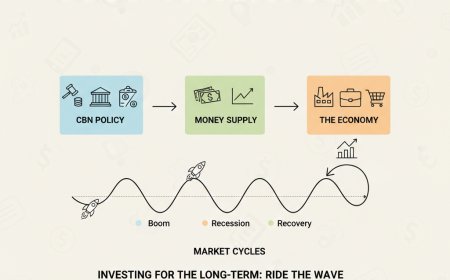
Nigeria's market is hostage to oil, and you must plan for this
The 2008 crash, the 2014–2016 bear market, and the 2020 COVID crash all shared a common thread: collapsing oil prices. As long as Nigeria remains oil-dependent, every significant drop in crude prices will threaten the naira, government revenue, and the stock market. Smart Nigerian investors maintain a portion of their portfolio in dollar-denominated assets, such as dollar mutual funds, ETFs, or USD-denominated fixed income to cushion the inevitable naira devaluation that accompanies oil crashes. Diversification across currencies is not optional it is essential.
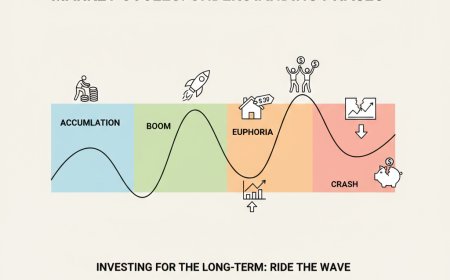
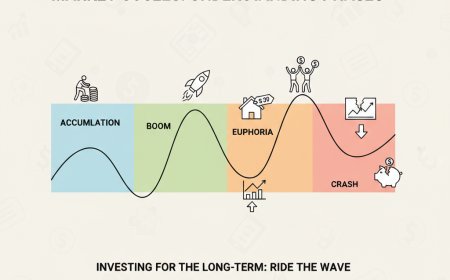
When everyone is euphoric, danger is approaching
In 2007, market women were buying stocks. Taxi drivers were discussing IPOs. Banks were lending to anyone who asked. The market was "number one in the world." This is the classic anatomy of a bubble. When people who have never invested before start rushing into the market because "everyone is making money," that is precisely when sophisticated investors become cautious and start trimming their positions. Euphoria and greed are the market's most reliable warning signs. Measure valuations against fundamentals when P/E ratios become astronomical, and reduce your equity exposure.
Panic selling locks in your losses permanently
The investors who sold in March 2020 when the ASI hit 21,300 points locked in a 26% loss. Had they held for just 9 more months, they would have been sitting on a 50% gain. The same pattern played out in 2009; those who sold at the bottom of the crash locked in 70% losses. Those who held, despite the agony, eventually recovered, though it took years. A paper loss is not a real loss until you sell. Volatility is the price you pay for the superior long-term returns that equities offer over every other asset class.
Crashes are the greatest wealth transfer events in history
Every crash destroys wealth for the unprepared and creates it for the prepared. Warren Buffett's most famous investments were made during market panics. The Nigerian investors who quietly bought Dangote Cement, Zenith Bank, and GTBank stocks in 2009 at their 70%-off crash prices watched those positions multiply many times over the following decade. Crashes are not disasters for every investor; they are discounts. The difference between those who got rich and those who got wiped out in every NGX crash came down to one thing: preparation.
The market always knows more than the newspapers
In late 2007, newspapers were celebrating Nigeria's booming stock market. In March 2009, they were writing eulogies. In mid-2020, the headlines screamed economic apocalypse, and the market ended the year up 50%. By the time a crisis is the lead story on every media outlet, much of the decline has already happened. And by the time the recovery is being widely celebrated, much of the upside has already been captured. Learning to act contrarily cautious when others are greedy, greedy when others are fearful, is the most reliable path to superior investment returns on the NGX.
8. The Crash Playbook: How to Protect Yourself
Protection is not about avoiding the stock market. It is about positioning yourself so that when — not if — the next crash comes, you survive it financially and emotionally intact, and are positioned to profit from it.
Your Crash-Proof Portfolio Framework
Build your financial fortress first
- Maintain 3–6 months of expenses in a money market fund
- Zero high-interest debt before investing in equities
- Never invest money you need within 2 years
- Keep 20–30% of portfolio in stable assets (bonds, T-bills)
- Dollar-denominated 15–25% of wealth for FX hedge
- Never use margin loans or borrowed money
Protect and position
- Do not sell quality stocks in a panic
- Check fundamentals — is the business still viable?
- Stop checking your portfolio daily — it makes panic worse
- Move new savings into equities as prices fall
- Watch for oversold quality stocks trading below book value
- Ignore mainstream media hysteria — it lags the market
Stay the course
- Continue regular monthly contributions regardless
- Reinvest any dividends received
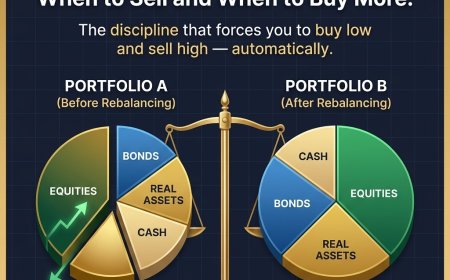
- Review portfolio allocation every 6 months
- Do not re-enter speculative momentum stocks too early
- Rebalance toward equities if you moved to safety
- Document what you learned for the next cycle
The investor's code
- Invest in businesses, not tickers
- Diversify across sectors — not just banking stocks
- Monitor oil prices as a leading Nigerian risk indicator
- Beware of bull market euphoria — trim when valuations are extreme
- Own dollar assets alongside naira assets permanently
- Think in decades, not months
Specific NGX sectors to monitor as early warning signals
Certain sectors historically give early warning of broader market stress before the ASI falls. Track these closely:
Banking sector: Nigerian banks are the market's most important bellwether. When tier-1 banks: Zenith, GTCO, Access Holdings, UBA, FBN Holdings begin showing sustained declines in volume and price with no fundamental reason, it is often an early signal of coming broader market weakness. The 2008 crash was heavily bank-driven. Watch for rising non-performing loan ratios published in quarterly bank results.
Consumer Goods sector: Companies like Nestlé Nigeria, Unilever, and Dangote Sugar reflect real-economy consumer purchasing power. When these stocks weaken despite reporting decent earnings, it often signals FX pressure, naira devaluation expectations, or weakening consumer spending all precursors to broader market stress.
Oil & Gas sector: Given Nigeria's dependence on crude revenue, weakening oil stocks on the NGX in the context of global oil price declines is a critical risk signal for the entire economy.
9. How to Take Advantage of the Next Crash
This is where patient, prepared investors make the wealth that compounds over decades. Every crash in NGX history created extraordinary buying opportunities. The problem was that almost nobody was financially or psychologically prepared to take advantage of them. Here is how to be different.
Step 1 — Build your "Crash War Chest" now, before it happens
The single most powerful thing you can do today, right now, in a rising market is begin building a dedicated cash or money market reserve specifically earmarked for buying during the next crash. Even ₦5,000 per month into a Cowrywise money market fund compounds at 22%+ while you wait, and then becomes ammunition when markets fall 30–40%.
Target: 20–30% of your investable assets in liquid, stable instruments that you will deploy into quality equities when they fall to historically cheap valuations. Not when you think the bottom has passed during the panic, while everyone else is selling.
Step 2 — Create your personal "Buy List" in advance
Do not wait for a crash to decide what to buy. Right now, research 5–10 quality Nigerian companies that you would be delighted to own at a 40–50% discount to today's prices. Blue-chip NGX candidates for most long-term investors include:
Banking: Zenith Bank, GTCO (Guaranty Trust Holding Company), Access Holdings, UBA, and Stanbic IBTC are all consistently profitable, dividend-paying institutions with strong balance sheets.
Consumer Goods: Nestlé Nigeria, Dangote Sugar, BUA Foods, businesses with strong brands that Nigerians will continue buying regardless of economic conditions.
Industrials: Dangote Cement and BUA Cement dominate market positions in a country with a massive infrastructure deficit.
Telecom: MTN Nigeria, Airtel Africa benefiting from Nigeria's mobile data growth regardless of macro conditions.
Write down the price at which each of these becomes a "screaming buy" for you. Then, when the market crashes and those prices hit your targets, you act without hesitation, without waiting for "more clarity."
Step 3 — Use Dollar-Cost Averaging (DCA) aggressively during crashes
Rather than trying to buy at the exact bottom (which nobody consistently achieves), implement an aggressive DCA strategy during crashes: commit to investing a fixed naira amount every month regardless of market conditions. When the market is down 30%, your monthly contribution buys 43% more units than when prices were at their peak. When it is down 50%, you buy double the units for the same money. Over time, this mechanical approach consistently outperforms trying to time the market.
Step 4 — Use ETFs for the broadest, cheapest crash exposure
During market-wide crashes, the most efficient way to buy "everything at a discount" is through an NGX ETF — particularly the Vetiva Griffin 30 ETF or the SIAML Pension ETF 40, which track the 30 or 40 largest companies on the exchange. Rather than picking which individual stock will recover fastest, you simply buy the entire market at its discounted price. History shows that broad-market index funds recover with the market as a whole.
Step 5 — Stay invested — always
The data on NGX rolling returns is decisive: nearly 9 out of 10 rolling 5-year periods since inception have been profitable. Every single 20-year rolling period has been profitable. The investors who stayed invested through every crash, correction, and bear market, and who kept contributing monthly, ended up significantly wealthier than those who tried to dodge the downturns.
The numbers that should motivate you: The NGX All-Share Index delivered a 283.45% cumulative return between 2020 and December 2024, rising from 26,842 points to 102,926 points. In early 2026, it has surpassed 170,000 points. Every naira invested at the COVID panic low of 21,300 points would be worth approximately 8x that amount at 170,000 points. That is the reward for those who prepared, stayed calm, and bought when others were selling.
10. Your Personal Crash-Proof Investment Checklist
Use this as your self-assessment before, during, and after any market event:
Final Word: Crashes Are Not the Enemy. Unpreparedness Is.
The NGX has crashed three times in 20 years. It will crash again; we simply do not know when. What history tells us with remarkable consistency is that every crash has been followed by a recovery, every recovery has produced new all-time highs, and every cycle has made patient, prepared investors wealthier than they were before.
The investors who lost everything in 2008 were not unlucky. They were underprepared, they invested borrowed money, they ignored warning signs of speculative excess, they had no emergency fund, no diversification, and no plan for a scenario where prices fell. The investors who made generational wealth from the same crash were not lucky. They were prepared, they had cash ready, quality stocks on a buy list, and the emotional discipline to act against the crowd.
You now have the full history, the lessons, the protection framework, and the opportunity playbook. The next crash will come. When it does, you will know exactly what it is not a catastrophe, but a sale.
Your action step today: Open a money market account on Cowrywise. Start your "Crash War Chest" with whatever you can afford, even ₦5,000/month. Write your Buy List of 5 quality NGX stocks. Set up a monthly auto-invest. You are now more prepared than 95% of Nigerian retail investors were when any of the three crashes in this article occurred.
Disclaimer: This article is for educational and informational purposes only. It does not constitute personalised financial or investment advice. All investments carry risk, including loss of capital. Past performance does not guarantee future results. Always conduct your own research and consider consulting a licensed financial advisor before making investment decisions. Verify all investment platforms on the SEC Nigeria register at sec.gov.ng.