Mutual Funds in Nigeria: A Beginner’s Guide to Smart Investing
Discover how mutual funds work in Nigeria. Learn the types, benefits, risks, and how to start investing using trusted apps and platforms.
 Yahnic Chigozie

Everything you need to know, from what they are and the types available, to the best apps to use and how to start investing today with as little as ₦5,000.
- What is a Mutual Fund?
- How Mutual Funds Work in Nigeria
- Types of Mutual Funds in Nigeria (with Examples)
- Who Should Invest in Mutual Funds?
- Best Apps to Buy Mutual Funds in Nigeria
- Advantages of Mutual Funds
- Disadvantages of Mutual Funds
- Step-by-Step: How to Start Investing
- Key Tips for Nigerian Investors
1. What is a Mutual Fund?
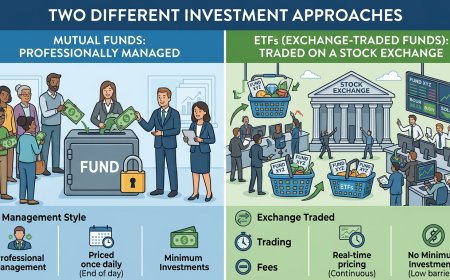
A mutual fund is a professionally managed investment vehicle that pools money from many investors and uses it to buy a diversified portfolio of assets such as stocks, government bonds, treasury bills, and real estate. Think of it as a group savings plan with professional management.
Instead of picking individual stocks and hoping for the best, you buy "units" of the fund. A licensed fund manager regulated by Nigeria's Securities and Exchange Commission (SEC) handles all the investing decisions on your behalf. You simply sit back, watch your units grow, and earn your share of the returns.
Simple analogy: Imagine 1,000 people each contributing ₦10,000 into a shared pot (₦10 million total). A financial expert then invests that pot across many assets. Everyone earns proportional returns, and no single person carries all the risk alone. That's a mutual fund.
In Nigeria, all mutual funds must be registered with the SEC. This means your money is not handed to just anyone; it is managed by licensed, vetted professionals with legal accountability.
2. How Mutual Funds Work in Nigeria
When you invest in a mutual fund, you purchase units at the current Net Asset Value (NAV), the price per unit of the fund on any given day. Your returns come in two primary ways:
Periodic Distribution (Income)
Common in money market funds, this is a regular income payment distributed quarterly, bi-annually, or annually from the interest and dividends the fund earns. If a fund yields 22% annually, that return is broken down and credited to your account over time.
Capital Appreciation (Growth)
This is when the price per unit rises. For example: you buy 100 units at ₦100 each (total ₦10,000). If the NAV rises to ₦130 after one year, your investment is now worth ₦13,000 — a 30% return. This is common in equity and balanced funds.

Important: Mutual fund gains in Nigeria are currently tax 10%
Fund managers publish daily NAV updates on the SEC Nigeria website or their own platforms. You can track your investment performance via mobile apps, email reports, or online dashboards.
3. Types of Mutual Funds in Nigeria
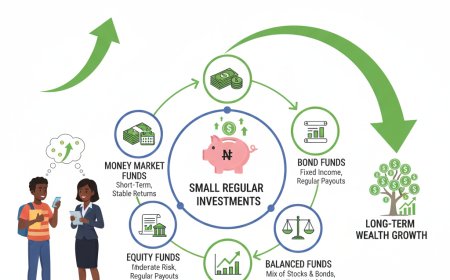
Nigeria's mutual fund market has five main categories, each designed for a different risk appetite, time horizon, and financial goal. Here is a detailed breakdown with real examples of each.
These invest in short-term, highly liquid instruments such as Treasury Bills, fixed deposits, and commercial paper. They are the safest entry point into investing — ideal for beginners and anyone who wants to earn more than a bank savings account without taking on risk. Returns are typically in the range of 22–25% annually as of 2025, beating inflation meaningfully.
Money is usually accessible within 24–48 hours, making these funds highly liquid. Think of them as a smarter, higher-yielding version of a savings account.
• Stanbic IBTC Money Market Fund — Nigeria's largest by assets under management
• United Capital Money Market Fund — yielded ~22.27% in 2024
• ARM Money Market Fund — popular with first-time investors via Cowrywise
• Cowrywise Investment Portfolio — returned 24.17% in 2024
• FBNQuest Money Market Fund — strong option for conservative investors
Equity funds invest at least 70% of their portfolio in stocks listed on the Nigerian Exchange (NGX). These are growth-oriented funds that ride the ups and downs of the Nigerian stock market. When the market booms (as it did in 2025), equity funds can generate extraordinary returns. When the market dips, values can fall significantly — so a long investment horizon is essential.
These are best suited for patient investors with a 3–7 year+ timeline who can stomach short-term volatility in exchange for higher long-term growth.
• Halo Equity Fund (Halo Asset Management) — achieved ~90% return in H1 2025
• Paramount Equity Fund (Chapel Hill Denham) — Nigeria's oldest mutual fund; 40.66% in H1 2025
• Guaranty Trust Equity Income Fund (GT Fund Managers) — 56.21% return H1 2025
• Meristem Equity Market Fund — over ₦1 billion in assets; available via Meristem app
• Zrosk Magna Equity Fund — aggressive conviction-based strategy; 42%+ in H1 2025
Balanced funds invest in a blend of stocks and bonds/fixed income, designed to give you growth potential alongside stability. When equities are performing well, the stock portion drives returns. When markets are volatile, the fixed income portion cushions the losses. They are ideal for moderate investors who want growth without the full rollercoaster of a pure equity fund.
• Alpha Morgan Balanced Fund — 67.84% return in H1 2025
• Coral Balanced Fund (FSDH Asset Management) — 67.70% return; one of Nigeria's most dependable balanced funds
• Stanbic IBTC Balanced Fund — offered directly via the Stanbic IBTC app
• ARM Discovery Balanced Fund — blends NGX equities with FGN bonds
These funds invest primarily in government bonds, corporate bonds, and other fixed-rate debt instruments. They offer more predictable, stable returns than equity funds, and are perfect for investors who want to earn above-inflation returns without the volatility of the stock market. They perform especially well during periods of high interest rates.
• Stanbic IBTC Bond Fund — invests in FGN bonds and corporate debt
• FBNQuest Fixed Income Fund — popular among conservative institutional investors
• Vetiva Fixed Income Fund — accessible on the Vetiva platform
• FSDH Fixed Income Fund — managed by one of Nigeria's most respected asset managers
• United Capital Fixed Income Fund — strong Eurobond exposure for FX hedging
Designed specifically for Nigerian investors who want to protect their wealth from naira depreciation, these funds invest in US dollar-denominated assets — such as Eurobonds, US treasuries, and global equities. Returns are earned in dollars, so your investment grows even when the naira loses value. As of 2025, these funds are among the most strategic options for wealth preservation.
• Stanbic IBTC Dollar Fund — a naira and dollar-denominated fund available on Cowrywise
• United Capital Eurobond Fund — go-to for FX-exposed investors
• Risevest Fixed Income (USD) — ~10% USD annual return on fixed income
• Risevest Real Estate Portfolio — fractional US real estate earning ~15% USD p.a.
• ARM Eurobond Fund — invests in sovereign and corporate Eurobonds
These funds are Shariah-compliant (Halal) — they do not invest in companies that deal in alcohol, tobacco, interest-bearing instruments (riba), gambling, or other prohibited activities. Instead, they use sukuk (Islamic bonds) and halal equities. They are ideal for Muslim investors or anyone who prefers ethical, values-aligned investing. Performance has been very competitive — some returned over 35% in H1 2025.
• Stanbic IBTC Imaan Fund — fully Shariah-compliant; 40.49% return in H1 2025
• ARM Halal Balanced Fund — blends Islamic equities with sukuk; 35.68% H1 2025
• FSDH Halal Fixed Income Fund — non-interest instruments only
• Cowrywise Halal Investment Plan — automated ethical investing via the Cowrywise app
4. Who Should Invest in Mutual Funds?
Mutual funds are genuinely versatile — they work for a wide range of people and financial situations. Here is who they are ideal for:
Mutual funds may NOT be right for you if: you need money urgently within days (some funds have withdrawal waiting periods), you want direct control over which exact stocks you buy, or you are chasing get-rich-quick schemes. Mutual funds are a long-game tool.
5. Best Apps to Buy Mutual Funds in Nigeria
Thanks to fintech innovation, you no longer need to visit a bank or asset manager in person. These apps make investing in mutual funds as simple as sending a WhatsApp message.
Nigeria's most mutual fund-focused app. Gives access to a wide range of naira and dollar funds from top SEC-regulated managers. Supports Halal plans, goal-based savings, and automated investing. Ideal for long-term, hands-off investors. Returns: 17–24%+ annually depending on fund.
Nigeria's most popular savings app with 4M+ users. Offers Safelock (up to 22% p.a.), fixed deposits, and pre-vetted sector investments (agriculture, real estate). Best for building the habit of saving before moving to funds.
Invest in dollar-denominated US stocks, real estate, and fixed income. Historical returns: ~14% p.a. stocks, ~15% real estate, ~10% fixed income — all in USD. Perfect for hedging against naira depreciation. SEC-regulated.
Access to 3,000+ US stocks and ETFs directly. Think of it as Nigeria's Robinhood. Best for investors who want direct exposure to global companies like Apple, Google, and Tesla. Partners with licensed brokers for security.
Direct access to Stanbic IBTC's full range — Nigeria's largest mutual fund provider by AUM. Includes money market, equity, bond, dollar, and Halal (Imaan) funds. Best for investors who want a bank-grade experience with comprehensive fund options.
One of the lowest entry points in the market is to invest as little as ₦100 in mutual funds. Offered by one of Nigeria's most respected investment firms. Good for absolute beginners testing the waters with minimal capital.
Invest in both Nigerian and international assets, US, Chinese, and European stocks, ETFs, and bonds. Supports fractional investing. Best for investors who want broad global diversification alongside local Nigerian assets.
Full-service brokerage app with access to NGX stocks, bonds, and their Equity Market Fund. Over ₦1 billion in assets. Includes margin trading for experienced investors. Good for those who want to combine direct stocks with mutual funds.
Other App are: Zecrest, I-invest, InvesNaija
Pro tip for beginners: Start with Cowrywise for naira mutual funds and add Risevest for dollar exposure as your income grows. Together, they give you both local growth and FX protection in two simple apps.
6. Advantages of Mutual Funds
- Professional management — licensed experts make all investment decisions for you
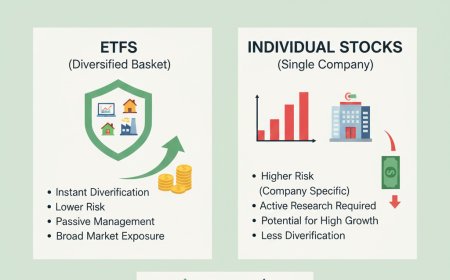
- Instant diversification — your money spreads across many assets automatically, reducing risk
- Low entry barrier — start investing with as little as ₦100–₦5,000
- Liquidity — most funds allow withdrawals within 24–48 hours
- SEC-regulated — legally protected; fund managers are licensed and accountable
- Beats bank savings — returns of 22–90%+ vs. typical bank savings of 4–6%
- Tax-free gains — currently no capital gains tax on mutual fund returns in Nigeria
- Passive wealth building — no need to monitor the market daily
- Access to large markets — even small investors gain exposure to stocks, bonds, and Eurobonds
- Automatic reinvestment — compound your gains by reinvesting returns over time
- Market risk — equity funds can lose value during stock market downturns
- Management fees — fund managers charge annual fees (usually 1–2%) that reduce your net return
- No control — you cannot choose individual stocks; the manager decides
- Inflation risk — if inflation rises faster than fund returns, real value can erode
- Lock-in periods — some funds restrict withdrawals for a set period
- Performance not guaranteed — past returns do not guarantee future results
- Currency risk — Naira funds lose real value when the Naira depreciates against the USD
- Liquidity risk — some funds (especially equity) may take longer than expected to redeem
- Overdiversification — some funds hold so many assets that strong performers barely move the needle
- Information gap — less transparency than owning stocks directly
7. Step-by-Step: How to Start Investing in Mutual Funds in Nigeria
Getting started is simpler than most people think. Here is the complete process from zero to your first investment:
1. Define your financial goal and timeline
Ask yourself: Why am I investing? Is it for an emergency fund, a house deposit, retirement, or general wealth building? Your goal determines whether you need a short-term money market fund or a long-term equity fund. Be honest about when you'll need the money.
2. Assess your risk tolerance
If seeing your balance drop 20% temporarily would cause you to panic and withdraw everything, stick with money market or fixed income funds. If you can stay calm through market swings and you're investing for 5+ years, equity or balanced funds will likely reward you more.

3. Choose your app or platform
For beginners: download Cowrywise (naira funds) or Risevest (dollar funds). For more advanced options: use the Stanbic IBTC app or Meristem app. Ensure any platform you choose is licensed by the SEC Nigeria. You can verify this at sec.gov.ng.
4. Create and verify your account (KYC)
Sign up on your chosen app. You will need to complete Know Your Customer (KYC) verification, which typically requires: a valid ID (NIN, BVN, International Passport, or Driver's License), a selfie or photo, your bank account details, and sometimes a utility bill for proof of address. This usually takes 5–15 minutes on modern apps.
5. Select your fund
Browse the available funds on the platform. For complete beginners, start with a money market fund — it is the safest, most liquid, and still delivers returns of 22%+ that beat typical savings accounts significantly. As you gain confidence and income grows, you can diversify into equity or balanced funds.
6. Fund your account and invest
Transfer money from your bank account to the platform. Most apps support instant bank transfers or USSD payments. Enter the amount you want to invest (minimum varies by platform — as low as ₦100 on Cowrywise), confirm the transaction, and your units will be allocated immediately or within one business day.
7. Set up automatic contributions
The single most powerful thing you can do is automate monthly contributions. Even ₦5,000 per month invested consistently in a money market fund compounds significantly over time. Most apps let you set up a recurring debit on a set date, so investing happens automatically, no willpower required.
8. Monitor and review (not obsessively)
Check your portfolio every 3–6 months — not every day. Frequent checking often leads to panic-selling during normal market dips, which destroys long-term returns. Review whether your fund is still aligned with your goals, and rebalance only if your financial situation has meaningfully changed.
9. Reinvest your returns
Instead of withdrawing your earnings, reinvest them. This triggers compound growth, you earn returns on your original investment and on the returns already earned. This is the real engine of long-term wealth creation. A ₦200,000 investment reinvested consistently over 10 years can grow to over ₦1.5 million in a well-performing fund.
8. Key Tips for Nigerian Investors
Start before you feel ready
The biggest mistake Nigerian investors make is waiting until they have "enough" money. There is no such threshold. ₦5,000 invested today in a 22% annual fund is worth far more than ₦50,000 invested five years from now. The earlier you start, the longer compound interest works in your favor.
Diversify across fund types
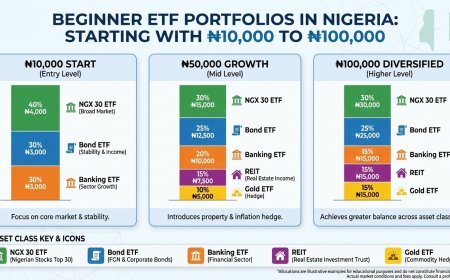
Don't put all your money in one fund type. A smart Nigerian investor might hold 40% in a money market fund for liquidity, 40% in an equity fund for long-term growth, and 20% in a dollar fund for FX protection. This balance means you are covered whether markets boom, stall, or the naira weakens.
Always verify SEC registration
Before investing in any platform, confirm it is registered with the Securities and Exchange Commission of Nigeria. You can check the SEC register at sec.gov.ng. Do not send money to any investment platform that cannot be verified on the SEC portal — regardless of how attractive the returns sound.
Understand the fees
All mutual funds charge a management fee — typically 1–2% per year. This is deducted from your returns. Compare fee structures before choosing a fund, as high fees can meaningfully reduce long-term gains. Most app-based platforms are transparent about their fee structures in the fund fact sheet.
Do not panic during market downturns
Every equity market experiences corrections, sometimes severe ones. When your equity fund drops 15% in a bad month, the worst thing you can do is sell. History shows that Nigeria's NGX has consistently recovered and reached new highs after every major downturn. Patient investors who hold through dips are the ones who capture the full recovery returns.
Final Thoughts: Your Wealth Starts Here
Mutual funds remain one of the most accessible, most regulated, and most effective tools available to everyday Nigerians who want to build real wealth. You do not need a stockbroker, a finance degree, or millions of naira to get started. You need a smartphone, a verified account, and the discipline to invest consistently.
Whether you begin with ₦5,000 in a money market fund on Cowrywise or ₦50,000 in an equity fund directly with Stanbic IBTC, the single most important step is the one you take today. Your future self will thank you for it.
Action step: Download Cowrywise or Risevest today. Fund it with whatever you can afford, even ₦5,000. Pick a money market fund. In 30 days, you will see real returns and wonder why you waited.
Disclaimer: This article is for educational purposes only and does not constitute personalised financial advice. All investments carry risk. Past performance does not guarantee future results. Please verify all platforms on the SEC Nigeria register at sec.gov.ng before investing.