Mutual Funds vs ETFs: Which Is Best for You?
Confused between mutual funds and ETFs? Learn the differences, benefits, and which investment option is best for you in Nigeria. Learn the key differences between mutual funds and ETFs, their advantages, and which option is best for your investment goals in Nigeria.
 Yahnic Chigozie
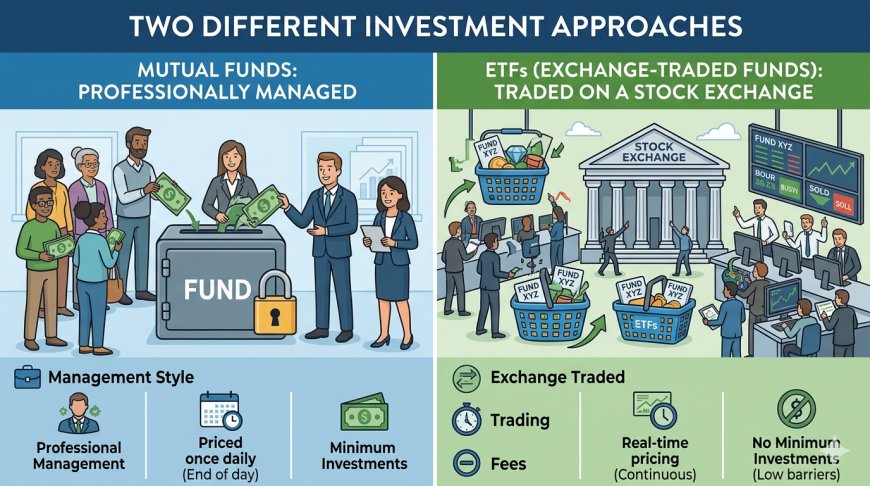
Both pool your money and grow your wealth — but they work very differently. This is the complete, honest comparison every Nigerian investor needs before choosing.
- The Core Difference at a Glance
- What Are Mutual Funds? (Quick Recap)
- What Are ETFs?
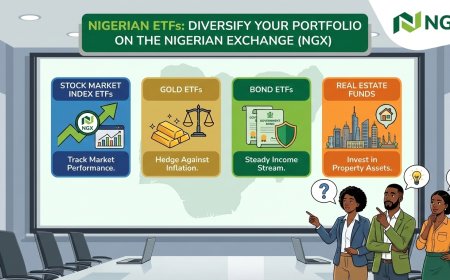
- ETFs Available in Nigeria Right Now
- Head-to-Head Comparison Table
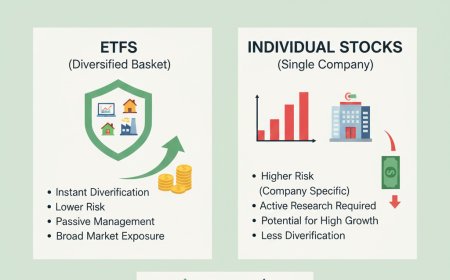
- Advantages & Disadvantages of Each
- Who Should Choose Which?
- How to Buy ETFs in Nigeria (Step-by-Step)
- Can You Hold Both? (Spoiler: Yes)
- The Verdict
If you've been following our finance content, you already know what mutual funds are and how they work in Nigeria. Now let's talk about their popular cousin, the ETF (Exchange-Traded Fund), and settle the question every young Nigerian investor is asking: which one should I actually put my money in?
The short answer: they are not rivals. They are different tools for different situations. But understanding exactly how they differ will make you a significantly smarter investor.
1. The Core Difference at a Glance

2. What Are Mutual Funds? (Quick Recap)
A mutual fund pools money from thousands of investors and hands it to a licensed, professional fund manager whose job is to pick investments that beat the market. In Nigeria, mutual funds invest in stocks on the NGX, government bonds, treasury bills, Eurobonds, or a mix of all of these — depending on the fund type.
They are priced once per day based on the Net Asset Value (NAV) of all the assets in the fund. You cannot buy or sell at 11 AM and 3 PM on the same day — your price is fixed at the close of business. They are regulated by the SEC in Nigeria and available directly through simple apps without needing any stock market knowledge.
Nigeria has over 107 SEC-registered mutual funds across categories: money market, equity, balanced, fixed income, dollar/Eurobond, and Shariah-compliant. Total assets under management (AUM) reached ₦5.94 trillion in H1 2025 — showing massive and growing adoption.
Already covered this in detail? Read our previous article: Mutual Funds in Nigeria: The Complete Guide for deep breakdowns of all six fund types with real examples.
3. What Are ETFs?
An Exchange-Traded Fund (ETF) is, as the name suggests, a fund that trades on a stock exchange — just like shares in Dangote Cement or GTBank. You buy and sell ETF units through a stockbroking account during market hours, and the price fluctuates in real-time based on supply and demand.
The key distinction from mutual funds: most ETFs are passively managed. Instead of a manager trying to outsmart the market, the ETF simply tracks an existing index. If the NGX 30 Index goes up 5%, an ETF tracking that index goes up approximately 5%. No guesswork, no manager fees for stock-picking, no active decisions.
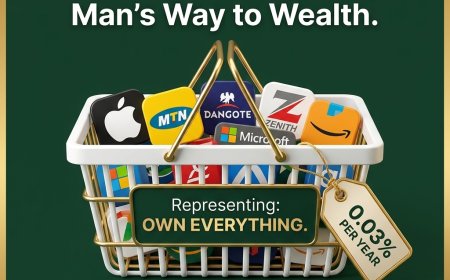
The "basket" analogy
Imagine you want to invest in the top 10 Nigerian consumer goods companies, Nestlé, Unilever, Dangote Sugar, PZ Cussons, etc., but you don't want to buy each company's shares one by one and pay 10 separate brokerage commissions. An ETF tracking the NGX Consumer Goods Index lets you buy all of them in a single transaction. You get instant diversification across an entire sector with one click.
The global trend is clear: In 2025, ETFs globally gathered nearly $980 billion in new assets as investors, especially younger ones, shifted toward lower-cost, more transparent vehicles. In Nigeria, ETF market capitalisation grew from ₦12.49 billion to ₦14.44 billion in just the first half of 2025 alone.
4. ETFs Currently Available in Nigeria

Average ETF performance in Nigeria (H1 2025): All 12 listed ETFs averaged 20.39% year-to-date returns, with 11 of 12 posting positive returns, a strong showing by any measure.
5. Head-to-Head Comparison
| Factor | Mutual Funds | ETFs |
|---|---|---|
| Management style | An actively managed fund manager picks investments. Active | Passively managed — tracks an index automatically. Passive |
| Trading | Priced once daily (end of day NAV) | Trades in real-time during market hours, like stocks, ETFs wins |
| Fees (TER) | 1–2% per year (higher due to active management) | Typically, under 0.5% per year, ETF wins |
| Minimum investment | ₦100 – ₦5,000 (apps) MF wins | ₦5,000 – ₦10,000 (via broker) |
| Accessibility | Simple apps (Cowrywise, PiggyVest, Stanbic) MF wins | Requires a stockbroking account (Meristem, Trove) |
| Transparency | Holdings disclosed quarterly | Holdings disclosed daily ETF wins |
| Short-term returns | Often outperforms in the short term (active picks), MF wins | Matches the market index only |
| Long-term returns | Many active managers underperform the market over 10+ years | Consistently competitive over long periods, ETF wins |
| Tax efficiency | Both are taxed in Nigeria, currently tied | Both are taxed in Nigeria, currently tied |
| Liquidity | 24–48 hours withdrawal after request | Instant — sell during market hours, ETF wins |
| Diversification | High — managed across many assets, Tied | High — tracks entire indices or sectors Tied |
| Who manages it? | Licensed fund manager (human decisions) | The algorithm mirrors the index automatically |
| Market variety in Nigeria | 107+ funds across all categories MF wins | 12 ETFs are currently listed on NGX |
| Best for | Beginners, passive investors, goal-based saving | Cost-conscious, market-aware, flexible investors |
6. Advantages & Disadvantages

7. Who Should Choose Which?

8. How to Buy ETFs in Nigeria (Step-by-Step)
Unlike mutual funds, where you just download an app, buying ETFs requires a few more steps. Here is the full process:
1. Open a stockbroking account
Choose a SEC-licensed stockbroker. Popular options for Nigerians include Meristem Securities (Meritrade app), Vetiva Capital, Bamboo (global + local), or Trove Finance. Download their app and signing up takes 10–20 minutes.
2. Complete KYC verification
You will need your BVN, a valid government ID (NIN slip, passport, or driver's licence), and a selfie. Some brokers also require a CSCS (Central Securities Clearing System) number, which links your identity to all stock market holdings in Nigeria. The app usually creates this automatically for you.
3. Fund your brokerage account
Transfer money via bank transfer, USSD, or card payment. Most platforms have a minimum of ₦5,000–₦10,000. Make sure your account is funded and verified before placing your first trade.
4. Search for your chosen ETF
Search by ticker name. For example: type "VSPBONDETF" for the Vetiva Bond ETF, "VCGETF" for Consumer Goods ETF, or "NEWGOLD" for the gold ETF. You'll see the current live price, trading volume, and historical performance chart.
5. Place a buy order
Enter the number of units you want to buy (not the amount in naira). Choose between a market order (buys immediately at the current price) or a limit order (only buys when the price reaches your target). For beginners, market orders are simpler. Confirm the trade, and it executes during NGX market hours (10 AM – 2:30 PM weekdays).
6. Monitor and hold
Track your ETF performance on the app. For long-term ETF investing, resist the urge to react to daily price swings — the whole point of passive indexing is that you let the market do its thing over years, not days. Review every quarter and reinvest dividends where available.
Note for Nigerian ETF investors: ETFs are not yet available directly on consumer apps like Cowrywise or PiggyVest. You must use a dedicated stockbroking platform. This is changing gradually as the Nigerian fintech ecosystem matures. You can find them on Bamboo, Chaka, and Afrinvestor 2.0.
9. Can You Hold Both? (Spoiler: Absolutely Yes)
This is not an either/or decision. The most sophisticated Nigerian investors hold both mutual funds and ETFs simultaneously — using each where it excels.
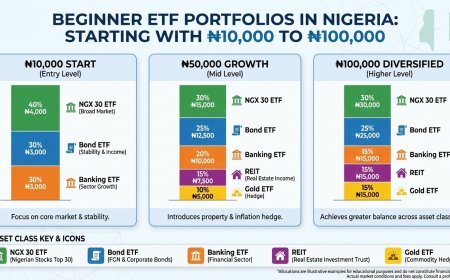
A practical example portfolio for a 25-year-old Nigerian earning ₦250,000/month:

Total: ₦65,000/month across 4 asset layers: liquidity, local growth, passive market exposure, and FX protection. This is a diversified, inflation-beating wealth-building machine for any young Nigerian professional.
The Verdict: Mutual Funds vs ETFs in Nigeria
Both are legitimate, SEC-regulated, wealth-building tools. The right choice depends on where you are in your investment journey, and ideally, you will use both.
- Are you investing for the first time
- Want simplicity via an app
- Need a capital-safe emergency fund
- Want active management to try to beat the market
- Have very limited starting capital (under ₦5,000)
- Prefer automated monthly investing
- Want Halal or ESG-compliant options
- Want the lowest fees possible
- Are you comfortable with a brokerage account
- Want real-time flexibility to buy/sell
- Are you investing for 10+ years passively
- Want gold (commodity) exposure
- Prefer full daily transparency of holdings
- Trust markets to grow more than active managers
Bottom line for young Nigerian investors: Start with a money market mutual fund to build the habit and grow your emergency reserve. Add an equity mutual fund for medium-term growth. Then open a brokerage account and begin buying an NGX ETF monthly for low-cost, long-term wealth compounding. Add a dollar fund or NewGold ETF to protect against naira risk. That combination — simple, diversified, low-cost — is how lasting wealth gets built.
Disclaimer: This article is for educational purposes only. It does not constitute personalised financial advice. All investments carry risk. Verify all platforms on the SEC Nigeria register at sec.gov.ng before investing.