How Market Cycles, Economic Cycles & CBN Policy Shape Investment Opportunities in Nigeria
Learn how the Central Bank of Nigeria, economic cycles, and market cycles interact and how to invest strategically through changing monetary conditions. & Understand the relationship between market cycles, economic cycles, CBN policy, and money supply, and how smart Nigerian investors take advantage of them.
 Yahnic Chigozie
If you truly want to understand investing in Nigeria, you must understand the connection between:
-
The Economic Cycle
-
The Market Cycle
-
The role of the Central Bank of Nigeria (CBN)
-
Money supply
-
Investment behavior
These are not separate topics.
They are deeply connected.
And once you understand the relationship, you stop reacting to news and start anticipating opportunity.
1. The Economic Cycle: The Big Engine
The economic cycle refers to the natural rise and fall of economic activity over time.
It usually moves through four phases:
-
Expansion
-
Peak
-
Contraction (Recession)
-
Recovery
During expansion:
-
Businesses grow
-
Employment rises
-
Spending increases
-
Profits improve
During contraction:
-
Growth slows
-
Inflation may rise, or demand may fall
-
Unemployment increases
-
Business profits shrink
The economy moves in waves.
And the stock market reacts to these waves.
2. The Market Cycle: The Reaction Machine
The market cycle reflects investor expectations about the economy.
Here’s the key difference:
👉 The economy moves based on actual data.
👉 The market moves based on expectations about future data.
That’s why markets often:
-
Rise before the economy improves
-
Fall before a recession is officially declared
Markets are forward-looking.
If investors believe recovery is coming, prices start rising — even if current conditions are still weak.
3. The Role of the Central Bank of Nigeria (CBN)
Now here’s where it becomes powerful.
The CBN controls:
-
Interest rates
-
Money supply
-
Liquidity in the banking system
-
Inflation management
The CBN does not directly control the stock market.
But it strongly influences it.
How CBN Influences the Economy & Market
When Inflation Is High:
The CBN may:
-
Increase interest rates
-
Reduce the money supply
-
Tighten liquidity
What happens?
-
Borrowing becomes expensive
-
Business expansion slows
-
Consumer spending drops
-
The stock market often declines
This usually pushes the economy toward contraction.
When Growth Is Weak:
The CBN may:
-
Reduce interest rates
-
Inject liquidity
-
Encourage lending
What happens?
-
Borrowing becomes cheaper
-
Businesses expand
-
Investors move money into stocks
-
Market begins recovery
Liquidity drives markets.
Money is fuel.
4. The Full Relationship (Simple Flow)
Here is the simplified chain:
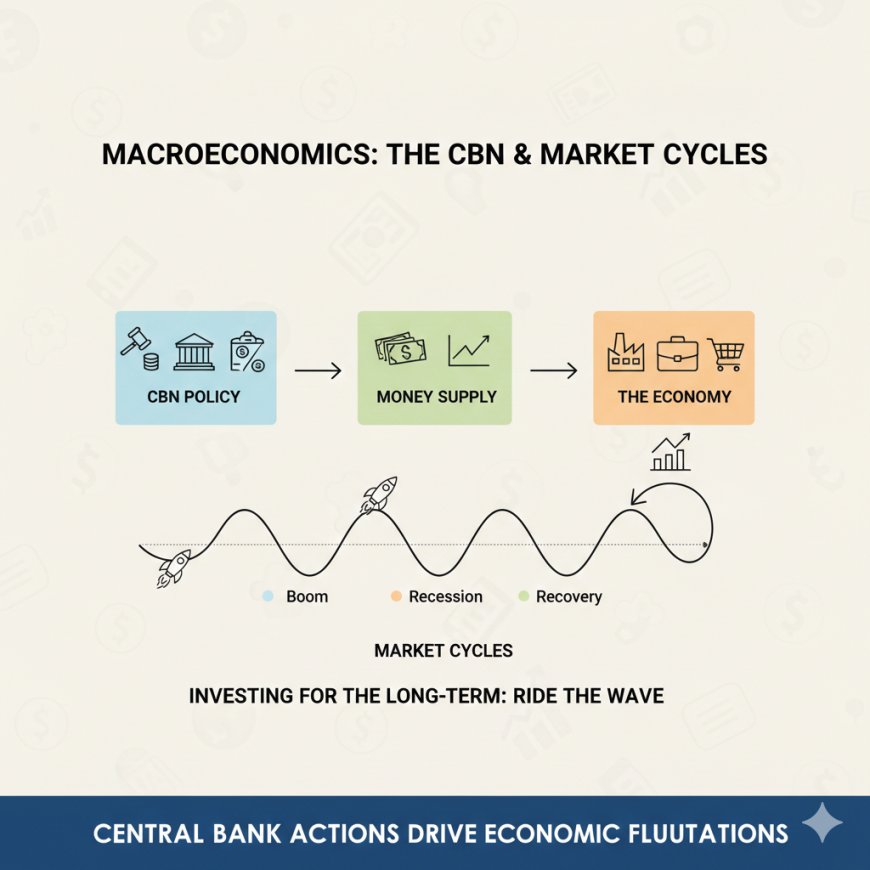
CBN Policy → Money Supply → Interest Rates → Business Activity → Investor Sentiment → Market Movement
Everything connects.
If you understand this chain, you understand the game.
5. How Money Drives Investment Behavior
When interest rates are high:
-
Fixed income looks attractive
-
Stocks become less attractive
-
Investors become cautious
When interest rates are low:
-
Savings yield less
-
Investors search for higher returns
-
Stocks and assets rise
Money always flows where it is treated best.
6 Practical Nigerian Examples
Imagine:
Inflation rises sharply.
The CBN increases interest rates aggressively.
What happens?
-
Loan costs increase
-
Corporate profits may shrink
-
The stock market weakens
-
Investors panic
Now fast forward.
Inflation stabilizes.
CBN pauses rate hikes.
Eventually, CBN begins cutting rates.
What happens?
-
Liquidity increases
-
Confidence returns
-
The market begins rising before the economy fully recovers
Smart investors watch policy shifts, not headlines.
7. How to Take Advantage as an Investor
Now the most important part.
How do you use this knowledge?
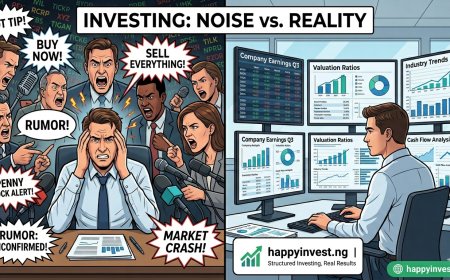
1. Watch CBN Policy Direction
Don’t just watch prices.
Watch:
-
Interest rate trends
-
Inflation data
-
Liquidity conditions
If tightening is near its peak, markets may be near a bottom.
If easing begins, early recovery may follow.
2. Accumulate During Tightening Phases
When:
-
Rates are high
-
Sentiment is weak
-
The media is negative
Quality stocks are often undervalued.
This is where long-term positions are built.
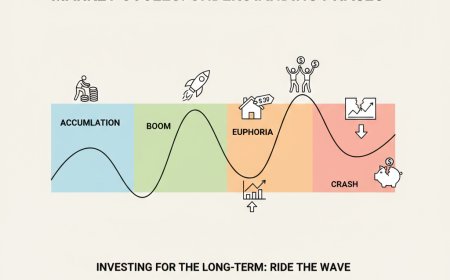
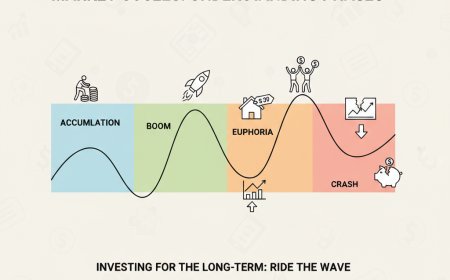
3. Be Cautious During Euphoria
When:
-
Rates have been low for a long time
-
Liquidity is abundant
-
Everyone is investing
-
Risk feels invisible
That is usually late-cycle behavior.
Protect capital.
Reduce excessive risk.
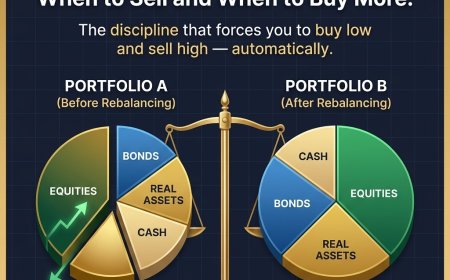
4. Diversify Across Cycles
Different assets perform differently across cycles:
-
Early recovery → equities often perform well
-
High inflation → commodities may outperform
-
Tight policy → defensive stocks and fixed income may stabilize returns
Understanding cycles improves allocation decisions.
8. The Strategic Investor’s Mindset
The average investor reacts.
The strategic investor anticipates.
Instead of asking:
“What is happening?”
Ask:
“Where are we in the economic and liquidity cycle?”
That single shift changes everything.
9. Long-Term Truth
Over decades:
-
Economies grow
-
Money supply expands
-
Businesses innovate
-
Markets rise
But cycles create volatility.
Volatility creates opportunity.
Opportunity creates wealth for prepared investors.
The economy is the engine.
The CBN controls the fuel.
The market reflects expectations.
Investors respond to incentives.
If you understand the relationship between:
-
Economic cycles
-
Market cycles
-
Central bank policy
-
Money supply
You stop being surprised by volatility.
And you start positioning strategically.
At Happyinvest.ng, we believe:
Those who understand liquidity understand markets.
Those who understand cycles build wealth.
Learn the system.
Study policy.
Invest with strategy, not emotion.