How to Invest During a Market Crash: A Smart Investor’s Guide
Discover smart strategies for investing during a market crash. Learn how to manage fear, buy quality assets, and build wealth during downturns.
 Yahnic Chigozie
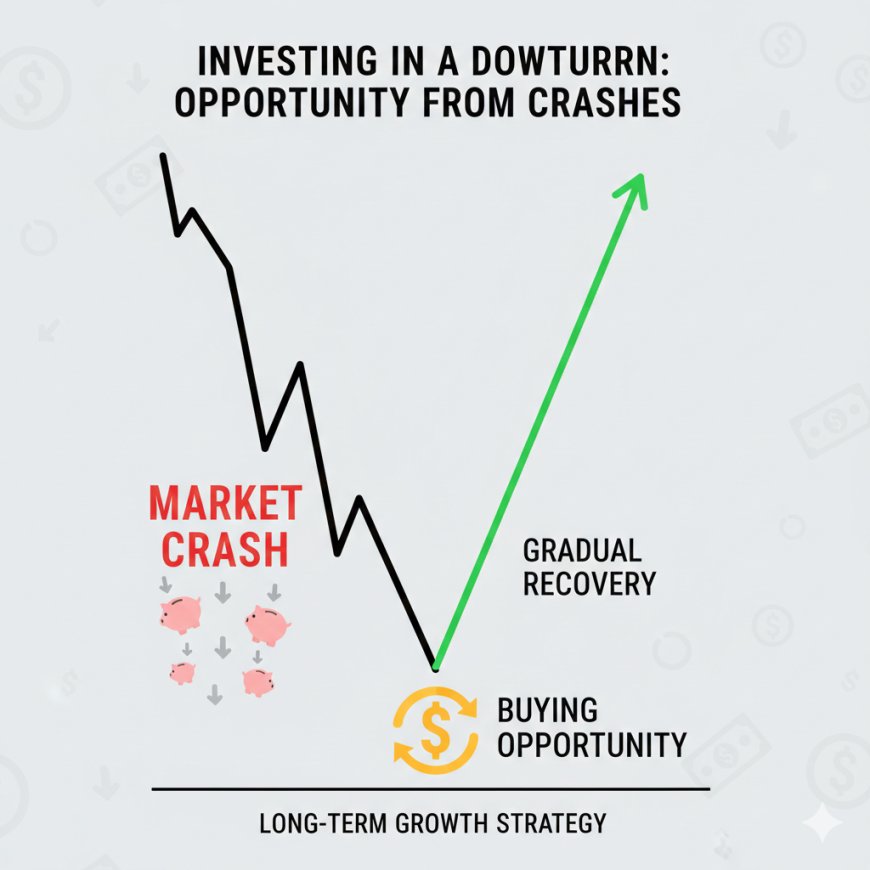
When markets crash, headlines scream.
“Billions Wiped Out.”
“Stocks in Free Fall.”
“Investors Panic.”
Prices drop. Fear rises.
And most people do the same thing:
They sell.
But history shows something powerful:
Market crashes create some of the best long-term investment opportunities.
The key question is not “Will crashes happen?”
They will.
The real question is:
Will you panic or will you prepare?

First: What Is a Market Crash?
A market crash is a rapid and significant decline in asset prices.
It often happens because of:
-
Economic recession
-
High interest rates
-
Policy shocks
-
Global crises
-
Excessive speculation bursting
Crashes feel abnormal.
But they are part of normal market cycles.
Why Most People Lose Money During Crashes
They:
-
Sell at the bottom
-
Stop investing completely
-
Lose confidence
-
Try to “wait until things are safe.”
But by the time things feel safe again, prices are already higher.
Fear causes bad timing.
The Mindset Shift You Must Make
Instead of seeing a crash as:
❌ “Everything is falling apart.”
See it as:
✅ “Quality assets are on discount.”
If you believed a company was good at ₦100, why is it suddenly bad at ₦65?
The business didn’t change overnight.
Sentiment did.
Step 1: Make Sure You’re Financially Safe First
Before investing during a crash, confirm:
✔ You have an emergency fund (3–6 months' expenses)
✔ You are not using borrowed money
✔ You are not investing money you’ll need soon
If you’re financially unstable, a crash will feel terrifying.
Safety creates confidence.

Step 2: Focus on Strong Businesses
During crashes, weak companies collapse first.
Strong companies survive and recover.
Look for:
-
Consistent earnings
-
Strong cash flow
-
Low debt
-
Essential products/services
-
Competitive advantage
In Nigeria, this might include:
-
Strong banks
-
Leading consumer goods firms
-
Telecom giants
-
Energy companies with solid fundamentals
Crashes separate quality from hype.
Step 3: Invest Gradually (Don’t Go All In)
Trying to pick the exact bottom is dangerous.
Instead:
Use gradual investing.
For example:
-
Divide your investment into 4–6 parts
-
Invest at intervals
-
Increase buying as prices drop further
This reduces regret and emotional pressure.
Consistency beats perfect timing.
Step 4: Control Emotions
During crashes:
-
The news is negative
-
Social media spreads fear
-
Friends may advise you to exit
Remember:
Markets recover before emotions do.
By the time optimism returns, the opportunity is smaller.
Discipline is your advantage.
Step 5: Think in Years, Not Months
Crashes hurt short-term portfolios.
But over 5–10 years, many crashes look like small dips on long-term charts.
Ask yourself:
“Will this company likely be stronger in five years?”
If yes, short-term volatility becomes less important.
A Practical Nigerian Example
Let’s say:
The Nigerian stock market falls 35%.
You have:
-
₦500,000 saved for investing
-
Emergency fund already secured
Instead of investing all at once:
-
₦100,000 now
-
₦100,000 if the market drops further
-
₦100,000 next month
-
Continue gradually
Two to three years later, when recovery happens, your average buying price may be far lower than that of those who waited.
Crashes reward patience.
What NOT to Do During a Crash
❌ Don’t borrow to invest
❌ Don’t chase “quick recovery” stocks blindly
❌ Don’t sell quality assets out of panic
❌ Don’t stop investing entirely
The biggest losses come from emotional decisions.
Why Crashes Create Wealth
Wealth is built by:
-
Buying when others are fearful
-
Holding through uncertainty
-
Staying disciplined
Many experienced investors made their biggest gains by investing during difficult periods.
Because when fear is high, competition is low.
You cannot prevent market crashes.
But you can prepare for them.
The difference between long-term wealth and long-term regret is often:
Calm thinking during chaotic times.
At Happyinvest.ng, we believe:
Crashes test emotions.
Strategy wins over time.
Stay disciplined.
Stay patient.
Stay invested.