
What Makes a Company a Good Investment? A Practical Guide for Smart Investors
Discover what makes a company a strong investment. Learn how to analyze revenue growth, profits, debt levels, and valuation before investing. & Learn the key factors that make a company a good investment, including revenue growth, profitability, competitive advantage, and valuation.
 Yahnic Chigozie
Many people buy stocks based on:
-
Hype
-
Social media tips
-
Friend recommendations
-
“It’s going up.”
But smart investors ask a different question:
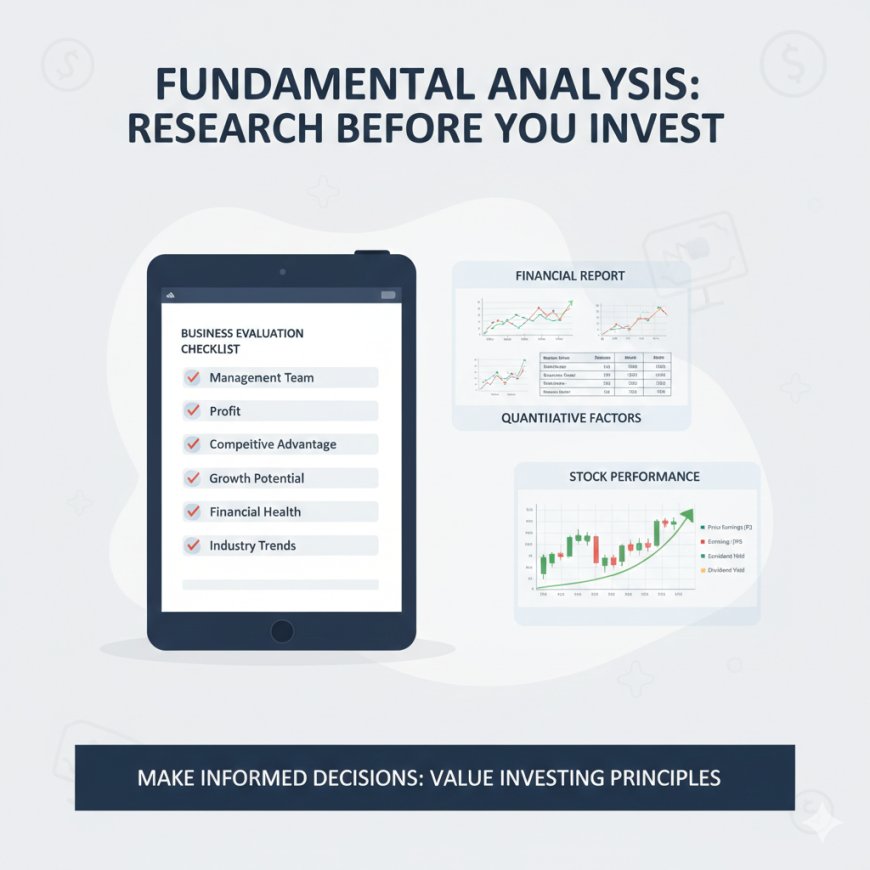
Is this a good business?
Because in the long run, stock prices follow business performance.

If you want to build lasting wealth, you must learn how to identify a strong company, not just a popular one.
Let’s break it down clearly and practically.
1 Strong and Consistent Revenue Growth
Revenue is the company’s total sales.
A good investment often shows:
-
Steady revenue growth over several years
-
Growing demand for its products or services
-
Ability to expand into new markets
Consistency matters more than one great year.
If sales grow year after year, it shows the business model works.
2. Growing Earnings (Profit Matters More Than Sales)
Revenue is important.
But profit is powerful.
A company may sell a lot but still lose money.
Look for:
-
Rising net profit
-
Improving earnings per share (EPS)
-
Efficient cost management
Strong earnings growth often drives long-term stock performance.
3. Healthy Operating Margin
Operating margin shows how efficiently a company turns revenue into operating profit.
Higher margins usually mean:
-
Strong pricing power
-
Cost control
-
Competitive advantage
If a company keeps strong margins while competitors struggle, that’s a positive sign.
4. Competitive Advantage (The “Moat”)
A great company has something that protects it from competitors.
This could be:
-
Strong brand recognition

-
Unique technology
-
Distribution network
-
Government licenses
-
High customer loyalty

Without an advantage, profits can disappear when competition increases.
Ask yourself:
“What makes this company hard to replace?”
5. Strong Balance Sheet
A good investment should not be drowning in debt.
Check for:
-
Manageable debt levels
-
Strong cash reserves
-
Ability to cover interest payments comfortably
During economic downturns, companies with strong balance sheets survive.
Weak ones collapse.
6. Reasonable Valuation
Even a great company can be a bad investment if it’s too expensive.
Look at valuation metrics such as:
-
Price-to-Earnings (P/E) ratio
-
Price-to-Book (P/B) ratio
-
Price-to-Sales (P/S) ratio
If a company’s price is far above its earnings growth, it may be overpriced.
Price matters.
Quality + Fair price = Better long-term results.
7. Strong Management Team
Management decisions shape company performance.
Look for:
-
Transparent communication
-
Clear long-term strategy
-
Responsible capital allocation
-
Consistent execution
Poor leadership can destroy even a strong business model.
8. Industry Position & Market Demand
Is the company operating in:
-
A growing industry?
-
A stable essential sector?
-
A declining market?
Businesses aligned with long-term demand trends tend to perform better over time.
For example:
-
Banking and telecom remain essential
-
Energy and infrastructure drive economies
-
Consumer goods often stay resilient
Growth industries provide tailwinds.
9. Cash Flow Strength
Cash flow is real money entering the business.
Profit can sometimes be manipulated through accounting.
Cash is harder to manipulate.
Strong free cash flow means the company can:
-
Reinvest
-
Pay dividends
-
Reduce debt
-
Expand operations
Cash flow supports sustainability.
10. Resilience During Economic Stress
Ask:
“How did this company perform during difficult periods?”
Did it:
-
Maintain profitability?
-
Recover quickly?
-
Protect shareholder value?
Resilience separates durable businesses from fragile ones.
Practical Nigerian Investor Perspective
If you’re investing in Nigeria, also consider:
-
Exposure to currency risk
-
Sensitivity to interest rates
-
Impact of inflation
-
Government regulation
Understanding macroeconomic exposure helps reduce surprises.
The Most Important Principle
A good investment is not just:
“A company whose stock price is rising.”
It is:
“A strong business bought at a reasonable price with long-term growth potential.”
Price movements are temporary.
Business fundamentals drive long-term returns.
Quick Checklist Before You Invest
Ask yourself:
✔ Is revenue growing consistently?
✔ Are profits increasing?
✔ Is debt manageable?
✔ Does it have a competitive advantage?
✔ Is the valuation reasonable?
✔ Is management trustworthy?
✔ Is the industry stable or growing?
If most answers are yes, you may be looking at a strong investment candidate.
Investing is not gambling.
It’s business ownership.
When you buy shares, you become a partial owner.
So think like an owner, not a trader.
At Happyinvest.ng, we believe:
Great investors focus on great businesses.
Great businesses create long-term wealth.
Study the fundamentals.
Be patient.
Let quality compound over time.