How to Analyze a Company Before You Invest: What Makes a Business Worth Your Money?
Stop guessing based on hot tips. Learn how to evaluate any company like a pro: revenue growth, profit, cash flow, debt, management, valuation, and red flags. Practical guide for Nigerian investors. Learn exactly what makes a company good for investment versus bad. This guide teaches Nigerian investors how to analyze financial statements, spot red flags, and make informed stock decisions, no finance degree required.
 Yahnic Chigozie

Your friend just told you about a "sure" stock. Now what?
It happens to every Nigerian investor. A friend, a WhatsApp group, or a social media influencer says: "Buy this stock, it's going to explode!"
Your heart races. You feel the fear of missing out. But here's the hard truth: hot tips are not investment strategies. They are emotions dressed up as opportunities.
This article will teach you how to move from guessing to knowing. You'll learn exactly what makes a business good for investing, what makes it bad, and how to study a company like a professional even if you've never read a financial report before.
Part One: What Makes a Business GOOD for Investing?
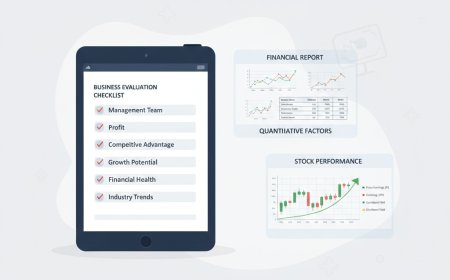
Think of a great company as a healthy tree. It has deep roots (financial strength), strong branches (competitive advantages), and it bears fruit year after year (profits and growth). Here's what to look for.
1. Strong and Growing Revenue (The Top Line)
Revenue is the money a company makes from selling its products or services. It's the fuel for everything else.
What to look for: Consistent revenue growth over 3–5 years. A good company grows its sales every year, even if just a little.
How to check: Look at the company's financial statements. Compare revenue from this year to last year, and the year before that.
> Nigerian example: Dangote Cement has consistently grown its revenue because infrastructure development continues across Nigeria and Africa. People need cement for roads, houses, and bridges.
Green flag: Revenue growth of 7–15% annually for several years.
2. Real Profits (Not Just Paper Profits)
A company can have huge sales but still lose money. You want companies that turn sales into actual profits.
What to look for: Positive and growing Profit After Tax (PAT). This is the money left after paying all expenses and taxesthe real profit available to shareholders.
How to check: Find the "Profit After Tax" or "Net Income" line in the company's income statement. Compare it year to year.
Green flag: Steady or rising profit margins (Profit ÷ Revenue × 100). Higher margins mean the company is efficient and has pricing power.
3. Healthy Earnings Per Share (EPS)
Earnings Per Share tells you how much profit is allocated to each share of stock. It's the single most-watched number by serious investors.
What to look for: EPS that grows consistently over time. A company with growing EPS is creating real value for shareholders.
How to calculate: Profit After Tax ÷ Number of Outstanding Shares.
Green flag: EPS growth of at least 15% annually for companies of moderate size. For very large, mature companies, steady single-digit growth can still be good.
P/E ratio is simpler than people make it sound.
Let me use something we all understand. Imagine you want to buy a small shop. The owner says the shop costs N5 million. You ask how much profit the shop makes per year. He says N1 million. So you’re paying N5 million for a business that gives you N1 million every year. That means it will take you 5 years to earn back what you paid. That’s a P/E of 5. Now imagine another shop costs N20 million but only makes N1 million per year. That’s 20 years to earn back your money. P/E of 20. More expensive relative to what it earns. Same thing with stocks. Take the share price and divide it by the earnings per share. If a stock costs N100 and earns N25 per share annually, the P/E is 4. If another stock costs N100 but only earns N2 per share, the P/E is 50. Lower P/E generally means you’re paying less for each naira the company earns. Higher P/E means you’re paying more. Nigerian banks right now have a P/E of 2 to 4. That means you’re paying N2 to N4 for every N1 the bank earns in profit. In most markets around the world, that’s considered very cheap. But P/E alone doesn’t tell the full story. A company with a low P/E might be cheap for a reason like declining revenue. Always check if earnings are growing before you jump in.
4. Positive Free Cash Flow (The Oxygen of Business)
Here's a secret many casual investors miss: Profit can be manipulated. Cash cannot .
Free Cash Flow (FCF) is the cash a company generates after paying for its operations and necessary investments. It's the money available to pay dividends, buy back shares, or invest in growth.
What to look for: Consistently positive free cash flow.
Why it matters: A profitable company can still fail if it runs out of cash. As one veteran financial journalist puts it: "Profit and loss is food. Cash is oxygen. You can go a couple of days without food. But oxygen? You're done".
Green flag: Free cash flow that covers dividend payments and still leaves room for growth.
5. A Real Competitive Advantage (The Moat)
A great company has something that keeps competitors away. Warren Buffett calls this an "economic moat"—like the water around a castle that keeps invaders out.
What to look for: Something the company has that others cannot easily copy.

Examples of moats:
- Strong brand: People trust and choose this company over others
- Low costs: They can offer lower prices than competitors
- Network effect: The product becomes more valuable as more people use it
- Government protection: Licenses or patents that block competitors
> Nigerian example: There is no substitute for palm oil in many products. Companies like Okomu Oil and Presco enjoy strong demand because their product is essential.
Green flag: The company maintains or grows its market share even when the economy is difficult.
6. Competent and Honest Management
The best business in the world will fail with bad leaders. Management matters enormously.
What to look for: Leaders with a track record of delivering results and treating shareholders fairly.
How to check:
- Read the CEO's message in the annual report. Is it honest about challenges?
- Check if company insiders (directors, top executives) are buying or selling their own company's shares. Insider buying is a very positive sign.
- Look for management that holds shares for the long term, not flipping for quick profit.
Green flag: Management owns significant shares. Their money is in the same boat as yours.
7. Reasonable Valuation (Not Overpaying)
Even the best company can be a bad investment if you pay too much for it.
What to look for: A stock price that is fair compared to the company's earnings, assets, or growth prospects.
Common valuation tools:
- P/E Ratio (Price-to-Earnings): Share price ÷ Earnings Per Share. A very high P/E may mean the stock is overvalued.
- P/B Ratio (Price-to-Book): Share price ÷ Book Value per share. If P/B is less than 1, you might be buying assets for less than they are worth.
- Earnings Yield: EPS ÷ Share Price × 100. The inverse of P/E. Higher is generally better.
Green flag: The stock is trading at or below its historical average valuation, and the company's fundamentals remain strong.
Part Two: What Makes a Business BAD for Investing?
Just as there are green flags, there are red flags that should make you run away. Here are the warning signs.
Red Flag 1: Inconsistent or Declining Financial Performance
If revenue is bouncing up and down like a yo-yo, or profit is shrinking year after year, something is wrong.
What to watch for: Revenue that declines in multiple years. Profits that turn into losses. Margins that keep getting smaller.
Example: A company that posted its best earnings five years ago and has been weak ever since may be losing competitive ground.
Why it's dangerous: Inconsistent performance makes the company unpredictable. You cannot count on future profits.
Red Flag 2: Weak Balance Sheet (Too Much Debt)
A company drowning in debt is a ticking time bomb. When interest rates rise or business slows, debt can crush a company.
What to watch for: More debt than assets. Debt that is growing faster than profits. Inability to pay interest from operating cash flow.
Simple check: Look at "Total Liabilities" versus "Total Assets" on the balance sheet. Liabilities should not exceed assets.
Why it's dangerous: Highly indebted companies can go bankrupt even if their products are good. Interest payments eat up money that could otherwise grow the business.
Red Flag 3: Hidden Risks You Can't Understand
If you read a company's annual report and cannot understand what they do or how they make money within the first few pages, be suspicious.
What to watch for:
- Complex jargon that obscures the real situation
- Frequent changes in accounting methods
- Raising money without clearly explaining how it will be used
Why it's dangerous: Complexity is often used to hide problems. If the company cannot explain itself clearly, perhaps there is nothing good to explain.
Red Flag 4: Poor Corporate Governance
Corporate governance means how the company is run—who makes decisions, how they are held accountable, and whether minority shareholders are treated fairly.
What to watch for:
- Related-party transactions (company doing business with companies owned by executives)
- Excessive executive pay while the company performs poorly
- No independent directors on the board
- Late release of financial results
Why it's dangerous: If the people running the company care more about themselves than about shareholders, you will lose money.
Red Flag 5: Bad Company Culture and High Staff Turnover
This is harder to measure but incredibly important. If employees are unhappy, the company is likely in trouble.
What to watch for: News of business.com scandals, frequent turnover of top executives, and reputation as a bad employer.
Why it's dangerous: Unhappy employees do poor work. Talented people leave. The company slowly deteriorates from the inside.
Red Flag 6: No Competitive Advantage
If a company has nothing special about it, competitors will eventually eat its lunch.
What to watch for: Products that are identical to competitors'. No brand loyalty. No cost advantage. Easy for new companies to enter the industry.
Why it's dangerous: Without a moat, the company can only compete on price. Price wars destroy profits for everyone.
Red Flag 7: Overvalued Stock Price
Sometimes a good company becomes a bad investment simply because the price is too high.
What to watch for: A P/E ratio far above the company's historical average or far above industry peers. Hype and excitement that seem disconnected from actual financial results.
Why it's dangerous: When you overpay, even a good company can take years to deliver a return. If the company disappoints even slightly, the stock can crash.
Part Three: A Simple Framework for Studying Any Company
Now that you know what to look for, here is a step‑by‑step process you can use for any Nigerian stock.
Step 1: Start With the Big Picture
Before looking at numbers, understand what the company does.
- What products or services does it sell?
- Who are its customers?
- Who are its main competitors?
- Is the industry growing or shrinking?
Nigerian context: Consider sectors that are essential to the Nigerian economy: financial services, telecommunications, cement, consumer goods, and energy.
Step 2: Read the Latest Financial Report
Every public company in Nigeria releases quarterly and annual reports. You can find them on the Nigerian Exchange (NGX) website or the company's investor relations page.
What to look for in order:
1. Revenue: Is it growing?
2. Profit After Tax: Is it positive and growing?
3. EPS: Is it increasing?
4. Free Cash Flow: Is it positive?
5. Debt: Is it manageable?
Step 3: Compare to Previous Years
A single year's numbers don't tell you much. Look at trends over 3–5 years.
Simple method: Put the last 5 years of revenue and profit in a table. Is the line going up? Is growth steady or bumpy?
Step 4: Compare to Competitors
A company might look good alone, but weak compared to its rivals.
What to compare: Profit margins, revenue growth, debt levels, and P/E ratios.
Example: If one cement company has a 30% profit margin and another has 15%, the first company is more efficient or has a stronger market position.
Step 5: Check What Others Are Saying
Read news about the company. Look for analyst reports (available on stockbroker platforms). Listen to what suppliers, customers, and employees say.
Warning sign: If you only hear good news, be careful. Every real company has challenges. Honest management discusses both strengths and weaknesses.
Step 6: Assess the Price
Once you understand the company's quality, ask: Is the current price reasonable?
Rule of thumb: Compare the P/E ratio to the company's earnings growth rate. If P/E is much higher than the growth rate, the stock may be overvalued.
Part Four: What About Your Friend's Tip?
Now you know how to evaluate the stock your friend recommended.
Your job is not to believe or reject the tip. Your job is to verify.
Take the company name. Run it through the steps above. Look at its revenue, profit, debt, cash flow, and management. Compare it to competitors. Check if the price is reasonable.
If the numbers support the tip, you have a real investment opportunity. If the numbers don't, you have saved yourself from a mistake.
And if you cannot find the information or understand the business? That is your answer. Do not invest in what you do not understand.
The difference between gambling and investing is simple: Gambling relies on hope. Investing relies on evidence.
Your friend's tip is not evidence. A social media post is not evidence. A hot rumor is not evidence.
Evidence is revenue that grows year after year. Evidence is profit margins that stay healthy. Evidence is free cash flow that keeps the business breathing. Evidence is honest management and a real competitive advantage.
Learn to read these signs. Practice on companies you know—MTN Nigeria, Dangote Cement, Guaranty Trust Bank, Nestle Nigeria. Look at their reports. See what the numbers tell you.
Over time, you will develop an investor's eye. You will spot opportunities others miss. And you will avoid traps that catch the careless.
That is how you build wealth in the stock market. One smart decision at a time.
Happyinvest.ng is committed to helping Nigerians invest with confidence. Continue learning with our other guides on financial analysis and wealth building.
If you have read this far i have a gift for you below to download and further your study