Rebalancing Your Portfolio: When to Sell and When to Buy More
Understand portfolio rebalancing, when to sell, and when to buy more investments. Learn how to manage risk and improve returns with a disciplined strategy. Learn what portfolio rebalancing is, why it matters, and when to sell or buy more investments to maintain a balanced and profitable portfolio.
 Yahnic Chigozie
Many people focus on what to invest in, but very few understand something equally important:
How to manage your investments after you’ve started.
Markets move. Prices change. Some investments grow faster than others. Over time, your portfolio can drift away from your original plan.
This is where portfolio rebalancing becomes essential.
What Is Portfolio Rebalancing? (Simple Definition)
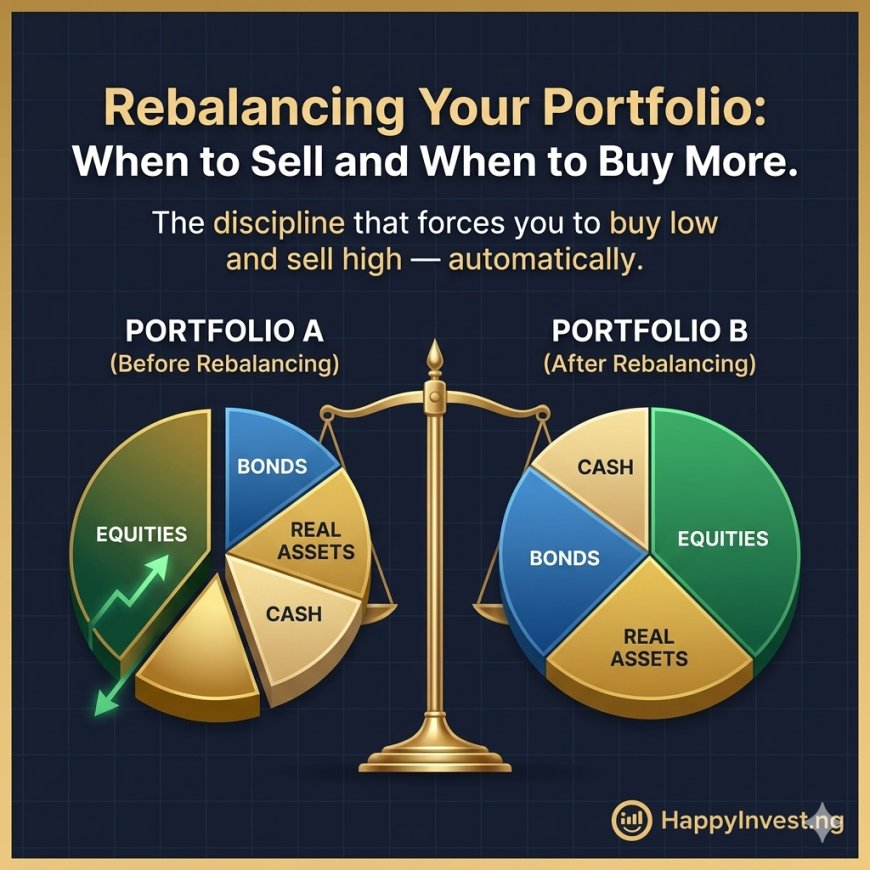
Portfolio rebalancing is the process of adjusting your investments to maintain your desired asset allocation.
In simple terms:
You periodically sell some investments and buy others to keep your portfolio balanced according to your plan.
Why Rebalancing Matters
Without rebalancing, your portfolio can become:
-
Too risky

-
Too concentrated in one asset
-
Misaligned with your goals


Example
You start with:
-
50% stocks
-
30% fixed income
-
20% crypto
After one year:
-
Stocks perform well → now 70%
-
Crypto drops → now 10%
Your portfolio is now riskier than you planned.
Rebalancing helps you bring it back to your original structure.
When Should You Rebalance Your Portfolio?
There is no one-size-fits-all answer, but here are the most effective approaches:
1. Time-Based Rebalancing
You rebalance at regular intervals:
-
Every 3 months
-
Every 6 months
-
Once a year
This method is simple and works well for beginners.
2. Threshold-Based Rebalancing
You rebalance when your allocation changes beyond a certain level.
Example:
-
If any asset moves more than 5–10% from your target
This method is more precise and keeps your risk under control.
3. Life Event Rebalancing
You rebalance when your situation changes:
-
New job or income
-
Marriage or family responsibilities
-
Financial goals change
When to Sell and When to Buy More
This is where many investors struggle emotionally.


When to Sell
You should consider selling when:
1. An Asset Has Grown Too Much
If one investment becomes too large in your portfolio:
-
It increases risk
-
You may be overexposed
Rebalancing means:
Sell part of it and redistribute.
2. Your Investment Thesis Has Changed
If the reason you invested is no longer valid:
-
Poor company performance
-
Industry decline
-
Economic changes
Then selling is justified.
3. You Need to Reduce Risk
As you approach financial goals:
-
Reduce exposure to volatile assets
-
Increase safer investments
When to Buy More
You should consider buying more when:
1. An Asset Has Dropped but Still Has Value
Market declines can create opportunities.
If fundamentals remain strong:
-
Prices are lower
-
Future growth potential remains
This is where disciplined investors take advantage.
2. Your Allocation Is Too Low
If an asset falls below your target percentage:
-
Rebalancing requires buying more
3. Long-Term Strategy Remains Intact
If nothing has changed fundamentally:
-
Market drops should not scare you
-
They can be opportunities
The Psychology of Rebalancing
Rebalancing often feels uncomfortable because it requires you to:
-
Sell what is performing well
-
Buy what is underperforming
This goes against human instincts.
Most people:
-
Chase winners
-
Avoid losers
But disciplined investors:
-
Lock in gains
-
Buy undervalued assets
Real-Life Example (Nigeria Context)
Imagine two investors:
Investor A (No Rebalancing)
-
Invests in stocks, crypto, and fixed income
-
Ignores portfolio changes
-
Ends up heavily exposed to one asset
Result:
-
High risk
-
Unstable performance
Investor B (Rebalances Regularly)
-
Reviews portfolio every 6 months
-
Adjusts allocations
-
Maintains balance
Result:
-
Controlled risk
-
More stable growth
Simple Rebalancing Strategy for Beginners
If you are just starting, use this:
-
Set your target allocation
-
Example:
-
50% stocks
-
30% fixed income
-
20% crypto
-
-
-
Review every 6 months
-
Rebalance if any asset deviates by more than 5–10%
-
Sell high-performing assets slightly
-
Buy underperforming assets carefully
Common Mistakes to Avoid
-
Rebalancing too frequently
-
Ignoring transaction costs
-
Letting emotions guide decisions
-
Holding losing investments without reason
-
Selling strong investments too early
How Rebalancing Protects Your Wealth
Rebalancing helps you:
-
Control risk
-
Avoid overexposure
-
Maintain discipline
-
Improve long-term returns
It ensures your portfolio stays aligned with your goals.
Discipline Beats Emotion
Successful investing is not just about:
-
Picking the right assets
It is about:
-
Managing them properly over time
Rebalancing teaches one powerful principle:
Buy low, sell high, but in a structured and disciplined way.
If you apply this consistently, you:
-
Reduce risk
-
Stay in control
-
Build wealth more sustainably