How Central Banks Influence Your Money
Learn how central banks influence your money through interest rates, inflation, currency value, and investment markets, explained simply.
 Yahnic Chigozie
Most people think central banks only affect economists, governments, or big banks.
But the truth is simpler and more personal 👇
Every decision a central bank makes quietly affects your money, whether you notice it or not.
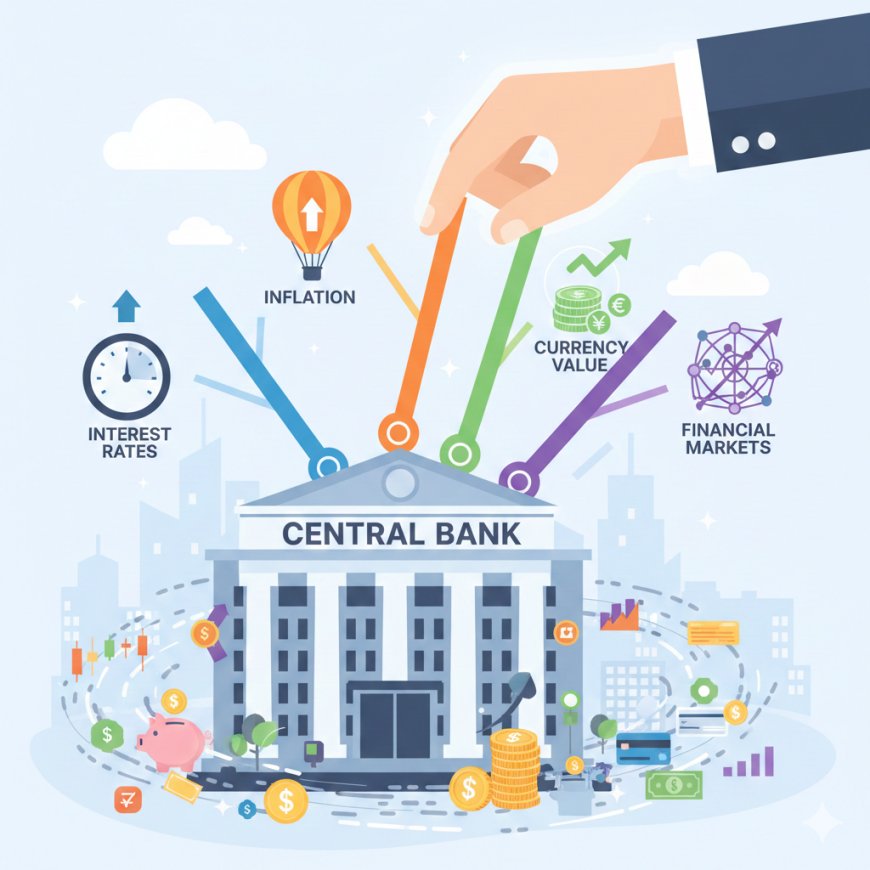
From how much you earn on savings to loan interest, inflation, currency value, and even stock prices, central banks sit at the center of it all.
Let’s break it down simply, without jargon.
What Is a Central Bank (In Plain Terms)?
A central bank is the institution that manages a country’s money system.
Examples:
-
Central Bank of Nigeria (CBN)
-
U.S. Federal Reserve (Fed)

-
European Central Bank (ECB)


Their main job is to keep the financial system stable.
That means:
-
Controlling inflation
-
Managing interest rates
-
Regulating banks
-
Protecting the value of the currency
Think of a central bank as the referee of the economy.
1. Interest Rates: The Most Powerful Tool
Interest rates affect:
-
Loans
-
Savings
-
Mortgages
-
Business expansion
-
Investments
When Central Banks Raise Interest Rates
-
Loans become expensive
-
People borrow less
-
Spending slows down
-
Inflation cools
When They Lower Interest Rates
-
Loans become cheaper
-
People borrow more
-
Businesses expand
-
Spending increases
💡 Your loan, rent, and investment returns respond directly to interest rate changes.
2. Inflation Control: Why Your Money Buys Less Over Time
Inflation means prices rise and money loses purchasing power.
If inflation is high:
-
Your salary feels smaller
-
Savings lose value
-
Daily living becomes harder


Central banks fight inflation by:
-
Raising interest rates
-
Reducing the money supply
-
Tightening lending rules
💡 If your money isn’t growing faster than inflation, you’re quietly losing wealth.
3. Money Supply: How Much Cash Is in the System
Central banks decide:
-
How much money circulates
-
When to print or withdraw money
Too Much Money
-
Prices rise fast
-
Currency weakens
-
Savings lose value
Too Little Money
-
Businesses struggle
-
Jobs disappear
-
Economy slows
💡 Balance is everything.
4. Currency Value: Why Exchange Rates Change
Central bank policies affect:
-
Naira vs Dollar
-
Import prices
-
Travel costs
-
Foreign investment
If confidence is low:
-
Currency weakens
-
Imports become expensive
-
Inflation increases
If confidence is high:
-
Currency stabilizes
-
Investment flows in
💡 Central bank credibility matters more than announcements.
5. How Central Banks Affect Your Investments
Stocks
-
Low interest rates → stocks often rise
-
High rates → stocks may struggle
Bonds
-
Rates up → bond prices fall
-
Rates down → bond prices rise
Real Assets (Property, Commodities)
-
Often benefits when inflation rises
💡 Markets move based on central bank expectations, not just decisions.
6. Why Long-Term Investors Pay Attention
Central banks don’t just manage today, they shape the future.
Smart investors:
-
Track interest rate cycles
-
Adjust asset allocation
-
Protect against inflation
-
Avoid emotional decisions
💡 Understanding central banks helps you invest with context, not fear.
You may not vote for central bank leaders, but their decisions:
-
Affect your savings
-
Shape your cost of living
-
Influence your investment returns
The goal isn’t to predict them perfectly
It’s to position your money wisely regardless of their moves.
At Happyinvest.ng, we believe:
Financial awareness is the first step to financial freedom.