Stock Splits, Reverse Splits & Buybacks: What Every Investor Should Know
Understand stock splits, reverse splits, and share buybacks. Learn how these corporate actions affect stock prices and investor returns.
 Yahnic Chigozie
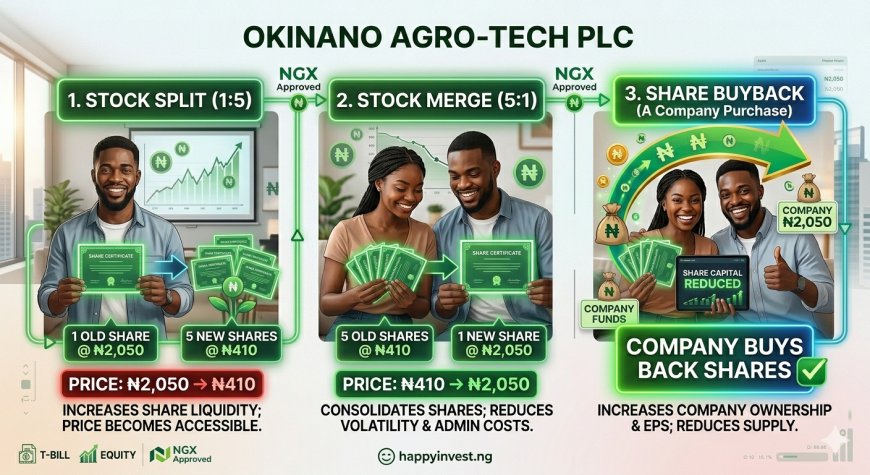
When you invest in stocks, price movements are not always driven by earnings or news.
Sometimes, companies take strategic actions that affect:
-
Share price
-
Number of shares
-
Investor perception
Three important actions you must understand are:
-
Stock splits
-
Reverse splits

-
Share buybacks (repurchases)
1. Stock Splits: Making Shares More Affordable
What Is a Stock Split? (Simple Definition)
A stock split is when a company increases the number of shares while reducing the price per share.
In simple terms:
You get more shares, but the total value stays the same.
How It Works
Example: 2-for-1 Split
-
You own 1 share at ₦1,000
-
After split → You own 2 shares at ₦500 each
Total value:
-
Before = ₦1,000
-
After = ₦1,000
Why Companies Do Stock Splits
1. Make Shares More Affordable
Lower price:
-
Attracts more investors
2. Increase Liquidity
More shares:
-
Easier to buy and sell
3. Improve Market Perception
A rising stock that splits often signals:
-
Strong growth
Impact on Investors
-
No real gain or loss immediately
-
More shares in your portfolio
-
Easier entry for new investors
2. Reverse Stock Splits: Increasing Share Price
What Is a Reverse Split? (Simple Definition)
A reverse split reduces the number of shares while increasing the price per share.
In simple terms:
You get fewer shares, but each is worth more.
How It Works
Example: 1-for-10 Reverse Split
-
You own 10 shares at ₦100
-
After split → You own 1 share at ₦1,000
Total value:
-
Still ₦1,000
Why Companies Do Reverse Splits
1. Avoid Delisting
Some exchanges require:
-
Minimum share prices
2. Improve Company Image
Very low prices may signal:

-
Weakness
3. Attract Institutional Investors
Big investors prefer:
-
Higher-priced, stable stocks
Warning Sign
Reverse splits can sometimes indicate:
-
Financial trouble
-
Declining performance
Stock Splits vs Reverse Splits
| Feature | Stock Split | Reverse Split |
|---|---|---|
| Shares | Increase | Decrease |
| Price per Share | Decreases | Increases |
| Signal | Growth | Potential weakness |
| Value Change | No | No |
3. Share Buybacks (Repurchases): Returning Value to Investors
What Is a Share Buyback? (Simple Definition)
A buyback is when a company buys back its own shares from the market.
In simple terms:
The company reduces the number of shares available.
How It Works
-
The company purchases its own shares
-
Shares are removed or held
-
Total shares outstanding decrease
Why Companies Do Buybacks
1. Increase Share Value
Fewer shares mean:
-
Earnings are spread over fewer shares
This increases:
-
Earnings Per Share (EPS)
2. Return Money to Shareholders
Instead of dividends:
-
Companies reward investors through buybacks
3. Signal Confidence
Management may believe:
-
The stock is undervalued
Example
Before buyback:
-
Profit = ₦1,000,000
-
Shares = 1,000
-
EPS = ₦1,000
After buyback:
-
Shares reduce to 800
-
EPS increases
This can:
-
Push the stock price higher
Impact of Buybacks on Investors
Positive Effects
-
Higher EPS
-
Potential price increase
-
Increased ownership percentage
Negative Considerations
-
If done at high prices → waste of cash
-
May hide weak growth
-
Reduces cash available for expansion
Stock Splits vs Buybacks: Key Difference
| Action | Purpose |
|---|---|
| Stock Split | Make shares more accessible |
| Buyback | Increase value per share |
How to Use This Information as an Investor
1. Don’t Get Excited About Splits Alone
Stock splits:
-
Do not increase the real value
-
Focus on fundamentals
2. Be Cautious with Reverse Splits
Ask:
-
Why is the company doing this?
3. Pay Attention to Buybacks
Buybacks can be:
-
A positive signal if the company is strong
4. Always Look at the Bigger Picture
Check:
-
Earnings
-
Growth
-
Financial health
Real-Life Investor Mindset
Investor A
-
Buys because of a stock split
-
Ignores fundamentals
Investor B
-
Understands splits don’t create value
-
Focuses on earnings and growth
Over time:
-
Investor A follows hype
-
Investor B builds real wealth
Common Mistakes to Avoid
-
Thinking stock splits create profit
-
Ignoring warning signs in reverse splits
-
Assuming all buybacks are good
-
Not analyzing the company's performance
Structure Changes Don’t Equal Value Creation
Stock splits and reverse splits:
-
Change structure, not value
Buybacks:
-
Can create value but only if done wisely
Because in the end:
What truly drives long-term wealth is not how shares are divided but how strong the business is behind them.