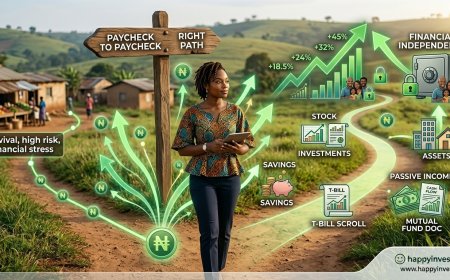
Why We Make Bad Money Decisions & How to Fix Them
Discover the 10 mental biases destroying Nigerian investors' wealth and the proven fixes. A behavioural finance guide built specifically for the Nigerian money mindset.& Your biggest financial enemy isn't inflation, bad stocks, or even fraud it lives between your ears. This deep-dive into behavioural finance unpacks the 10 cognitive biases and psychological traps that systematically destroy Nigerian investors' wealth, from loss aversion and herd mentality to the unique cultural pressures of family obligation and status signalling. Includes a bias-to-fix master table and a complete 6-part behavioural defence system.
 Yahnic Chigozie

Have you ever said:
👉 “I’ll start saving next month.”
👉 “Let me just spend this one time.”
👉 “This investment looks good, let me rush in.”
Then later… regret it?
You’re not alone.
The truth is:
👉 Bad money decisions are not just about a lack of knowledge; they are about human behavior.
Understanding why you make these mistakes is the first step to fixing them.
What Are Bad Money Decisions? (Simple Definition)
Bad money decisions are financial choices that negatively affect your future wealth, even if they feel good in the moment.
Examples include:
-
Spending more than you earn

-
Investing without research
-
Falling for scams
-
Not saving at all
Why We Make Bad Money Decisions
1. Emotions Over Logic
Money decisions are often emotional, not rational.
-
Fear → selling investments too early
-
Greed → chasing unrealistic returns
-
Excitement → impulsive spending
👉 When emotions lead, money suffers.
2. Instant Gratification
We prefer now over later.
Example:
-
Buying a new phone today vs. investing that money
This is why saving feels hard, but spending feels easy.
3. Peer Pressure & Social Media Influence
In today’s world, it’s easy to compare:
-
“My friends are investing in crypto.”
-
“Everyone is making money online.”
-
“I need to keep up.”
👉 This leads to rushed and uninformed decisions
4. Lack of Financial Education
Many people were never taught:
-
How money works
-
How investing works
-
How to manage risk
👉 So they learn through mistakes.
5. Overconfidence
Some people believe:
👉 “I know what I’m doing.”
Without proper knowledge, this leads to:
-
Big losses
-
Poor investment choices
6. Fear of Missing Out (FOMO)
This is very common in Nigeria.
Example:
-
A friend makes money from a quick investment
-
You rush in without understanding
👉 Most times, you enter late… and lose.
The Hidden Truth: Your Brain Is Wired Against You
Your brain prefers:
-
Comfort over discipline
-
Short-term pleasure over long-term gain
That’s why:
👉 Saving feels painful
👉 Spending feels good
How to Fix Bad Money Decisions
Now, the most important part solutions you can apply immediately
1. Create a Simple Financial Plan
If you don’t have a plan, anything feels right.
Start with:
-
Income
-
Expenses
-
Savings goal
-
Investment goal
👉 A plan gives your money direction.
2. Use the 24-Hour Rule
Before making any major purchase:
👉 Wait 24 hours
This helps you avoid impulse spending.
3. Automate Your Savings
Don’t rely on discipline alone.
-
Set automatic transfers
-
Save immediately after income
👉 What you don’t see, you won’t spend
4. Learn Before You Invest
Never invest blindly.
Ask:
-
How does it work?
-
What are the risks?
-
Is it realistic?
5. Limit Social Media Influence
Not everything online is real.
👉 People show profits, not losses.
6. Build Better Money Habits
Small habits create big results.
Examples:
-
Track your spending
-
Save consistently
-
Invest regularly
7. Accept That Mistakes Will Happen
Even smart investors make mistakes.
The difference is:
👉 They learn and improve
Real-Life Example (Nigeria Context)
Person A:
-
Spends impulsively
-
Follows trends
-
No savings
Person B:
-
Has a simple plan
-
Saves monthly
-
Invests with knowledge
👉 After a few years, the difference becomes clear:
Discipline beats impulse.
Common Signs You’re Making Bad Money Decisions
-
You live paycheck to paycheck
-
You don’t know where your money goes
-
You invest based on hype
-
You regret purchases often
If you see yourself here, don’t worry.
👉 Awareness is the first step to change.
Control Your Mind, Control Your Money
Money is not just numbers.
👉 It’s behavior.
If you can control:
-
Your emotions
-
Your habits
-
Your decisions
You can control your financial future.