How the Central Bank of Nigeria (CBN) Directly Affects You
A simple guide explaining how central banks influence interest rates, inflation, currency value, savings, loans, and investments.
 Yahnic Chigozie
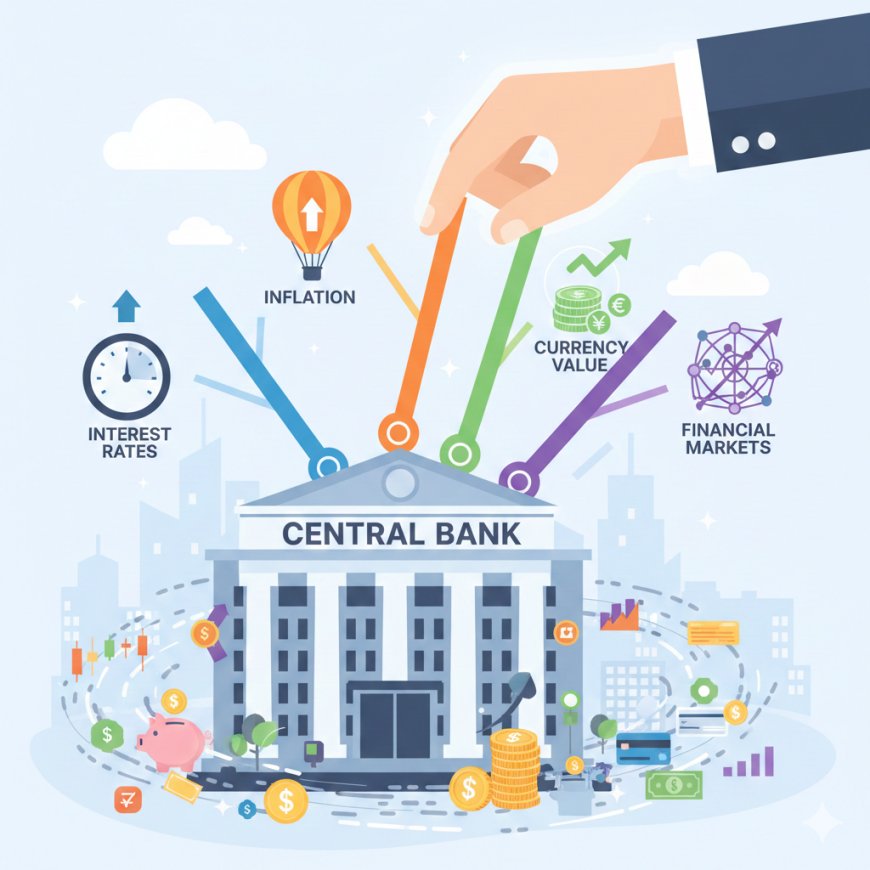
In Nigeria, the Central Bank of Nigeria (CBN) plays an even more visible role in people’s daily financial lives.
Why?
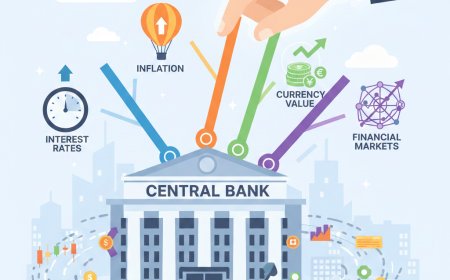
Because inflation, exchange rates, fuel prices, and interest rates are deeply connected to CBN decisions.
Let’s break it down simply.
1. The CBN and Interest Rates (MPR Explained Simply)
The Monetary Policy Rate (MPR) is the key interest rate set by the CBN.
When the CBN:
-
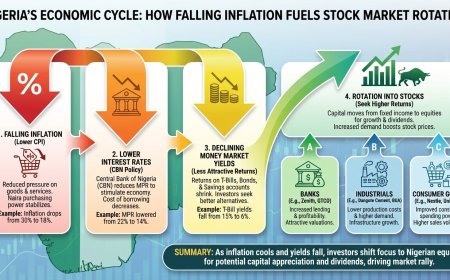
Raises MPR → banks increase loan rates
-
Lowers MPR → loans should become cheaper (though not always immediately)
What This Means for You
-
Higher MPR = higher loan repayments

-
Lower MPR = cheaper borrowing for businesses
-
Savings rates may rise slightly, but often lag inflation
💡 In Nigeria, high interest rates are usually a sign the CBN is fighting inflation or currency pressure.
2. The CBN and Inflation in Nigeria
Nigeria’s inflation is often driven by:
-
Food prices
-
Fuel costs
-
Exchange rate movements
-
Supply challenges
The CBN tries to control inflation by:
-
Raising interest rates
-
Reducing excess money in the system
-
Restricting access to cheap credit
The Reality
Even when inflation is high:
-
Savings often earn less than inflation
-
Cash loses value quickly
-
Fixed-income earners suffer most
💡 This is why Nigerians must invest not just save.
3. The CBN and the Naira Exchange Rate
The CBN influences:
-
Official exchange rates
-
FX liquidity
-
Dollar availability
When FX supply is tight:
-
The naira weakens
-
Imported goods become expensive
-
Inflation rises
When confidence improves:
-
Foreign capital flows in
-
Naira stabilizes
-
Markets become calmer
💡 Currency stability depends on trust, policy consistency, and reserves not just announcements.
4. How CBN Policies Affect Nigerian Banks
Banks are directly affected by:
-
Cash reserve requirements (CRR)
-
Interest rate policies
-
FX rules
When policies are tight:
-
Banks earn more from lending
-
But loan demand may drop
When policies are loose:
-
Lending increases
-
Business activity improves
💡 This is why banking stocks often move with interest rate expectations.
Investment Strategies for Different Interest Rate Cycles
Understanding rate cycles helps you position your money wisely, not emotionally.
1. High Interest Rate Environment (Like Nigeria Today)
What Usually Happens
-
Borrowing slows
-
Inflation remains elevated
-
Businesses face higher costs
-
Stock markets may be volatile
Smart Strategies
✔ Focus on strong, cash-generating companies
✔ Prefer businesses with low debt
✔ Look at dividend-paying stocks
✔ Consider real assets that hedge inflation
✔ Avoid highly leveraged businesses
💡 In high-rate periods, survival and cash flow matter more than hype.
2. Falling Interest Rate Environment
What Usually Happens
-
Borrowing becomes easier
-
Businesses expand
-
Stock markets often rise
-
Asset prices increase
Smart Strategies
✔ Growth stocks benefit
✔ Real estate becomes attractive
✔ Equity markets gain momentum
✔ Long-term investments perform better
💡 This is where patience is rewarded.
3. Low Interest Rate Environment
What Usually Happens
-
Cheap money flows everywhere
-
Asset prices inflate
-
Returns on savings are poor
Smart Strategies
✔ Equities outperform cash
✔ Long-term investing works best
✔ Watch out for bubbles
✔ Diversify across sectors
💡 Low rates reward investors, not savers.
4. Inflationary Periods (Common in Nigeria)
What Usually Happens
-
Purchasing power falls
-
Cash loses value
-
Cost of living rises
Smart Strategies
✔ Own productive assets
✔ Invest in companies that can raise prices
✔ Diversify beyond one asset class
✔ Think long-term, not headlines
💡 Inflation punishes idle money.
Final Nigerian Investor Takeaway
In Nigeria, you don’t control:
-
Inflation
-
Interest rates
-
Currency policy
But you do control:
-
Where do you put your money
-
How long have you invest
-
Whether your money grows or shrinks
Understanding the CBN doesn’t mean predicting every move
It means preparing your finances for any environment.
At Happyinvest.ng, our mission remains simple:
Help Nigerians protect, grow, and compound their wealth regardless of economic cycles.