Navigating the Nigerian Exchange (NGX) in 2026: What Every Investor Needs to Know
Learn the key NGX rules, trading hours, T+1 settlement cycle, price movement thresholds, brokerage requirements, and practical investing tips every Nigerian investor should know in 2026.
 Yahnic Chigozie
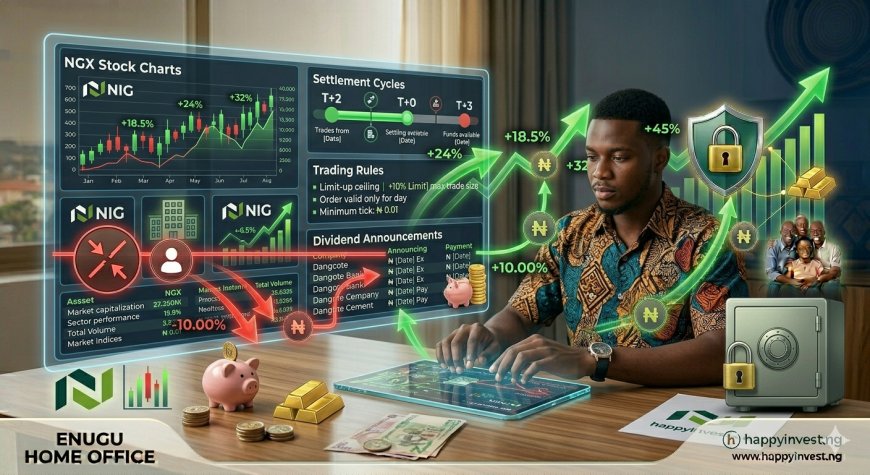
"The stock market is not just about picking good stocks. It's also about understanding the rules of the game."
Many investors spend hours researching companies, analyzing earnings reports, and studying stock charts.
But surprisingly, many don't fully understand how the Nigerian Exchange (NGX) itself works.
In 2026, the NGX introduced several important changes that every investor should understand.
Whether you're a beginner investing your first ₦10,000 or a seasoned investor managing millions of naira, understanding these rules can help you trade more effectively, avoid costly mistakes, and make better investment decisions.
At Happyinvest, we believe that successful investing starts with education.
Let's break down the key NGX rules, updates, and practical tips that every investor should know in 2026.
Why Understanding NGX Rules Matters
Imagine trying to play football without knowing:
-
The offside rule
-
The number of players allowed
-
The duration of the match
You would struggle.
The same applies to investing.
Understanding how the market operates helps investors:
-
Execute trades efficiently
-
Understand price movements
-
Reduce surprises
-
Stay compliant
-
Make informed decisions
The more you understand the market structure, the better your investing decisions become.
Major NGX Update: New Minimum Volume Thresholds for Price Movements
One of the biggest changes introduced by the NGX in recent years is the new volume threshold system for price movements.
Previously, relatively small trades could sometimes influence a stock's quoted price.
To improve market integrity and price discovery, NGX introduced a tiered system.
Stocks Trading at ₦1,000 and Above
Minimum volume required:
10,000 shares
Before the market price can officially change.
Stocks Trading Between ₦500 and ₦999.99
Minimum volume required:
50,000 shares
Before a price movement is recognized.
Stocks Trading Below ₦500
Minimum volume required:
100,000 shares
Before the market price adjusts.
Why This Rule Matters
The goal is simple:
Improve market efficiency.
Benefits include:
Reduced Price Manipulation
Small trades can no longer easily distort market prices.
Better Price Discovery
Prices now reflect more meaningful market activity.
Improved Market Confidence
Investors can have greater confidence that quoted prices represent genuine buying and selling interest.
More Efficient Trading in High-Priced Stocks
Higher-priced stocks can react more appropriately to market demand.
For investors, this means that very small trades may not affect the official closing price.
NGX Trading Hours in 2026
The Nigerian Exchange expanded trading hours in 2026.
Main Trading Session
Monday to Friday
9:00 AM – 4:00 PM (WAT)
This longer trading window provides:
-
More liquidity
-
Better price discovery
-
Increased participation
Pre-Open Session
Before the main session begins, investors can submit orders.
This helps establish opening market prices.
Public Holidays
The market remains closed on official public holidays.
Investors should monitor the annual NGX trading calendar for specific dates.
Faster Settlements: NGX Moves to T+1
One of the most investor-friendly changes in 2026 is the adoption of the:
T+1 Settlement Cycle
Effective from June 1, 2026.
T+1 means:
Trades settle one business day after execution.
Example:
You sell shares on Monday.
Funds and securities settle by Tuesday.
Benefits of T+1 Settlement
Faster Access to Funds
Investors receive proceeds sooner.
Reduced Settlement Risk
The shorter timeframe reduces operational risk.
Improved Liquidity
Money moves through the system faster.
Better Trading Efficiency
Investors can reposition capital more quickly.
This places Nigeria among the fastest-settling stock markets in Africa.
How to Become an Investor on the NGX
Many Nigerians believe investing is complicated.
The reality is much simpler.
Step 1: Open a Brokerage Account
You must register with a licensed stockbroker.
Many brokers now offer:
-
Mobile apps
-
Online trading platforms
-
Digital account opening
Step 2: Complete KYC Requirements
Regulations require investors to provide:
-
Valid identification
-
Passport photographs
-
Bank details
-
Proof of address
-
Other verification documents
This process helps protect investors and maintain market integrity.
Step 3: Obtain a CSCS Account
Shares in Nigeria are held electronically through the:
Central Securities Clearing System (CSCS)
Physical share certificates are largely a thing of the past.
Your shares are securely stored electronically.
Step 4: Start Investing
Once approved, you can:
-
Buy shares
-
Sell shares
-
Monitor your portfolio
-
Receive dividends electronically
All from your broker's platform.
Understanding Tick Sizes
Stocks do not move in random price increments.
The NGX uses:
Tick Sizes
These are the minimum amounts a stock can move.
Examples include:
-
1 Kobo
-
5 Kobo
-
10 Kobo
Depending on the stock category.
This creates orderly trading and prevents erratic price changes.
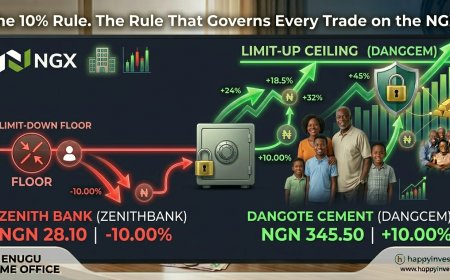
Daily Price Limits
To reduce excessive volatility, the NGX generally applies:
±10% Daily Price Movement Limits
For many listed equities.
This means a stock typically cannot rise or fall beyond the permitted range within a trading day.
The objective is to:
-
Protect investors
-
Reduce panic selling
-
Promote orderly markets
Order Types Available on NGX
The NGX Automated Trading System (ATS) supports different order types.
Market Orders
Buy or sell immediately at the best available price.
Limit Orders
Buy or sell at a specific price or better.
Many experienced investors prefer limit orders because they offer greater price control.
Why Free Float Matters
One important requirement for listed companies is maintaining a sufficient:
Free Float
Free float refers to shares available for public trading.
Companies generally must maintain:
-
Approximately 20% public float on Main Board listings
-
Alternative market-value requirements where applicable
Why does this matter?
Because higher free float generally leads to:
-
Better liquidity
-
Easier trading
-
More accurate pricing
Broker Regulations and Investor Protection
NGX and regulators maintain strict standards for brokers.
Licensed brokers must follow rules regarding:
-
Client funds
-
Risk disclosures
-
Cybersecurity
-
Record keeping
-
Ethical conduct
Violations can attract sanctions and fines.
This regulatory framework helps protect investors.
Practical Tips for Navigating the NGX in 2026
Understanding the rules is important.
Applying them effectively is even more important.
Focus on Liquid Stocks
Some stocks trade actively every day.
Others trade infrequently.
Examples of sectors that often attract higher trading activity include:
Banking
Examples:
-
GTCO
-
Zenith Bank
-
Access Holdings
-
UBA
Consumer Goods
Examples:
-
Nestlé Nigeria
-
BUA Foods
-
Dangote Sugar
Oil & Gas
Examples:
-
Seplat Energy
-
Aradel Holdings
Higher liquidity often means:
-
Easier buying and selling
-
Narrower spreads
-
Better price discovery
Monitor Corporate Actions
Many investors miss opportunities because they ignore corporate announcements.
Watch for:
-
Dividends
-
Bonus shares
-
Rights issues
-
Share buybacks
-
Mergers and acquisitions
These events can significantly impact stock prices.
Follow Company Fundamentals
Do not invest solely based on social media discussions.
Review:
-
Revenue growth
-
Earnings growth
-
Debt levels
-
Dividend history
-
Cash flow
Good businesses often outperform speculation over time.
Diversify Your Portfolio
Avoid putting all your money into one stock or sector.
Diversification helps manage risk.
A balanced portfolio may include:
-
Banking stocks
-
Consumer goods
-
Energy stocks
-
Telecommunications
-
Fixed income investments
Understand Market Risks
The NGX does not operate in isolation.
Market performance can be influenced by:
Inflation
Higher inflation affects corporate profitability.
Exchange Rates
The value of the naira impacts many businesses.
Oil Prices
Oil remains important to Nigeria's economy.
Government Policies
Tax reforms, banking regulations, and monetary policy can influence investor sentiment.
The Happyinvest Perspective
At Happyinvest, we believe understanding market structure is just as important as understanding individual stocks.
Many investors focus entirely on:
"What stock should I buy?"
But successful investors also understand:
"How does the market actually work?"
The investors who consistently succeed are often those who combine:
-
Market knowledge
-
Company research
-
Patience
-
Discipline
Understanding NGX rules gives you an advantage that many investors overlook.
Final Thoughts
The Nigerian Exchange continues evolving to become more efficient, transparent, and investor-friendly.
The 2026 updates—including:
-
New volume thresholds
-
Extended trading hours
-
Faster T+1 settlement
represent significant improvements for market participants.
Whether you're investing ₦20,000 or ₦20 million, understanding these rules can help you trade more confidently and make better decisions.
Because successful investing is not just about finding great opportunities.
It's also about understanding the market where those opportunities exist.