What Is a Bank Interest Rate and Why Should You Care? A Beginner's Guide for Nigerians
Learn what bank interest rates really mean, how inflation affects your savings, and why keeping all your money in a regular savings account may be costing you. A simple guide for Nigerians by Happyinvest.
 Yahnic Chigozie
What Is a Bank Interest Rate and Why Should You Care?
Making Money Simple. Building Wealth Daily.
Imagine this.
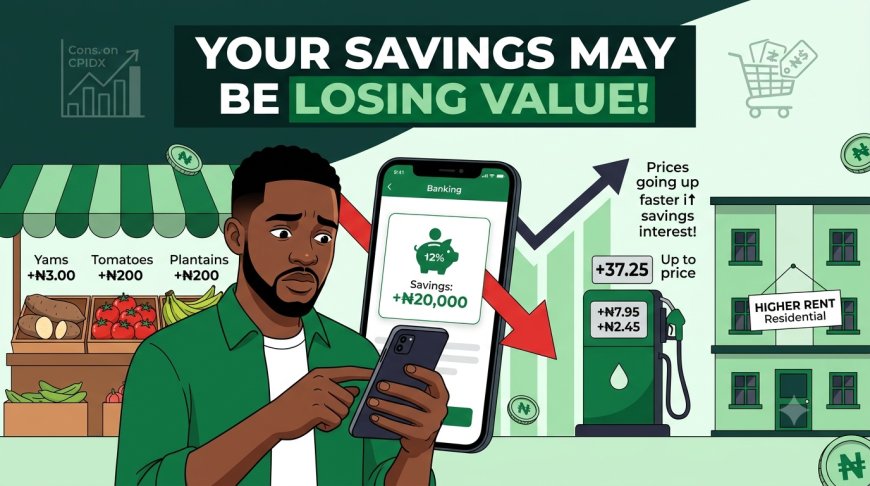
You save ₦500,000 in your bank account for one year. You check your balance after 12 months and discover you've earned about ₦20,000 in interest.
Sounds good, right?
Not so fast.
Now imagine that the price of food, transportation, rent, and other everyday expenses increased by more than ₦60,000 during that same year because of inflation.
Did you actually make money?
Or did your money quietly lose value while sitting safely in the bank?
This is one of the biggest money mistakes many Nigerians make. We believe that as long as our money is in the bank, it's growing. In reality, it might be doing the opposite.
Let's break it down.
What Is a Bank Interest Rate?
A bank interest rate is the percentage a bank pays you for keeping your money with them, or charges you when you borrow money.
There are two main types:
-
Savings interest – what the bank pays you for saving.
-
Loan interest – what you pay the bank when you borrow.
In this article, we'll focus on savings interest.
Think of it this way:
You are lending your money to the bank. The bank uses that money to lend to businesses and individuals. As a thank-you, they pay you a small percentage called interest.
A Simple Example
Let's say your savings account pays 4% interest per year.
You save:
₦100,000
After one year:
Interest earned:
₦100,000 × 4%
= ₦4,000
Your new balance becomes:
₦104,000
Easy enough.
But here's the real question…
Can ₦104,000 buy what ₦100,000 could buy a year ago?
Probably not.
That's where inflation comes in.
What Is Inflation?
Inflation simply means that the prices of goods and services increase over time.
If a bag of rice costs ₦80,000 today and ₦96,000 next year, inflation has reduced your purchasing power.
Your money buys less.

This is why simply earning interest isn't enough.
The Hidden Problem: Your Savings Can Lose Value
Let's use a realistic Nigerian example.
You save:
₦500,000
Your bank pays:
4% interest
After one year:
Interest earned:
₦20,000
Total:
₦520,000
Now, imagine inflation for that year is 25%.
That means something worth ₦500,000 today could cost around:
₦625,000
next year.
Even though your account balance increased to ₦520,000, your purchasing power dropped.
Your money grew.
But its value shrank.
This is what many people don't realize.
Why Banks Pay Low Interest
You may wonder,
"Why don't banks just pay higher interest?"
Banks are businesses.
They make money by lending your deposits to borrowers at higher interest rates than they pay savers.
For example:
-
They may pay you 4% on your savings.
-
They may lend that money at 20% or more, depending on the loan.
The difference helps cover costs, risks, and profits.
Should You Stop Saving Money?
Not at all.
Savings are important.
A savings account is still one of the best places to keep:
-
Your emergency fund.
-
Money you'll need within a few months.
-
Funds for upcoming bills or planned expenses.
The problem isn't saving.
The problem is believing that a regular savings account is the best place to grow long-term wealth.
It usually isn't.
Where Should You Keep Money Instead?
It depends on your goal.
Here's a simple guide:
If You Need the Money Soon
Use a savings account.
Example:
-
School fees
-
Rent
-
Medical emergencies
-
Christmas expenses
Liquidity matters more than high returns.
Use Ladda, which gives you 15% with a zero-fee transfer when depositing
If You Want Your Money to Grow
Consider investments that have the potential to earn higher returns over time.
Examples include:
-
Mutual funds
-
Treasury Bills
-
Stocks
-
Exchange-Traded Funds (ETFs)
-
Fixed-income investments
Every investment carries some level of risk, so always understand how it works before investing. You can use Cowrrywise, invest Naija, etc
How to Make Better Money Decisions
Instead of asking:
"Which bank pays the highest interest?"
Start asking:
-
Is my money growing faster than inflation?
-
What's my financial goal?
-
How much risk can I comfortably take?
-
Do I need this money next month or in five years?
These questions will help you make smarter financial decisions.
Three Simple Lessons to Remember
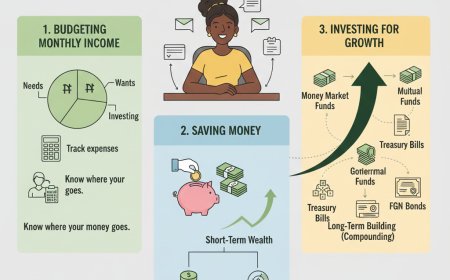
1. Saving is not the same as investing.
Saving protects your money.
Investing helps your money grow.
You need both.
2. Interest is important—but inflation matters too.
Always compare the interest you're earning with how quickly prices are rising.
3. Give every naira a job.
Some money should stay in savings.
Some should be invested for the future.
Don't let all your money sit idle if your goal is long-term wealth.
Final Thoughts
Your bank account is a great tool—but it's not a wealth-building machine.
Keeping money in savings gives you security and peace of mind, but over many years, inflation can quietly reduce what that money is worth.
Financial literacy begins with understanding this simple truth:
It's not just about whether your money is growing. It's about whether it's growing fast enough to protect and increase your purchasing power.
The earlier you understand how interest and inflation work together, the better your financial decisions will become.
At Happyinvest, we believe building wealth doesn't require complicated strategies. It starts with understanding the basics, asking the right questions, and making informed choices—one step at a time.
Making Money Simple. Building Wealth Daily.