Emergency Fund 101: Why You Need One and How to Build It Fast
Learn why an emergency fund is essential for financial security. Discover practical saving strategies, how much to save, and how Nigerians can build an emergency fund quickly.
 Yahnic Chigozie
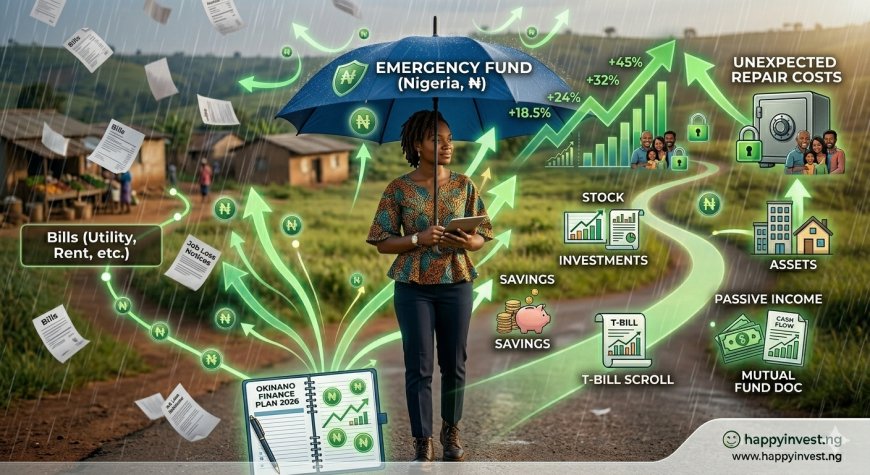
Imagine this.
Your phone suddenly stops working.
Your laptop develops a fault a week before exams.
Your company delays salaries.
A family member has a medical emergency.
Your rent increases unexpectedly.
What would happen if you needed money today?
For many Nigerians, an unexpected expense can quickly become a financial crisis.


Not because they are irresponsible.
But because they don't have an emergency fund.
At Happyinvest, we've noticed that many people are excited about investing, crypto, stocks, and business opportunities, but ignore the most important financial foundation of all:
An emergency fund.
Before you focus on building wealth, you must first protect yourself from financial shocks.
That's exactly what an emergency fund is designed to do.
What Is an Emergency Fund?
An emergency fund is money set aside specifically for unexpected expenses.
It is not:
-
Vacation money
-
Shopping money
-
Party money
-
Investment capital
It is money reserved for genuine emergencies.
Think of it as your financial shock absorber.
When life hits unexpectedly, your emergency fund absorbs the impact.
Without it, you may be forced to:
-
Borrow money
-
Sell investments
-
Use expensive loans
-
Accumulate debt
An emergency fund helps you avoid these situations.
Why an Emergency Fund Matters More Than You Think
Most people assume financial problems happen to others.
Until they happen to them.
Life is unpredictable.
No matter your income level, emergencies happen.
Examples include:


-
Medical expenses
-
Job loss
-
Car repairs
-
Business setbacks
-
School fees emergencies
-
Home repairs
-
Family obligations
An emergency fund provides breathing room when these situations occur.
The Hidden Cost of Not Having an Emergency Fund
Let's meet two people.
Emeka
Invests all his money.
Has no emergency savings.
When his laptop breaks down, he sells investments at a loss to fix it.
Amina
Has an emergency fund.
When her laptop breaks down, she pays from her savings without touching her investments.
Who is in a stronger financial position?
Amina.
The difference isn't income.
The difference is preparation.
How Much Should Your Emergency Fund Be?
A common recommendation is:
Minimum
3 months of living expenses
Better
6 months of living expenses
Strong Financial Protection
9–12 months of living expenses
Let's look at examples.
Example 1
Monthly expenses:
₦150,000
Three-month emergency fund:
₦450,000
Six-month emergency fund:
₦900,000
Example 2
Monthly expenses:
₦300,000
Three-month emergency fund:
₦900,000
Six-month emergency fund:
₦1.8 million
Notice something important.
Your emergency fund is based on expenses, not income.
Who Needs a Bigger Emergency Fund?
Some people need larger emergency funds than others.
Salary Earners
A three to six-month emergency fund may be sufficient.
Freelancers
Income can be unpredictable.
A six to twelve-month emergency fund may provide better protection.
Business Owners
Business income often fluctuates.
Larger emergency reserves can reduce stress during slow periods.
Where Should You Keep Your Emergency Fund?
Your emergency fund should be:
-
Safe
-
Accessible
-
Separate from daily spending
Good options include:
-
Savings accounts
-
Money market funds
-
High-yield savings products
Avoid placing emergency funds in highly volatile investments.
For example:
-
Stocks
-
Cryptocurrency
-
Speculative investments
Imagine needing emergency money during a market crash.
That's not a position you want to be in.
The Biggest Emergency Fund Mistake
Many people invest before building emergency savings.
This creates a dangerous situation.
Imagine:
You invest ₦500,000 in stocks.
The market declines.
At the same time, you need money urgently.
Now you may be forced to sell at a loss.
An emergency fund protects your investments from your emergencies.
How to Build an Emergency Fund Fast
The good news?
You don't need to build it overnight.
You simply need a plan.
Step 1: Set a Clear Target
Calculate your monthly expenses.
Multiply by:
-
3 months
-
6 months
Now you have a target.
Example:
Monthly expenses:
₦200,000
Emergency fund goal:
₦600,000 to ₦1.2 million
Step 2: Start Small
Many people never begin because the target looks large.
Don't focus on the final number.
Focus on the next milestone.
For example:
-
First ₦10,000
-
First ₦50,000
-
First ₦100,000
Small wins build momentum.
Step 3: Automate Your Savings
One of the best saving strategies is automation.
When income arrives:
Save first.
Spend a second.
Treat your emergency fund like a compulsory bill.
Step 4: Save Windfalls
Whenever you receive:
-
Bonuses
-
Gifts
-
Tax refunds
-
Side hustle income
Consider directing part of it toward your emergency fund.
This can accelerate progress significantly.
Step 5: Cut Temporary Expenses
If building your emergency fund is a priority, look for short-term spending reductions.
Examples:
-
Fewer impulse purchases
-
Less frequent takeout
-
Reduced subscription costs
The goal is not permanent sacrifice.
The goal is temporary acceleration.
Step 6: Create a Dedicated Account
Keep your emergency fund separate.
If it sits in the same account as your spending money, you may be tempted to use it.
Out of sight often means out of temptation.
What Counts as an Emergency?
This is important.
Use your emergency fund only for genuine emergencies.
Examples:
Real Emergencies
-
Medical bills
-
Job loss
-
Urgent repairs
-
Essential family emergencies
Not Emergencies
-
New phone upgrades
-
Concert tickets
-
Holiday spending
-
Flash sales
-
Impulse purchases
An emergency fund works only when it remains available for actual emergencies.
Emergency Fund vs Investment Account
Many beginners confuse the two.
Emergency Fund
Purpose:
Protection
Focus:
Safety and accessibility
Investment Account
Purpose:
Growth
Focus:
Long-term wealth building
Both are important.
But they serve different roles.
Think of it this way:
Your emergency fund protects your financial life.
Your investments grow your financial life.
The Psychological Benefits of an Emergency Fund
An emergency fund does more than protect your finances.
It also provides peace of mind.
When you know you have savings available:
-
Financial stress decreases
-
Decision-making improves
-
Confidence increases
-
Anxiety reduces
That peace of mind is valuable.
The Happyinvest Perspective
At Happyinvest, we believe wealth building begins with financial stability.
Before chasing high returns:
Build protection.
Before taking investment risks:
Create security.
An emergency fund may not be exciting.
It won't make headlines.
It won't double overnight.
But it can prevent financial disasters and give you the confidence to invest for the long term.
Final Thoughts
Most financial emergencies are not emergencies because they are unexpected.
They become emergencies because people are unprepared.
An emergency fund changes that.
Start today.
Even if it's:
-
₦1,000
-
₦5,000
-
₦10,000
The amount matters less than the habit.
Over time, those small savings can become a powerful financial safety net.
Because true financial success isn't just about growing wealth.
It's about protecting it, too.
And your emergency fund is the first line of defense.