How to Invest in Nigeria Without Losing Money
Scared of losing money? Learn the safest ways to invest in Nigeria, spot scams, and start building wealth today — even with ₦5,000."
 Yahnic Chigozie

Before you put one naira anywhere, read this first.
Let's be honest with each other.
The word "investment" in Nigeria has a complicated reputation. And honestly? It deserves to.
How many people do you know who have "invested" and lost money? Maybe it was a friend who put ₦500,000 into a Ponzi scheme that promised 50% returns in 30 days. Maybe it was a family member who gave money to someone running a "forex trading business" and never saw a kobo again. Maybe, and this one hurts, it was you.
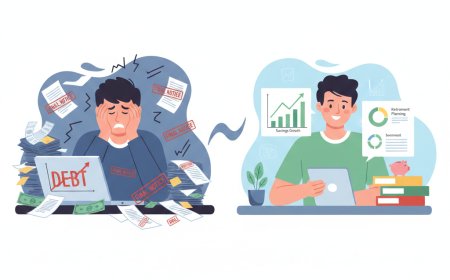
You're not alone. Millions of Nigerians have been burned. And because of that, a lot of people have decided that investing is "not for them." They'd rather keep their money under the mattress or in a regular savings account.
But here's the problem with that thinking: not investing is also a financial risk. With inflation consistently above 20% in Nigeria, your money sitting in a savings account is quietly losing value every single day.
So what do you do?
You learn how to invest smartly. You learn what to look for, what to avoid, and how to put your money in places that actually work. That's exactly what we're going to do today.
Let's get into it.
First, Let's Understand Why People Lose Money When Investing
Before I show you how to protect yourself, you need to understand the enemy. Why do people lose money in the first place?
There are four main reasons:
1. Greed over logic. Someone promises you 100% return in 30 days, and your brain says, "This is my opportunity." Your heart races. You ignore the red flags. You invest. You lose. This is the number one reason Nigerians lose money chasing returns that are too good to be true.
2. Investing without understanding. You hear "crypto" is making people rich, so you jump in without understanding how it works, when to buy, or when to sell. You panic when the market dips and sell at a loss. You didn't lose because crypto is bad; you lost because you didn't understand what you were doing.
3. Putting all eggs in one basket. You invest everything in one stock, one business, one scheme. It fails. Everything is gone. Diversification, spreading your money across different investments, is one of the most basic protections that most beginners ignore.
4. No plan, no timeline. Some investments are for the short term. Some are for the long term. If you invest money you need in 3 months in something that needs 3 years to grow, you'll be forced to pull out early, often at a loss.
Understanding these four traps is already half the battle.
The Golden Rule of Investing in Nigeria
Before anything else, remember this:
If it sounds too good to be true, it is too good to be true.
I know you've heard this before. But let me make it real for you with Nigerian numbers.
A legitimate Treasury Bill in Nigeria offers roughly 18–22% annual return. A solid Money Market Fund offers around 15–20% annually. A well-performing stock might give you 20–40% annually in a good year.
So if anyone is promising you 50% in a month, 100% in 30 days, or double your money in 2 weeks, what they are actually promising you is fraud dressed in fine language.
Run. Don't walk. Run.
That one rule, if strictly followed, will save you from losing the majority of money that Nigerians lose to "investments."
Where Can You Actually Invest in Nigeria? (Legit Options)
Now let's talk about where smart, careful Nigerians are actually putting their money and growing it.
1. Treasury Bills (T-Bills) — The Safest Starting Point
Risk Level: Very Low Returns: ~18–22% per annum (as of recent CBN rates) Who it's for: Absolute beginners, anyone who wants safety first
Treasury Bills are issued by the Nigerian government through the Central Bank of Nigeria (CBN). When you buy a T-Bill, you are essentially lending money to the government, and they pay you back with interest after 91, 182, or 364 days.
The government of Nigeria is not going to disappear. Your money is about as safe as it gets.
You can access T-Bills through your bank, licensed brokers, or platforms like Bamboo, I-invest, Afrinvestor 2.0, and invest Naija, which pool funds to access these instruments.
Example: You invest ₦200,000 in a 364-day T-Bill at 20%. At the end of one year, you receive approximately ₦240,000. You did nothing. Your money worked.
2. Money Market Funds — Better Than Your Savings Account
Risk Level: Low Returns: ~15–20% per annum Who it's for: Anyone with idle cash they want to grow
A Money Market Fund pools money from many investors and puts it into safe, short-term instruments like T-Bills and bank placements. You earn better returns than a regular savings account, you can access your money relatively quickly, and it's regulated by the SEC (Securities and Exchange Commission).

Platforms like Cowrywise, ARM Investments, Stanbic IBTC, and others offer Money Market Funds.
Example: Put ₦50,000 in a Money Market Fund. Forget about it for a year. You'll likely pull out around ₦57,500–₦60,000 without touching the stock market.
3. Nigerian Stock Market (NGX) — For the Patient Investor
Risk Level: Medium to High Returns: Variable can be 20% to 100%+ in good years, or negative in bad years. Who it's for: People willing to learn, patient enough to wait
The Nigerian Exchange (NGX) allows you to buy shares of Nigerian companies MTN Nigeria, Dangote Cement, Zenith Bank, Stanbic IBTC, and many others. When these companies grow and make profits, your shares grow in value too.
The keyword here is patience. The stock market goes up and down. If you invest today and panic sell in three months because the price dropped, you'll lose money. But if you invest in solid, fundamentally strong companies and hold for 3–5 years? The historical returns are very impressive.
How to start: Open a stockbroking account with a licensed broker or use apps like Bamboo, Trove, or Chaka, which simplify the process.
Real example: Someone who bought Zenith Bank shares a few years ago and held through the fluctuations has seen significant returns plus dividend payments along the way.
4. Real Estate — The Nigerian Classic
Risk Level: Medium (if done properly) Returns: Rental income + capital appreciation Who it's for: Those with more capital or access to cooperative/group savings
Nigerians trust land. And with good reason, property in most Nigerian cities has consistently appreciated in value over time. Even ₦500,000 put into a plot of land in an emerging area can become ₦2 million in 5–7 years.
But here's where people get burned: fake documents, fraudulent agents, and unverified land. Always do due diligence. Verify titles. Use a verified lawyer. Never pay for land without seeing a Certificate of Occupancy (C of O) or Governor's Consent.
If you don't have enough capital on your own, look into Real Estate Investment Trusts (REITs). These let you invest in real estate through the stock market with as little as a few thousand naira.
5. Dollar-Based Investments — Protect Yourself from Naira Depreciation
Risk Level: Low to Medium Returns: Dollar growth + exchange rate gain Who it's for: Anyone worried about the naira losing value
The naira has lost significant value against the dollar over the years. One smart strategy? Hold some of your investments in dollar-denominated instruments.
Platforms like Risevest and Bamboo allow you to invest in dollar assets, US stocks, dollar fixed income, and ETFs right from Nigeria. If the naira weakens further (which has been the historical trend), not only are your investments growing, but their naira value is rising too.
Example: ₦500,000 converted to roughly $300 (at ₦1,650/$1). If the naira weakens to ₦2,000/$1 next year and your investment grows by 10%, your $330 is now worth ₦660,000 — a ₦160,000 gain.
6. Agricultural Investments — High Returns, Higher Risk
Risk Level: Medium to High Returns: 15–30%+ per season Who it's for: Those willing to research and diversify
Platforms like ThriveAgric and Farmcrowdy allow everyday Nigerians to invest in farming rice, maize, poultry, and fish farming and earn returns when the harvest is sold.
The risk? Agriculture has real-world risks: drought, floods, disease, and market price drops. Never put your entire savings here. But as a portion of a diversified portfolio? It can generate solid returns.
Always verify: Is the platform licensed? Do they have a physical address? Can you visit the farm? These questions protect you.
How to Build a Simple Investment Portfolio as a Nigerian Beginner
You don't need to do everything at once. Here's how to think about it:
Let's say you have ₦100,000 to invest.
| Allocation | Amount | Where |
|---|---|---|
| Safety (low risk) | ₦40,000 | Money Market Fund or T-Bills |
| Growth (medium risk) | ₦35,000 | NGX stocks (blue chip companies) |
| Dollar hedge | ₦15,000 | Dollar investment on Risevest/Bamboo |
| High-risk/high-reward | ₦10,000 | Agricultural investment or explore crypto (only what you can afford to lose) |
This way, even if one area underperforms, the others are holding. You are never wiped out.
Red Flags: How to Know You're About to Lose Your Money
Before you give anyone your money, check for these warning signs:
🚩 Guaranteed returns — No legitimate investment guarantees fixed returns. Markets fluctuate.
🚩 Returns above 10% per month — That's 120% annually. No legitimate business generates that consistently.
🚩 Pressure to invest quickly — "This offer closes tonight." "Don't miss out." Scammers create urgency deliberately.
🚩 No SEC or CBN registration — Every legitimate Nigerian investment platform must be registered. Check the SEC website before you invest anywhere.
🚩 Referral-based income — If the platform makes more money when you bring in new members than from actual investments, it's a Ponzi scheme. Full stop.
🚩 No physical address or verifiable information — Legitimate companies have offices, registration numbers, and licensed directors. Find them before you send money.
The 5 Rules of Safe Investing in Nigeria
Write these down. Screenshot them. Pin them somewhere:
Rule 1: Never invest what you cannot afford to lose, especially in volatile assets. Your rent money, your school fees, your emergency fund, these are off-limits for investing.
Rule 2: Start with the safest options first — Build confidence and knowledge before moving to riskier assets. T-Bills and Money Market Funds first. Stocks second. Crypto last and only with money you're okay losing.
Rule 3: Diversify always — Spread your money. Never put everything in one place, one asset, one person.
Rule 4: Do your research before anything — Google the platform. Search for reviews. Check SEC registration. Ask people who've used it. Thirty minutes of research can save you your entire life savings.
Rule 5: Think long-term — The best investors are patient. They don't panic when prices drop. They don't sell in fear. They understand that time in the market beats timing the market always.
Your 30-Day Action Plan to Start Investing Safely
Here's exactly what to do this month:
Week 1: Calculate how much money you can set aside for investing, even if it's just ₦5,000. Open a Cowrywise or PiggyVest account and put that money in a Money Market Fund. You're now an investor.
Week 2: Spend 30 minutes learning about the Nigerian stock market. Download the Bamboo or Trove app. Read about blue-chip stocks like Dangote Cement, Zenith Bank, or MTN Nigeria.
Week 3: Verify any platform you're considering using. Go to the SEC Nigeria website (sec.gov.ng) and confirm it's listed. If it's not there, don't touch it.
Week 4: Review your budget and commit to a monthly investment amount. Even ₦10,000 a month, invested consistently at 15–20% annual return, builds serious wealth over time.
The secret isn't the amount. It's the consistency.
Final Word
Investing in Nigeria is not gambling. It's not magic. And it's not reserved for the rich.
It is a skill. A learnable, practisable skill that ordinary Nigerians are using right now to quietly build wealth while their mates are complaining that "things are hard."
Yes, people lose money. But they lose money because of ignorance, greed, or impatience, not because investing itself is bad. Now that you know better, you can do better.
Start small. Start safe. Start now.
Because the best time to invest was five years ago. The second best time? Today.
Found this helpful? Share it with someone who needs to hear it. And if you have questions about any of the platforms or investments mentioned here, drop them in the comments. We answer every one.