Understanding Market Cycles (Booms & Crashes): How Investors Build Wealth in Every Season
Learn how market cycles work, including booms and crashes. Discover how Nigerian investors can prepare, stay disciplined, and build wealth during both bull and bear markets.
 Yahnic Chigozie
Markets do not move in straight lines.
They rise.
They peak.
They crash.
They recover.
If you don’t understand market cycles, you will celebrate at the top and panic at the bottom.
Understanding market cycles (booms and crashes) is one of the most important skills for investors in Nigeria and globally.
Because wealth is not built by avoiding cycles.
It is built by understanding them.
What Are Market Cycles?
A market cycle refers to the natural rise and fall of financial markets over time.
Markets move in predictable psychological and economic patterns that repeat across decades.
These cycles affect:
-
Stock markets
-
Real estate
-
Cryptocurrency
-
Commodities
-
Even business sectors
No market goes up forever.
No market crashes forever
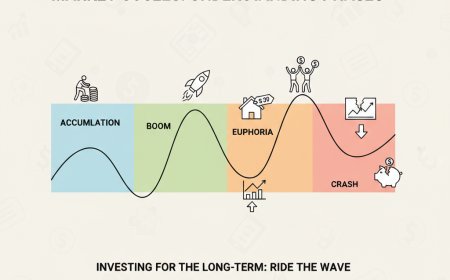
The Four Phases of a Market Cycle
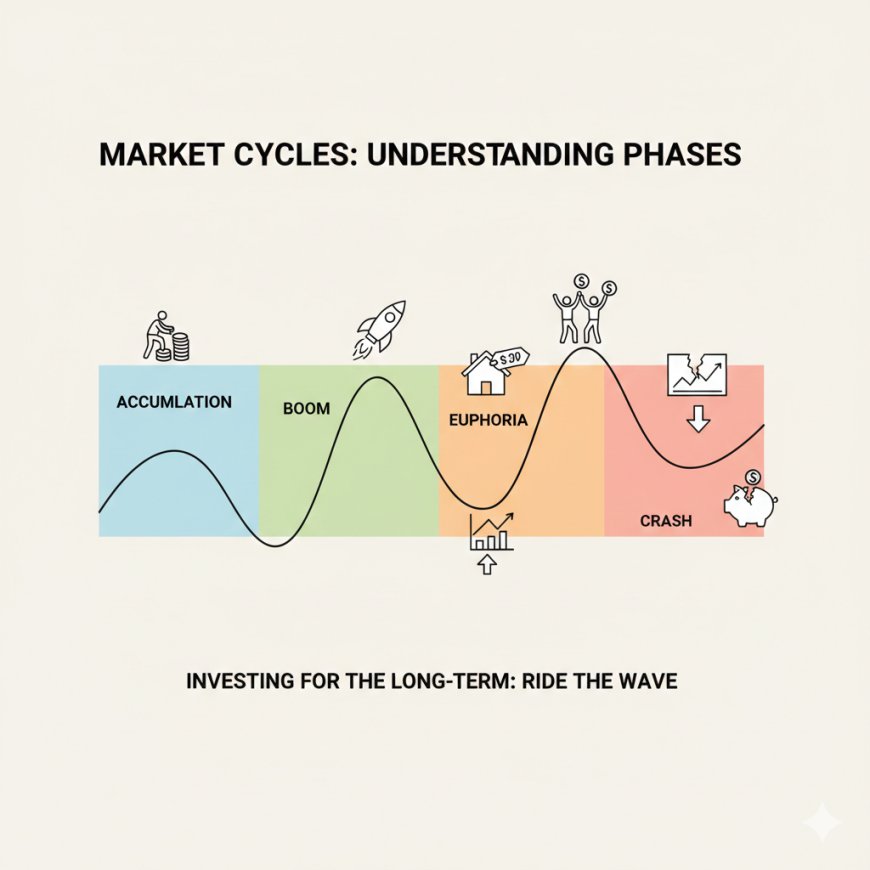
Most market cycles follow four main stages:
1. Accumulation Phase (Quiet Opportunity)
This happens after a crash.
-
Prices are low
-
The news is negative
-
Most people are afraid
-
Smart investors start buying
This is when long-term wealth is built.
Emotion in the market: Fear and doubt.
2. Expansion Phase (Growth & Optimism)
The economy improves.
-
Corporate earnings rise
-
Confidence returns
-
Prices steadily increase
-
More investors enter
This phase creates strong returns.
Emotion in the market: Optimism and confidence.
3. Peak Phase (Euphoria & Overconfidence)
This is the dangerous stage.
-
Everyone is talking about investing

-
“This time is different” becomes popular
-
Valuations become expensive
-
Risk-taking increases
People who were not interested before suddenly want to invest.
Emotion in the market: Greed and excitement.
4 Contraction Phase (Crash & Panic)
Reality returns.
-
Prices fall sharply
-
Weak businesses collapse
-
Investors panic-sell
-
Media headlines become negative
This is where emotional investors lose money.
Emotion in the market: Fear and regret.
And then…
The cycle starts again.
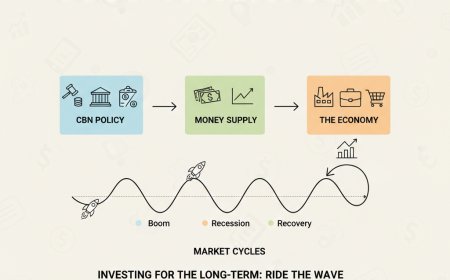
Why Market Cycles Happen
Market cycles are driven by:
-
Economic growth and recession
-
Interest rate changes
-
Inflation trends
-
Government policy
-
Investor psychology
But the strongest force?
Human emotion.
Greed pushes markets up too far.
Fear pushes markets down too much.
Smart investors understand this.
Understanding Market Cycles in Nigeria
Nigeria is not isolated.
Global cycles affect:
-
NGX stocks
-
Oil prices
-
Banking sector performance
-
Real estate
-
Naira value
For example:
When oil prices rise → Nigeria benefits.
When global markets crash → foreign investors withdraw.
Market cycles hit emerging markets harder and faster.
That is why Nigerian investors must be even more strategic.
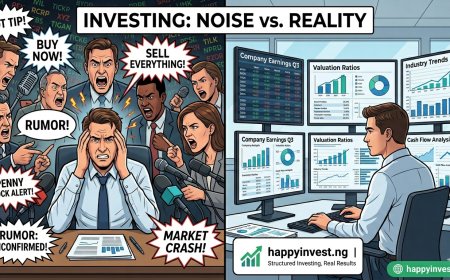
The Emotional Trap: Buying High, Selling Low
Most people:
-
Buy during excitement (peak)
-
Panic during crashes (bottom)
This is the opposite of wealth building.
Market crashes feel painful.
But historically, they create the best long-term opportunities.
The investors who built generational wealth did not avoid crashes.
They prepared for them.
Practical Strategy: How to Invest Through Market Cycles
Here is what disciplined investors do:
1. Build an Emergency Fund
So you are not forced to sell during crashes.
2. Invest Consistently
Use dollar-cost averaging instead of trying to time the market.
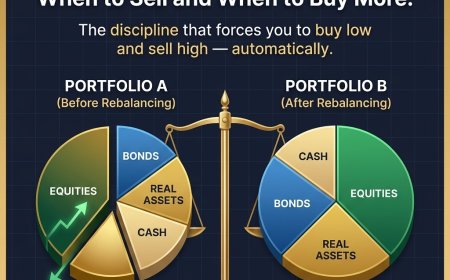
3. Diversify Assets
Stocks, fixed income, global exposure, and inflation-resistant assets.
4. Focus on Fundamentals
Buy strong businesses with healthy cash flow and solid balance sheets.
5. Stay Emotionally Disciplined
Markets reward patience more than intelligence.
What Happens If You Ignore Market Cycles?
If you don’t understand cycles:
-
You will overpay during booms
-
You will panic during crashes
-
You will follow hype
-
You will lose confidence
But if you understand cycles:
-
You buy when others are fearful
-
You stay calm during volatility
-
You build long-term wealth
Market cycles are not enemies.
They are opportunities in disguise.
Booms create excitement.
Crashes create opportunity.
Understanding market cycles (booms and crashes) gives you an advantage most investors never develop.
The market is not designed to reward emotions.
It rewards discipline.
The question is:
When the next crash comes,
will you panic…
or will you prepare?