Understanding Market Cycles: Booms, Crashes, and Smart Investing Strategy
Learn how market cycles work, why booms and crashes occur, and how to invest strategically through market volatility.
 Yahnic Chigozie
If you invest long enough, you will experience both:
📈 Booms — when everything seems profitable.
📉 Crashes — when everything feels dangerous.
These movements are not random.
They are called market cycles, and understanding them can completely change how you invest.
Because markets don’t move in straight lines.
They move in waves.
And every wave has a pattern.
What Is a Market Cycle?
A market cycle is the natural pattern of growth and decline in asset prices over time.
It reflects:
-
Economic expansion and contraction
-
Investor psychology (greed and fear)
-
Business performance
-
Interest rates
-
Liquidity in the financial system
Every market, stocks, real estate, commodities, and crypto go through cycles.
The problem?
Most people think the current phase will last forever.
It never does.
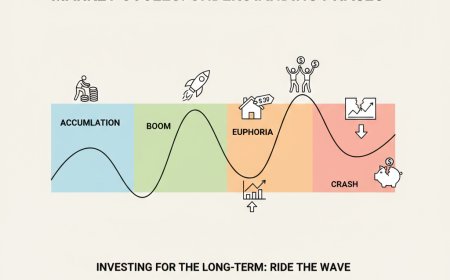
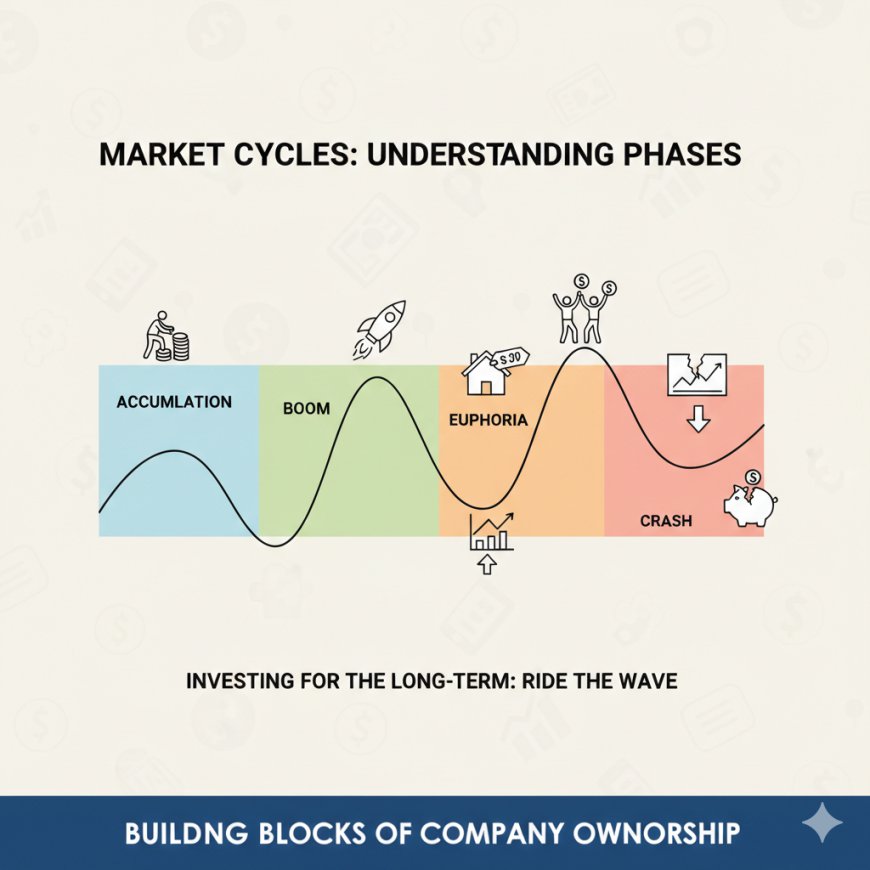
The Four Main Phases of a Market Cycle
Most cycles follow four recognizable stages:
1. Accumulation Phase (The Quiet Bottom)
This comes after a crash.
-
Prices are low
-
The news is negative
-
Confidence is weak
-
Few people are investing
Only patient, strategic investors begin buying here.
It feels uncomfortable, but this is often where long-term wealth starts.
2. Expansion Phase (The Growth Period)
The economy improves.
-
Earnings increase
-
Optimism returns
-
Investors gain confidence
-
Prices rise steadily
This is the “healthy growth” stage.
Most people feel comfortable investing here.
3. Euphoria Phase (The Peak)
This is the dangerous stage.
-
Everyone is talking about investing

-
Social media shows profits everywhere
-
People believe prices will only go up
-
Risk is ignored
Speculation increases.
Debt increases.
Valuations become unrealistic.
This is usually near the top of the cycle.
4. Contraction Phase (Crash or Bear Market)
Reality returns.
-
Earnings disappoint
-
Interest rates rise
-
Economic slowdown begins
-
Fear spreads
Panic selling happens.
Prices fall sometimes sharply.
This resets the cycle.
Why Market Cycles Happen
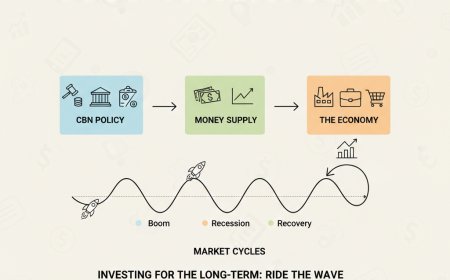
Market cycles are driven by two powerful forces:
1. The Economy
Economies naturally expand and contract due to:
-
Business growth
-
Inflation
-
Interest rate changes
-
Government policies
2. Human Psychology
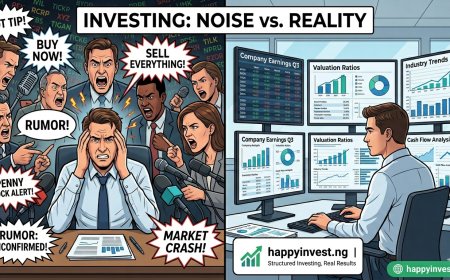
Markets are emotional.
During booms:
Greed dominates.
During crashes:
Fear dominates.
The cycle is simply emotion amplified by money.
What This Means for Nigerian Investors
Nigeria’s market cycles are influenced by:
-
Oil prices
-
Inflation levels
-
Exchange rate movements
-
Central Bank policies
-
Global capital flows
Because of these factors, Nigerian markets can be volatile.
If you don’t understand cycles, you might:
❌ Buy near the top
❌ Sell near the bottom
❌ Lose confidence permanently
Understanding cycles gives you emotional control.
The Biggest Mistake Investors Make
They assume:
Boom = normal
Crash = disaster
But in reality:
Boom and crash are both normal.
The market breathes in and out.
Expansion and contraction.
Neither lasts forever.
How Smart Investors Navigate Cycles
They don’t try to predict exact tops or bottoms.
Instead, they:
✔ Invest consistently
✔ Keep emergency funds
✔ Increase investments during downturns
✔ Avoid borrowing to speculate
✔ Focus on strong companies
Crashes feel painful in the short term.
But they often create long-term opportunities.
A Simple Example
Imagine:
The stock market drops 30%.
Many investors panic and sell.
But a disciplined investor:
-
Reviews the company fundamentals
-
Buys strong businesses at discounted prices
-
Holds for several years
When recovery happens, their returns multiply.
The difference?
Understanding the cycle instead of reacting emotionally.
Long-Term Reality
Zoom out on any long-term market chart.
You’ll see crashes.
But you’ll also see recovery and growth over decades.
Why?
Because:
-
Businesses innovate
-
Populations grow
-
Productivity improves
-
Economies expand
Short-term volatility.
Long-term growth.
How to Protect Yourself in Any Cycle
-
Build an emergency fund
-
Diversify investments
-
Avoid emotional decisions
-
Think in 5–10 year horizons
-
Never invest money you need urgently
Strategy beats prediction.
You cannot stop market cycles.
But you can prepare for them.
When you understand:
-
Where are we in the cycle
-
How emotions influence markets
-
Why volatility is normal
You become calmer.
And calm investors make better decisions.
At Happyinvest.ng, we believe:
Crashes test patience.
Booms test discipline.
Strategy builds wealth.
Learn the cycle.
Respect the cycle.
Invest through the cycle.