Behavioural Finance: Avoiding Panic Selling During a Market Crash
Why we panic sell during market crashes and how to stop. A complete guide for Nigerian investors covering crash history, neuroscience, real cost tables & crash survival kit.
 Yahnic Chigozie
One of the biggest reasons people lose money in investing is not lack of knowledge…
It is behavior.
Markets rise and fall. Crashes are normal. But what separates successful investors from struggling ones is how they react during those moments.
This is where behavioral finance becomes critical.
What Is Behavioral Finance? (Simple Definition)
Behavioral finance is the study of how emotions and psychology influence financial decisions.
In simple terms:
It explains why people make irrational money decisions, especially during uncertainty.
What Is Panic Selling?
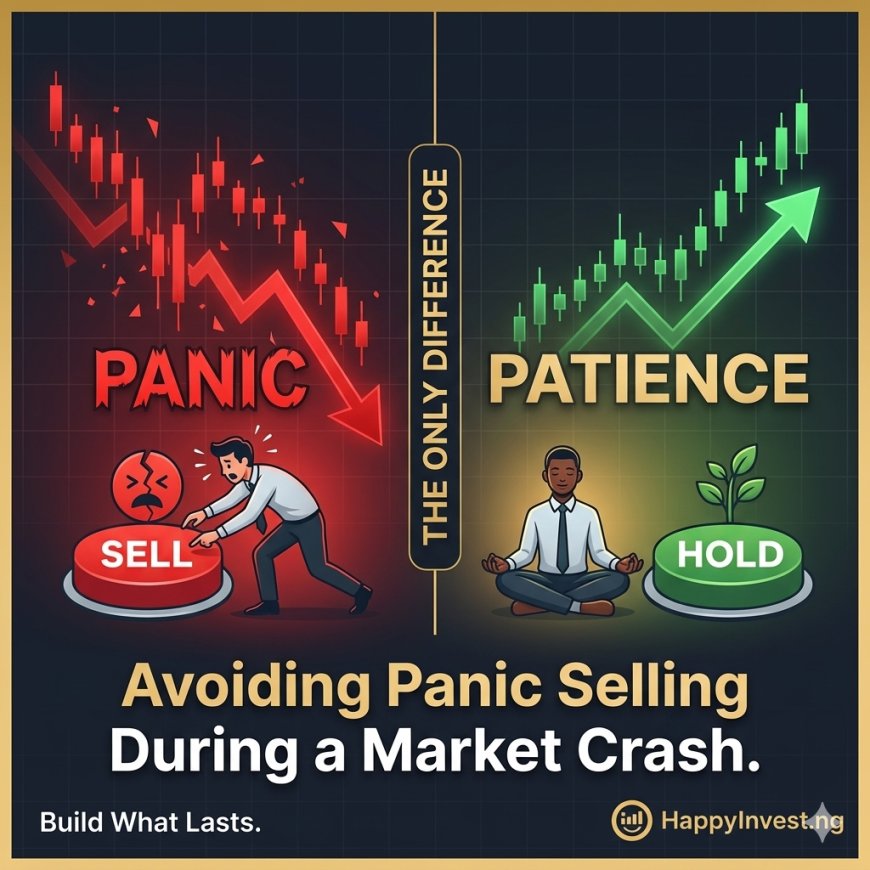
Panic selling is when investors quickly sell their investments during a market drop out of fear of losing more money.
It usually happens:


-
During market crashes
-
When prices fall rapidly
-
When negative news spreads
Why Panic Selling Is Dangerous
At first, selling may feel like the “safe” decision.
But in reality, panic selling often leads to:
1. Locking in Losses
When you sell during a crash:
-
You convert temporary losses into permanent losses
2. Missing the Recovery
Markets tend to recover over time.
If you sell early:
-
You miss the rebound
-
You lose future gains
3. Destroying Long-Term Growth
Wealth is built over time, not in perfect timing.
Frequent panic selling interrupts:
-
Compounding
-
Long-term returns
Why People Panic Sell (The Psychology Behind It)
Understanding this is key to avoiding it.
1. Fear of Losing Everything
When markets fall, people imagine worst-case scenarios.
Thoughts like:
-
“What if it goes to zero?”
-
“Let me just take what I have left.”
This fear triggers emotional decisions.
2. Loss Aversion
Humans feel losses more deeply than gains.
Losing ₦100,000 feels worse than gaining ₦100,000 feels good.
This makes people:
-
Overreact to losses
-
Act irrationally



3. Herd Mentality
When everyone is selling:
-
It feels safer to follow
People assume:
“If others are selling, they must know something.”
4. Constant Exposure to Negative News
During crashes:
-
News becomes more negative
-
Social media amplifies fear
This increases panic and urgency.
The Reality: Market Crashes Are Normal
Every serious investor must understand this:
-
Markets go up and down
-
Crashes are part of the cycle
-
Recoveries usually follow
Historically, major markets have always:
-
Crashed
-
Recovered
-
Continued growing
How to Avoid Panic Selling (Practical Strategies)
1. Have a Clear Investment Plan
If you do not have a plan, fear will control you.
Your plan should include:
-
Why are you investing
-
Your time horizon
-
Your risk tolerance
A clear plan gives you confidence during uncertainty.
2. Invest Only What You Can Leave Alone
Do not invest money you may need urgently.
If you might need the money soon:
-
Market drops will force you to sell
3. Focus on Long-Term Goals
Short-term movements are unpredictable.
But long-term trends are more stable.
Shift your mindset from:
-
Daily price changes
to -
Long-term growth
4. Limit How Often You Check Your Portfolio
Constant monitoring increases anxiety.
During a crash:
-
Prices will look worse every day
Checking less frequently helps you stay calm.
5. Understand What You Own
Confidence comes from knowledge.
If you invest in strong assets:
-
You are less likely to panic
6. Use Market Drops as Opportunities
Instead of fear, think in terms of value.
When prices drop:
-
Good assets become cheaper
Disciplined investors:
-
Buy during fear
-
Sell during hype
7. Diversify Your Portfolio
A well-diversified portfolio reduces emotional stress.
When everything is not falling equally:
-
Panic is reduced
8. Build an Emergency Fund
This is critical.
If you have cash reserves:
-
You will not be forced to sell investments
Real-Life Example (Nigeria Context)
Consider two investors during a market downturn:
Investor A (Emotional Reaction)
-
Sees portfolio dropping
-
Panics and sells everything
-
Locks in losses
Investor B (Disciplined Approach)
-
Understands market cycles
-
Holds investments
-
Buys more at lower prices
After recovery:
-
Investor A struggles to recover losses
-
Investor B benefits from growth
The difference is not intelligence.
It is behavior.
Simple Rule to Remember
A powerful principle in investing:
Do not make permanent decisions based on temporary emotions.
Common Mistakes During Market Crashes
-
Selling without a plan
-
Following crowd behavior
-
Reacting to news instead of strategy
-
Trying to time the market perfectly
-
Ignoring long-term goals
Control Your Emotions, Protect Your Wealth
Markets will always test your discipline.
There will be:
-
Crashes
-
Fear
-
Uncertainty
But successful investors:
-
Stay calm
-
Stick to their plan
-
Think long-term
Behavioral finance teaches one powerful lesson:
Your biggest enemy in investing is not the market.
It is your reaction to the market.