The Impact of Inflation on Youth Investment Behavior in Nigeria (And How to Protect Your Money in 2026)
Inflation in Nigeria is reshaping how young people save and invest. Discover how rising prices affect youth investment behavior and practical strategies to protect and grow your wealth in 2026.
 Yahnic Chigozie

Inflation in Nigeria is no longer just an economic term used by analysts on TV.
It is now a daily reality.
Food prices are rising. Rent is increasing. Transportation costs keep going up. Meanwhile, most young Nigerians are earning the same salary they earned last year.
This persistent inflation is significantly reshaping youth investment behavior in Nigeria, forcing many young people to rethink how they save, invest, and build wealth.
What Is Inflation and Why It Matters to Young Nigerians
Inflation refers to the continuous rise in the price of goods and services over time, which reduces purchasing power.
In simple terms:
If ₦100,000 could buy 100 items last year but can only buy 70 items this year, inflation has reduced the value of your money.
For young earners between the ages of 20 and 35, this is dangerous because:


-
Income growth is slow
-
Expenses are rising
-
Savings lose value quickly
-
Long-term financial plans become uncertain
How Inflation Is Changing Youth Investment Behavior in Nigeria
1. Decline in Traditional Savings
Many Nigerian youths no longer see bank savings as a safe strategy.
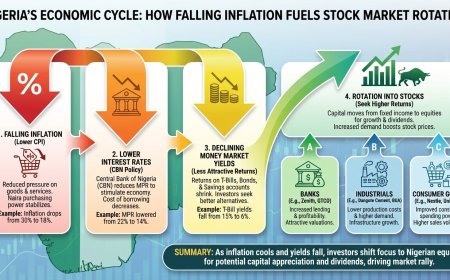
With inflation rates often higher than bank interest rates, money kept in savings accounts loses real value.
As a result, young investors are shifting toward:
-
Nigerian stocks
-
U.S. stocks
-
Cryptocurrency
-
Dollar-denominated assets
-
Treasury bills and fixed-income securities
They are looking for assets that can outpace inflation.
2. Increased Risk Appetite
Inflation creates pressure.
And pressure can lead to desperation.
Many youths now seek:
-
High-return opportunities
-
Fast-growing digital assets
-
Short-term trading strategies
Unfortunately, this also increases exposure to Ponzi schemes and scams promising unrealistic returns.
When people are trying to “beat inflation quickly,” they sometimes ignore risk management.
3. Growing Interest in Dollar Investments
One major trend among Nigerian youths is currency diversification.
Due to Naira depreciation, many now:
-
Save in dollars
-
Invest in U.S. stocks
-
Explore global ETFs

-
Hold stablecoins


Inflation and currency weakness are pushing young Nigerians to think globally.
4. Rise in Financial Education
The positive outcome?
Inflation has forced financial awareness.
More young people are learning about:
-
Asset allocation
-
Dividend investing
-
Long-term portfolio building
-
Wealth protection strategies
Economic pain is accelerating financial maturity.
The Psychological Impact of Inflation on Youth Investors
Inflation not only affects money; it affects behavior.
It can cause:
-
Fear-based investing
-
Emotional decision-making
-
Short-term thinking
-
Panic buying of assets
But disciplined investors respond differently.
Instead of reacting emotionally, they:
-
Build diversified portfolios
-
Focus on long-term growth
-
Invest consistently
-
Avoid hype-driven decisions
What Smart Young Nigerian Investors Should Do
If you are a young earner in Nigeria, here is a practical strategy:
-
Build an emergency fund (3–6 months' expenses)
-
Avoid keeping all savings in Naira
-
Invest in assets that historically outpace inflation
-
Focus on long-term compounding
-
Improve financial literacy continuously
Inflation is a challenge, but it is also a wake-up call.
The impact of inflation on youth investment behavior in Nigeria is undeniable.
It has:
-
Reduced trust in traditional savings
-
Increased interest in alternative investments
-
Encouraged currency diversification
-
Accelerated financial education
Inflation is not going away tomorrow.
The real question is:
Will you let inflation quietly reduce your wealth
or will you build a strategy that protects and grows it?