When Saving Is Better Than Investing
Discover when saving is better than investing. Learn why emergency funds, short-term goals, debt repayment, and financial stability should come before investing for many Nigerians.
 Yahnic Chigozie

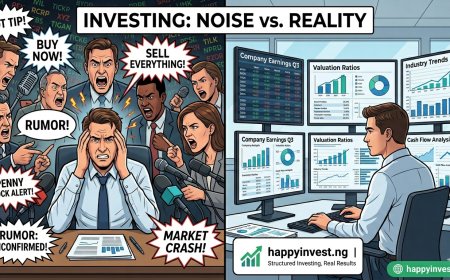
Most people hear phrases like "invest your money" and "make your money work for you" almost every day. Social media is filled with stories of people making money from stocks, crypto, real estate, and businesses.
Because of this, many Nigerians now believe that investing is always better than saving.
But is that really true?
The answer is no.
Sometimes, saving your money is actually smarter than investing it.
In fact, one of the biggest mistakes beginners make is rushing into investments before they are financially ready.
At Happyinvest, we teach that wealth is built in stages. Saving and investing are both important, but knowing when to use each one can save you from financial stress and costly mistakes.
Let's break it down in simple terms.

What Is Saving?
Saving means setting money aside for future use while keeping it safe and easily accessible.
Examples include:
-
Money in your bank account
-
Emergency funds
-
Fixed deposits
-
Money market accounts
-
Savings apps
The main goal of saving is protection and accessibility, not high returns.
For example, if you save ₦10,000 every month, you know your money will still be there when you need it.
What Is Investing?
Investing means putting your money into assets that have the potential to grow over time.
Examples include:
-
Stocks
-
Mutual funds
-
ETFs
-
Real estate
-
Businesses
-
Cryptocurrency
The goal of investing is growth.
Unlike savings, investments can go up or down in value.
That means investing carries risk.
The Mistake Many Nigerians Make
Imagine Chinedu receives his first salary.
He hears people talking about Bitcoin, stocks, and forex.
Without having any savings, he puts all his money into investments.
A few weeks later, his laptop develops a fault and costs ₦120,000 to repair.
Because he has no emergency savings, he is forced to sell his investments at a loss.
This happens to many people.

The problem wasn't investing.
The problem was investing before building financial stability.
When Saving Is Better Than Investing
1. When You Don't Have an Emergency Fund
This is the most important reason.
Life happens.
-
Medical emergencies
-
Job loss
-
Car repairs
-
Family responsibilities
-
Rent increases
If you don't have emergency savings, every small problem becomes a financial crisis.
A good rule is to save enough money to cover 3 to 6 months of living expenses before investing aggressively.
For example:
If your monthly expenses are ₦200,000, your emergency fund should be between:
-
₦600,000
-
₦1,200,000
Only after building this cushion should you focus heavily on investing.
2. When You Need the Money Soon
Investing works best when you can leave money untouched for years.
If you need the money within the next few months, saving is usually the better option.
Examples:
-
School fees next semester
-
Rent is due in six months
-
Wedding expenses
-
Business inventory purchase
-
Travel plans
Putting short-term money into volatile investments can create problems.
Imagine investing your rent money and the market falls by 20%.
Now you have less money when rent is due.
3. When You Are Paying Off High-Interest Debt
Suppose you owe:
-
₦500,000 on a loan charging 35% interest yearly
And your investment earns:
-
12% annually
You are losing money.
Before focusing on investing, it often makes more sense to clear expensive debts.
The guaranteed return from eliminating high-interest debt can be greater than what most investments will provide.
4. When You Are Learning About Investing
Investing without knowledge is like driving in Lagos without knowing road signs.
You may move, but eventually you'll hit trouble.
Before investing large amounts:
-
Learn basic financial literacy
-
Understand risk
-
Learn asset allocation
-
Understand market fluctuations
During this learning phase, saving your money is perfectly fine.
Knowledge first.
Investment second.
5. When Your Income Is Unstable
Many freelancers, commission workers, and business owners experience irregular income.
In this situation, having larger savings can provide stability.
For example:
One month, you earn ₦500,000.
In another month, you earn ₦100,000.
Savings can help smooth out these fluctuations.
Without savings, you may constantly withdraw investments during difficult months.
6. During Major Life Transitions
Certain periods of life require more liquidity.
Examples include:
-
Starting a business
-
Changing jobs
-
Relocating
-
Getting married
-
Having a child
During these times, having accessible cash is often more important than maximizing investment returns.
A Simple Wealth-Building Formula
Instead of choosing between saving and investing, use both.
Step 1:
Build an emergency fund.
Step 2:
Pay off expensive debt.
Step 3:
Learn basic investing.
Step 4:
Start investing consistently.
Step 5:
Continue saving for short-term goals while investing for long-term goals.
This approach creates both safety and growth.
Saving and Investing Are Teammates
Many people see saving and investing as competitors.
They are not.
Think of them like a football team.
Saving is your goalkeeper.
It protects you from emergencies.
Investing is your striker.
It helps you score long-term financial goals.
A football team needs both.
Your finances do too.
The Happyinvest Perspective
At Happyinvest, we believe investing is powerful, but investing without a financial foundation can be dangerous.
Before chasing high returns:
Ask yourself:
-
Do I have emergency savings?
-
Can I handle an unexpected expense today?
-
Do I understand what I am investing in?
-
Am I investing money I can leave untouched for years?
If the answer is no, focus on saving first.
There is no shame in building a strong foundation.
Remember:
Saving protects wealth.
Investing grows wealth.
You need both to achieve financial freedom.
Final Thoughts
The richest investors in the world understand something many beginners ignore:
The goal is not just to make money.
The goal is to stay financially secure while your wealth grows.
Sometimes the smartest financial decision is not investing.
Sometimes it is simply saving.
Build your emergency fund.
Strengthen your foundation.
Then invest with confidence.
That is how lasting wealth is created.