Wealth Mindset vs Poverty Mindset: What's Really the Difference?
Discover the key differences between a wealth mindset and a poverty mindset. Learn how money beliefs, financial literacy, and daily habits influence financial success and wealth creation.
 Yahnic Chigozie
Why do some people seem to move steadily toward financial success while others remain trapped in the same money struggles year after year?
Is it education?
Luck?
Family background?
Income?
While all of these factors can play a role, there's another factor that often gets overlooked:
Mindset.
The way you think about money influences how you earn it, spend it, save it, invest it, and grow it.
This doesn't mean positive thinking alone will make you wealthy.
It won't.
But your financial habits are often shaped by your beliefs.
And your beliefs shape your financial future.
At Happyinvest, we've observed that one of the biggest differences between people who build wealth and those who struggle financially isn't necessarily how much they earn.
It's how they think.
Let's explore the difference between a wealth mindset and a poverty mindset—and how changing your thinking can change your financial life.
First, What Is a Money Mindset?
A money mindset is the collection of beliefs, attitudes, and assumptions you have about money.
These beliefs influence decisions such as:
-
Spending
-
Saving
-
Investing
-
Risk-taking
-
Career choices
-
Business decisions
Many people don't realize they have a money mindset because it operates automatically.
Yet it affects nearly every financial decision they make.
Important: Poverty Is Not a Character Flaw
Before we continue, let's clarify something.
Having financial struggles does not mean someone has a "poverty mindset."
Many hardworking people face real economic challenges.
Factors such as:
-
Economic conditions
-
Unemployment
-
Inflation
-
Family responsibilities
-
Limited opportunities

can affect financial outcomes.
This article is about financial thinking patterns—not judging people based on income.
The goal is to identify beliefs that help or hurt long-term financial growth.
The Core Difference
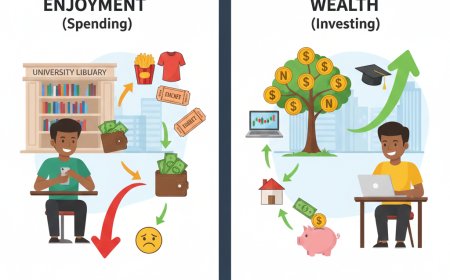
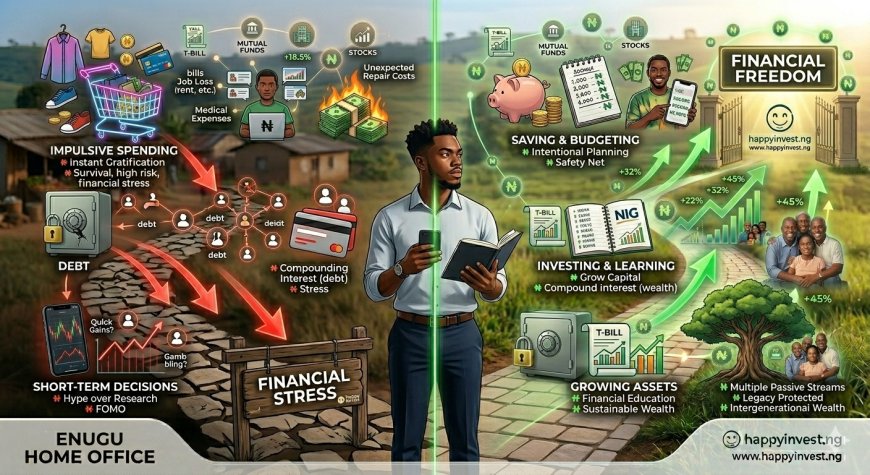
A poverty mindset often focuses on survival.
A wealth mindset focuses on growth.
This single difference can influence hundreds of financial decisions over a lifetime.
Let's look at some examples.
Wealth Mindset vs Poverty Mindset
1. Spending vs Investing
Poverty Mindset
"I need to spend money to look successful."
Wealth Mindset
"I need to invest money to become successful."
Many people buy things they cannot afford to impress people who don't pay their bills.
People with a wealth mindset often prioritize assets over appearances.
They ask:
"Will this purchase make me richer or poorer?"
2. Immediate Gratification vs Delayed Gratification
Poverty Mindset
"I want it now."
Wealth Mindset
"I'm willing to wait for something better later."
Building wealth often requires patience.
For example:
Would you rather spend ₦100,000 on a new phone today or invest it toward your future?
Financially successful people often choose long-term rewards over short-term excitement.
3. Seeing Money as Limited vs Expandable
Poverty Mindset
"There's never enough money."
Wealth Mindset
"How can I create more value and earn more income?"
People with a wealth mindset understand that income can grow.
They focus on:
-
Learning skills
-
Starting businesses
-
Solving problems
-
Creating opportunities
Instead of only asking:
"How can I save money?"
They also ask:
"How can I earn more money?"
4. Fear of Risk vs Understanding Risk
Poverty Mindset
"All investments are dangerous."
Wealth Mindset
"Every financial decision carries risk. Let me learn how to manage it."
Many people avoid investing because they're afraid of losing money.
Ironically, doing nothing also carries risk.
For example:
-
Inflation reduces purchasing power.
-
Cash loses value over time.
Financial literacy helps investors understand and manage risk intelligently.
5. Blaming Circumstances vs Taking Responsibility
Poverty Mindset
"My financial future depends entirely on external factors."
Wealth Mindset
"What actions can I take today to improve my situation?"
Not everything is under our control.
But successful people focus on what they can control:
-
Skills
-
Habits
-
Savings
-
Investments
-
Learning
Responsibility creates action.
Action creates progress.
6. Consuming Information vs Applying Information
Poverty Mindset
Collect knowledge endlessly.
Take little action.
Wealth Mindset
Learn.
Apply.
Improve.
Repeat.
Reading about money is valuable.
Applying what you learn is where transformation happens.
7. Looking Rich vs Becoming Rich
This is one of the biggest differences.
Poverty Mindset
Focuses on visible wealth.
Examples:
-
Expensive clothes
-
Luxury gadgets
-
Status purchases
Wealth Mindset
Focuses on invisible wealth.
Examples:
-
Investments
-
Businesses
-
Savings
-
Assets
The problem?
Visible wealth gets attention.
Invisible wealth builds freedom.
Why Financial Literacy Changes Everything
Many limiting beliefs come from a lack of financial education.
People are rarely taught:
-
How investing works
-
How compound interest works
-
How businesses create wealth
-
How assets generate income
This is why financial literacy is so powerful.
Knowledge helps replace fear with understanding.
A Nigerian Example
Let's imagine two graduates.
Chika
Receives her first salary.
She immediately upgrades her lifestyle.
Everything she earns is spent.
David
Receives the same salary.
He:
-
Saves part of it
-
Invests part of it
-
Learns about money
-
Builds additional income streams
Five years later, their financial situations may look very different.
Not because one was luckier.
But because their financial decisions were different.
And those decisions were influenced by mindset.
Signs You May Need a Money Mindset Shift
Ask yourself:
-
Do I believe wealth is only for certain people?
-
Do I avoid learning about money?
-
Do I spend to impress others?
-
Do I constantly focus on what I can't do?
-
Do I believe investing is only for the rich?
If you answered yes to several of these questions, a mindset shift could help.
How to Develop a Wealth Mindset
1. Learn About Money
Financial education is one of the highest-return investments you can make.
Read books.
Take courses.
Follow trusted financial educators.
2. Focus on Assets
Ask:
"What can I buy that might generate future value?"
Examples include:
-
Stocks
-
Businesses
-
Skills
-
Investments
3. Think Long Term
Wealth is rarely built in a month.
Most wealth-building journeys take years.
Patience matters.
4. Surround Yourself with Growth-Oriented People
Your environment influences your thinking.
Spend time with people who:
-
Learn
-
Build
-
Invest
-
Improve themselves
5. Practice Delayed Gratification
Not every desire requires an immediate purchase.
Learning to wait can dramatically improve financial outcomes.
The Wealth Mindset Formula
A simple formula looks like this:
Earn
Increase your ability to generate income.
Save
Keep a portion of what you earn.
Invest
Put money to work through assets.
Learn
Continue improving your financial knowledge.
Repeat
Consistency creates results.
The Happyinvest Perspective
At Happyinvest, we believe wealth begins in the mind before it appears in a bank account.
A wealth mindset doesn't guarantee financial success overnight.
But it encourages behaviors that increase the likelihood of long-term success.
Financial literacy.
Discipline.
Investing.
Patience.
Growth.
These are the building blocks of wealth.
Final Thoughts
The difference between a wealth mindset and a poverty mindset isn't about intelligence.
It isn't about where you were born.
And it isn't about how much money you currently have.
It's about how you think about opportunities, learning, investing, risk, and the future.
Your mindset shapes your habits.
Your habits shape your actions.
Your actions shape your financial life.
The good news?
Mindsets can change.
And sometimes, one new belief about money can change the direction of your entire financial future.
Because wealth often begins long before money appears.
It begins with the way you think.